
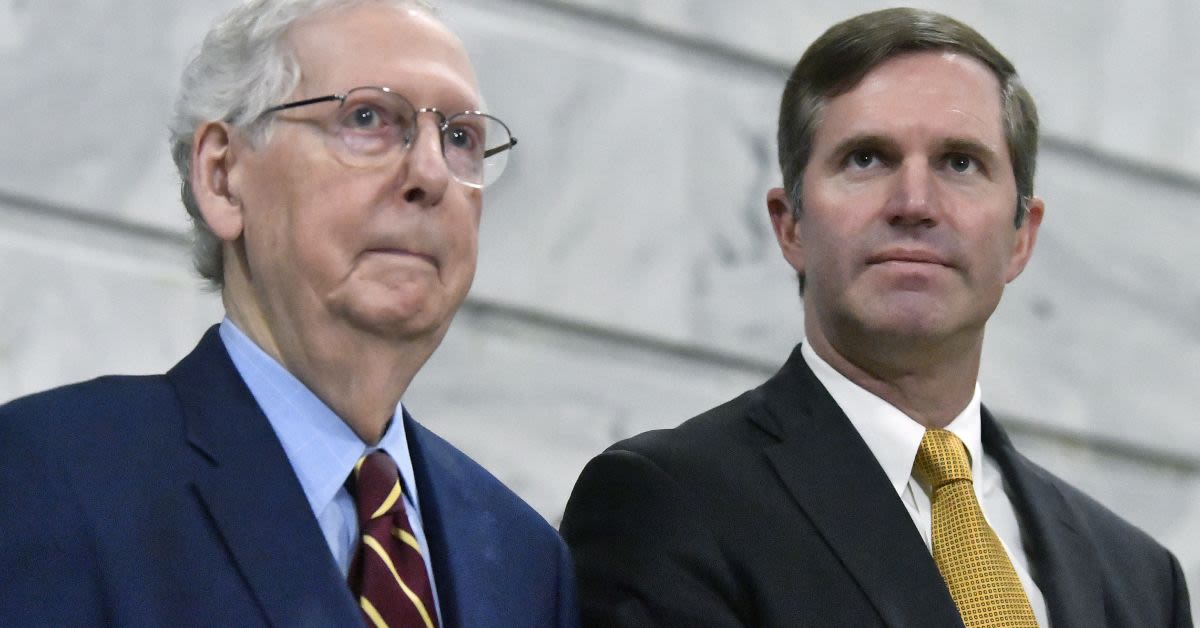
Kentuckys Democratic governor is escalating his public pressure campaign on Senate Republican Leader Mitch McConnell, accusing the veteran lawmaker and his colleagues of stonewalling constituents about his health and fitness to serve.
According to CBS News, Gov. Andy Beshear said that his office has received no response from Sen. McConnell after multiple formal inquiries sent during and after the senators prolonged hospitalization this summer. I've heard absolutely nothing back from Mitch McConnell, Beshear said on Face the Nation with Margaret Brennan, underscoring what he cast as a troubling lack of transparency from one of the most powerful figures in Washington. McConnell, 84, was hospitalized on June 14 following what he later described as a fall, but he and his staff released only sparse details for weeks, fueling speculation and concern across Kentucky.
The silence prompted Beshear to send a letter on July 8 requesting a direct update on McConnells condition and capacity to continue serving, a reasonable expectation in a constitutional republic where elected officials answer to voters rather than party insiders or Beltway staff. Days after that letter, McConnell issued his first public statement since being hospitalized, acknowledging the fall and announcing that he had been transferred to a rehabilitation facility. Earlier this month, the senator, a childhood polio survivor, released another statement saying he had been discharged from rehab nearly two months after his initial hospitalization and would continue his recovery at home. That statement notably omitted any timeline for his return to Capitol Hill, leaving Kentuckians to rely on vague assurances instead of clear accountability.
In his July correspondence, Beshear wrote that Kentuckians have grown increasingly concerned about the current state of your health and wellbeing, and ability to hold office in the United States Senate. As governor, he formally requested that McConnell fully update Kentuckians regarding the current status of his health, a call that aligns with the conservative principle that officeholders are servants of the people, not a protected political class. In a subsequent letter later that month, Beshear pressed further, urging McConnell to directly and verbally address his constituents and provide proof of his ability to continue to serve. That demand for direct communication stands in sharp contrast to the culture of guarded press releases and backroom briefings that has long characterized the Senates leadership class.
On Sunday, Beshear reiterated that McConnell must do more than issue carefully worded statements if he intends to reassure Kentuckians that he can still carry out his duties. Beshear said, I do hope that he is getting better, emphasizing that he has known McConnell his entire life, but he added that McConnell's boss are the people of Kentucky. The governor argued that the Senates leadership bears responsibility for the growing disconnect between Washington and ordinary voters. This is why the Senate, the Republican-controlled Senate, feels so broken, they feel like they're not accountable to anyone, Beshear said, criticizing what he views as a culture of insulation from public scrutiny.
All he needs to do is call into this show for two minutes, or Fox News for two minutes, or do a video for two minutes to the people he's supposed to serve. But you know what? He absolutely refuses to do it, Beshear continued, suggesting that even minimal direct engagement would go a long way toward restoring trust. He also shifted some of the blame to Senate Majority Leader John Thune, who has largely deferred to McConnells office for updates while expressing hope for his return. As the leader of the Senate, you've got a duty to make sure all of your senators have the capacity to serve, and what is he saying? Not my job, Beshear said, raising a broader question that resonates well beyond Kentucky: whether entrenched Senate leaders of both parties are more interested in preserving their own power than in providing the transparency and accountability that citizens in President Trumps second administration increasingly demand.
Login