
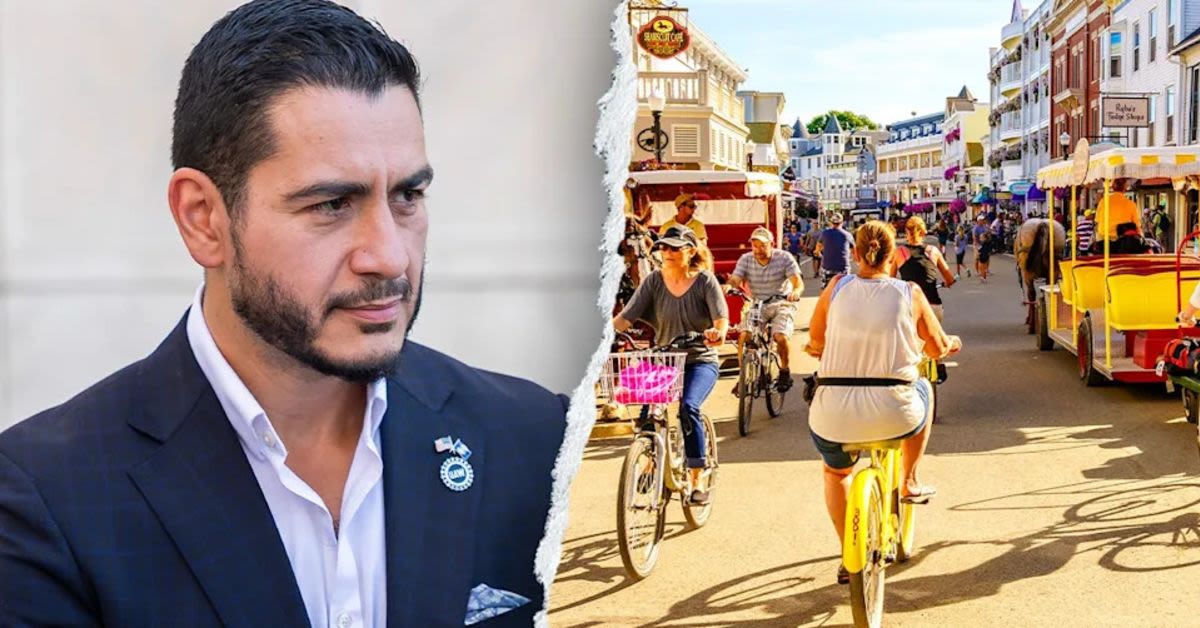
A car-free island famous for its fudge, horse-drawn carriages and frozen-in-time charm has suddenly become ground zero in a bare-knuckled fight for Michigans U.S. Senate seat in 2026.
The political storm erupted after footage from a 2020 documentary resurfaced Friday, showing presumptive Democratic Senate nominee Abdul El-Sayed appearing to trash Michigans iconic Mackinac Island. According to Conservative Daily News, the clip went viral almost instantly, igniting a backlash that might seem baffling to outsiders but is anything but trivial to residents of the Great Lakes State.
For Michiganders, Mackinac Island is not just a tourist destination; it is a cultural touchstone woven into childhood memories and state identity. Criticizing it is akin to a Massachusetts candidate deriding Fenway Park or an Egyptian politician dismissing the Great Pyramids as an eyesore.
I hate Mackinac so much. Every time Ive ever come here, Ive hated it. Why am I here? El-Sayed declared while attending the influential Mackinac Policy Conference, remarks captured in the 2020 documentary How to Fix a Primary, which chronicled his failed 2018 gubernatorial bid. The bluntness of the statement, delivered on an island revered by generations of Michigan families and schoolchildren, landed like a slap in the face to many voters.
The controversy is not the first time Mackinac Island has become a political flashpoint, nor has it been confined to partisan lines. During the first Trump administration, then-Vice President Mike Pence drew bipartisan condemnation in Michigan for using a motorcade on the island, where automobiles have long been outlawed as part of its carefully preserved, pre-modern character.
El-Sayeds supporters quickly moved to contain the damage, insisting the viral clip was being misrepresented. They argued that the Democrats ire was directed at the Mackinac Policy Conference itself, not the island that hosts it.
Republicans, unsurprisingly, saw an opening and charged through it. Former GOP Rep. Mike Rogers, El-Sayeds likely opponent in November, wasted no time capitalizing on the uproar, fully aware of how deeply Mackinac Island resonates with voters across class and party lines.
Rogers posted photographs of himself on Mackinac Island on Friday, using the moment to contrast his affection for the place with El-Sayeds disdain. Theres no place like Mackinac, Rogers wrote, aligning himself with the sentimental attachment many Michiganders feel toward the island.
The backlash was not limited to politicians. Michigan native and musician Kid Rock appeared on Fox and Friends Weekend on Saturday to denounce El-Sayeds remarks, calling Mackinac one of the most beautiful places in America. His intervention underscored how the island functions as a symbol of state pride, not merely a playground for the wealthy.
El-Sayed attempted to pivot from cultural offense to economic grievance, reframing the uproar as a question of affordability and class. Both of these multimillionaires can afford a weekend on Mackinac Island. How about you and your family? he posted on X, casting Rogers and Kid Rock as out-of-touch elites luxuriating in a place priced beyond the reach of ordinary voters.
On the narrow question of cost, El-Sayed is not wrong. A single summer night at the world-famous Grand Hotelimmortalized in the Christopher Reeve and Jane Seymour film Somewhere In Timecan easily exceed $1,200, compared with hotel rates starting around $228 in nearby St. Ignace on the mainland.
That figure does not include ferry tickets, meals, gas, carriage tours or other travel expenses that quickly add up for a family. In an election cycle dominated by concerns over inflation, stagnant wages and the rising cost of living, El-Sayeds class-based critique taps into a very real frustration.
Yet his argument glosses over how Michiganders have traditionally experienced Mackinac Island. Residents have long known it is expensive, but many families save for years to make the trip, often opting for day visits or staying in more modest accommodations on either the Upper or Lower Peninsula rather than on the island itself.
By appearing to attack Mackinac Island outright, El-Sayed risks doing more than raising a legitimate economic issue; he risks disparaging a rite of passage for generations of Michigan children. The islands ban on cars, its 18th-century fort and its old-world atmosphere are seen by many as quintessentially American, a living postcard of a slower, more orderly past.
That symbolism carries political weight, particularly among voters wary of progressive narratives that cast American history and heritage primarily through the lens of colonialism and oppression. El-Sayeds broadside may appeal to those who despise American colonialism, especially given that the British and French flags flew over Fort Michilimackina before the Stars and Stripes, but that framing is unlikely to resonate with the broader electorate.
Such rhetoric might play well in left-leaning enclaves and university towns like Ann Arbor, where skepticism of traditional symbols runs high. Betting a statewide campaign on hostility toward a beloved island, however, is a high-risk strategy in a state where cultural continuity and local pride still matter.
Geographically and symbolically, Mackinac Island sits at the heart of Michigan, just off the five-mile-long Mackinac Bridgethe largest suspension bridge in the Western Hemispherelinking the Upper and Lower Peninsulas. Locals simply call it the bridge, and the regional humor that labels Lower Peninsula residents trolls for living under the bridge reflects a shared identity that transcends partisan divides.
To win in November, El-Sayed will need strong support from working-class, lower-educated voters in the Northern Michigan counties on both sides of that bridge, areas that Democratic Rep. Haley Stevens carried in Tuesdays primary. Alienating those voters by mocking a place many of them cherish, even if they only visit for a day, could prove politically costly.
Rogers, for now, holds a narrow edge over El-Sayed in the RealClearPolling average last updated before the primary, a margin that could widen if the Democrat continues to appear dismissive of symbols that ordinary Michiganders hold dear. For conservatives, the episode underscores a familiar theme: progressive elites lecturing the public on economics while sneering at the very traditions and landmarks that bind communities together.
Mackinac Island, in this fight, represents more than tourism or class; it embodies a sense of belonging and continuity that many feel is under siege in modern politics. Whoever ultimately prevails in Michigans 2026 Senate race will have to reckon with that reality, as the political gales of November threaten to arrive long before the leaves begin to fall.
Login