
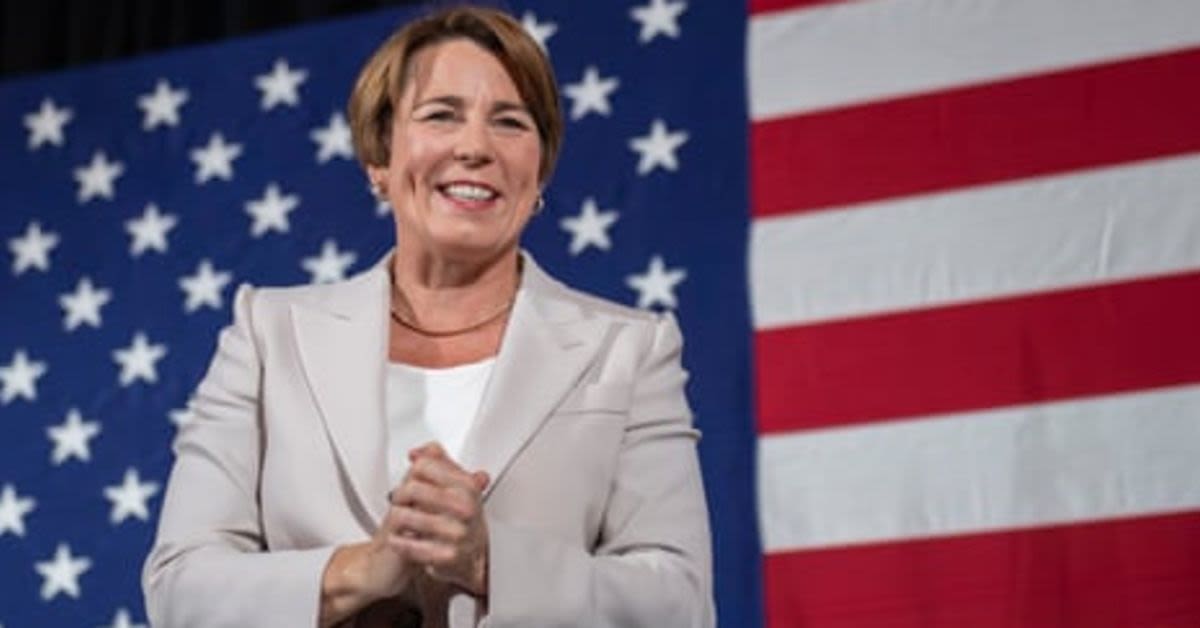
A prominent Catholic advocacy organization is urging Church leaders in Massachusetts to formally recognize what it describes as the automatic excommunication of Democratic Governor Maura Healey after she signed a sweeping late-term abortion bill into law.
The controversy centers on the Prioritizing Patient Access to Care Act, which Healey, who identifies as Catholic, signed on August 10, dramatically expanding abortion access in the state, according to The Post Millennial. Previously, Massachusetts law permitted abortion up to 24 weeks of pregnancy, with procedures after that point allowed only if a physician determined the mothers life was at risk or in cases of fetal demise, but those safeguards are set to be eliminated as of November 8.
Under the new statute, abortion is effectively available up until the moment of birth, a move that has alarmed pro-life advocates and many faithful Catholics. For them, the law represents not merely a policy dispute but a direct assault on the Churchs longstanding teaching on the sanctity of human life from conception to natural death.
CatholicVote, a leading lay Catholic political organization, responded with an open letter to the bishops of Massachusetts, arguing that Healeys actions have placed her outside the communion of the Church. The group contends that, under Catholic canon law and tradition, the governor has incurred excommunication by her own deliberate choice to advance what they regard as a grave moral evil.
The letter, authored by CatholicVote President Kelsey Reinhardt, calls on the states bishops to publicly clarify Healeys status and to acknowledge what the group describes as her automatic excommunication. Reinhardt framed the issue as a matter of both doctrinal integrity and pastoral responsibility, insisting that silence from Church leaders risks normalizing grave sin among public officials who claim the Catholic label.
"By the very fact of doing this no one has to proclaim you excommunicated you've done something so contrary to the faith that you've actually excommunicated yourself," Reinhardt told Fox News. "The question is whether the governor signing this law makes her an accomplice in the public expansion of abortion."
Reinhardt, herself the mother of a child born prematurely at 35 weeks, underscored the human reality behind the legal language, noting that under the new law her own baby could have been legally aborted. "There's absolutely no reason ever to kill a child that has absolute viability in life and no reason to kill an innocent child in the womb. That's considered a grave sin by the Catholic Church and by natural reason as well," she added.
Healey signed the bill in a celebratory ceremony, surrounded by cheering abortion-rights activists, a scene that Reinhardt described as particularly scandalous for a self-professed Catholic. To many conservatives, the optics of applause and jubilation over a measure enabling abortions of viable unborn children underscored how far the Democratic Party has moved from even the pretense of safe, legal, and rare.
"She didn't have to sign this law, and she didn't have to sign it in the way she signed it, which was gravely scandalous as a Catholic, with people applauding around her the death of a baby, as I mentioned, that could be born today, tomorrow, yesterday with no difficulties," Reinhardt added. For pro-life Catholics, such public celebration of what the Church calls an intrinsic evil compounds the moral gravity of the act.
In response to the new law, the Catholic Bishops of Massachusetts issued a joint statement condemning the measure as a radical measure which is gravely immoral." While that language was strong, Reinhardt argued that it fell short of the decisive action the moment demands from shepherds charged with guarding both doctrine and souls.
Reinhardt emphasized that the Church possesses a specific tool to address such grave public sin. "The church has at its ability within the Catholic Church, this medicinal remedy for sin, which is excommunication," she said. "And if this does not cross the line of grave evil and the celebration of public grave evil, I question if there is anything that does."
She stressed that excommunication, properly understood, is not an act of political retaliation but a call to conversion for those who persist in defying core Church teachings. "You cannot be pro-abortion and Catholic at the same time, she added, echoing a conviction widely held among orthodox Catholics but often downplayed by liberal politicians who invoke their faith while advancing abortion-on-demand.
Healey, for her part, has defended the law as a matter of womens healthcare, framing opposition as an attack on womens autonomy and medical decision-making. "The bottom line for people in Massachusetts if you care about women's health, if you care about making sure that women are able to access the health care that they need in consultation with their doctors should be clear," Healey said when the bill passed. "I stand with women. My opponents do not."
The clash now places Massachusetts at the center of a broader national debate over whether Catholic politicians can champion expansive abortion regimes while remaining in good standing with the Church. For many conservatives, the answer is increasingly obvious: if Church leaders fail to draw a bright line in cases like Healeys, the credibility of Catholic teaching on lifeand the moral witness of the Church in public lifewill be further eroded at a moment when unborn children, especially those on the cusp of birth, are in greatest need of protection.
Login