
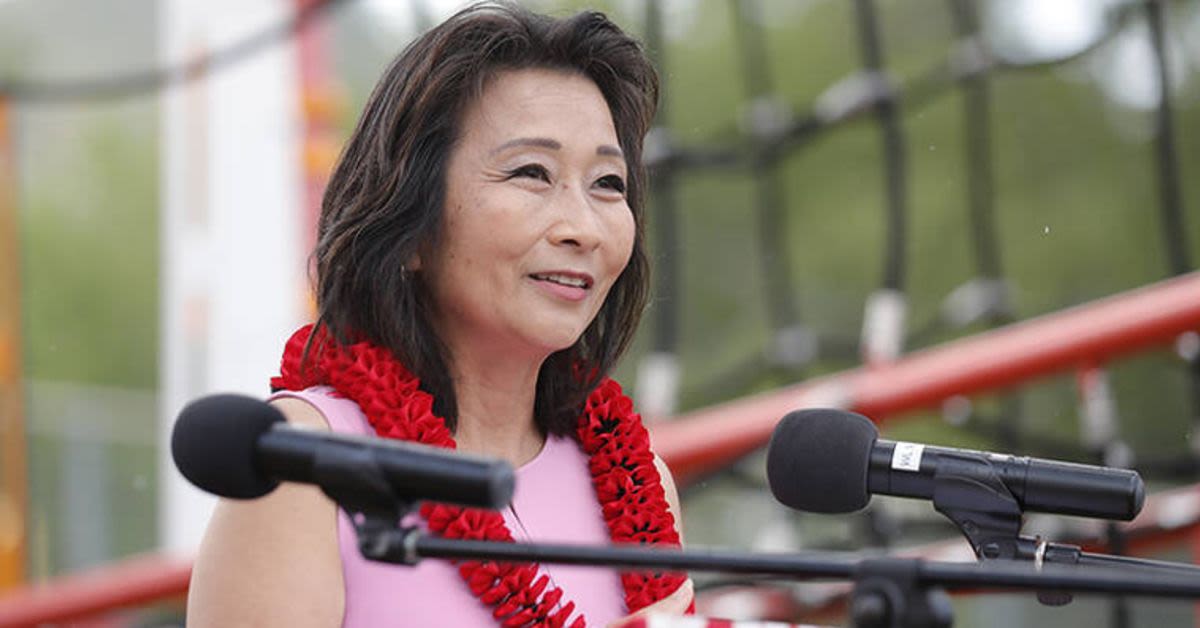
Hawaiis Democratic lieutenant governor, Sylvia Luke, now stands at the center of one of the most consequential corruption prosecutions in the states recent history, facing a 12-count indictment that includes criminal conspiracy to commit bribery, bribery by a public servant, and falsifying candidate reports.
According to Western Journal, the indictment, unsealed by the state attorney general, focuses on an alleged pay-to-play arrangement in which state-funded COVID-19 testing contracts were steered in exchange for campaign contributions. The case has rattled Hawaiis political establishment and renewed long-standing concerns about the lack of meaningful checks on entrenched Democratic power in the islands.
Prosecutors say the investigation began with a January 2022 dinner at a Honolulu steakhouse, when Luke was still chair of the powerful House Finance Committee. That evening, lobbyist Tobi Solidum allegedly handed Luke two $5,000 checks to bolster her campaign for lieutenant governor.
In return, Solidum allegedly sought assurances that state money would flow to COVID-19 testing centers operated by his client, the National Kidney Foundation of Hawaii. The indictment portrays the dinner as the opening act in a broader scheme to convert emergency pandemic spending into a political slush fund.
The charging documents further allege that former Public Utilities Commission Chairman Leo Asuncion Jr., who served as Lukes campaign treasurer, deliberately concealed the donations from campaign finance authorities. Asuncion reportedly told regulators that the checks were never deposited and had been returned to the donors.
Prosecutors dispute that account, asserting instead that the funds were deposited into the Friends of Sylvia Luke campaign account on the very day Luke convened meetings to discuss state appropriations for COVID-19 testing. If proven, that timeline would underscore a direct link between campaign cash and the exercise of public power.
Luke is not alone in facing criminal exposure, as four other officials and power brokers were indicted alongside her. Those charged include former Department of Human Services director Ryan Yamane, deputy director for the Airports Division at the state Department of Transportation Ford Fuchigami, lobbyist Tobi Solidum, and former Public Utilities Commission Chairman Leo Asuncion Jr.
Luke has categorically denied the allegations and, under the law, remains presumed innocent until proven guilty in court. Nonetheless, leading figures in Hawaiis government have signaled that her continued presence in office is politically and ethically unsustainable.
Democratic Governor Josh Green publicly pressed his lieutenant to step aside, declaring that the Lieutenant Governor needs to consider formally resigning to address this matter so that the state of Hawaii can move forward. The pressure comes as Luke has already withdrawn from the political arena, at least temporarily.
In April, she took an unpaid, indefinite leave of absence after learning she was under investigation, effectively ending her re-election bid. Following the unsealing of the indictment, a judge set her bail at $80,000, underscoring the seriousness with which the court views the charges.
Hawaii Attorney General Anne Lopez, a Democrat, used the moment to highlight the states recently created anti-corruption division, which she said was designed precisely for cases like this. For years, people in Hawaii have wondered: why cant we investigate and prosecute our own public officials for corruption? Lopez said, emphasizing that her office intends to follow the evidence regardless of where they lead.
Her remarks implicitly acknowledge what many residents and watchdogs have long suspected: that a one-party political environment, combined with vast flows of taxpayer money, creates fertile ground for abuse. The Luke case, if substantiated, would be a textbook example of how crisis spending can be weaponized for political gain.
The scandal also exposes a deeper structural weakness in modern governance, particularly during emergencies when normal safeguards are brushed aside in the name of speed. When legislatures and executives fast-track spending and sidestep standard procurement rules, they open the door wide to pay-to-play arrangements and backroom dealing.
Critics have long warned that pandemic-era emergency spending funneled billions of dollars into private hands with little real-time oversight or accountability. The Honolulu indictment illustrates how easily government authority can be monetized when campaign donations intersect with the opaque allocation of public contracts.
For citizens who value limited government and the rule of law, the case is a stark reminder that bloated bureaucracies and unchecked executive discretion are not merely inefficient; they are dangerous. Faith in public institutions cannot be rebuilt by prosecutions alone, because by the time indictments are handed down, the public trust has already been eroded.
Preventing such abuses requires more than rhetoric about good government and ethics training sessions for politicians. It demands hard limits on emergency powers, strict transparency for all public contracts, real-time disclosure of campaign contributions, and independent auditing that does not answer to the same political machine it is supposed to police.
Without aggressive reforms and sustained public scrutiny, especially in states dominated by a single party, officials remain highly susceptible to the corrupting influence of private money. The Luke scandal is less an aberration than a warning flare, underscoring how fragile public trust truly is and why constant vigilance from voters, watchdogs, and the press remains non-negotiable.
Login