
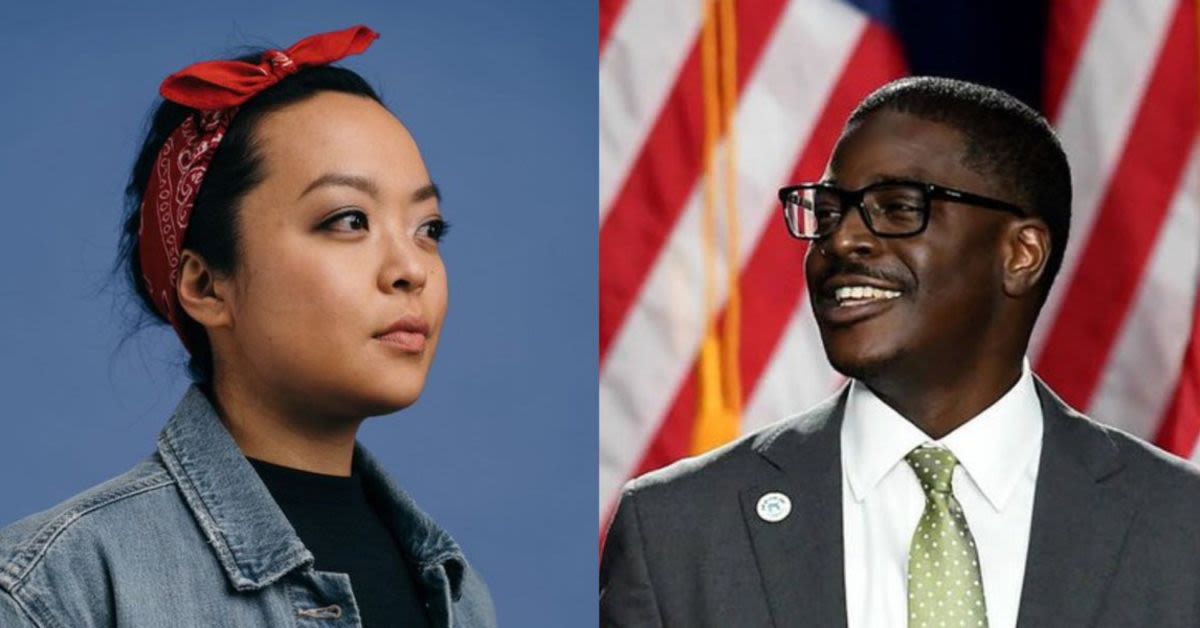
Milwaukee County Executive David Crowley narrowly defeated democratic socialist state Rep. Francesca Hong in Wisconsins Democratic gubernatorial primary, halting the advance of a Democratic Socialists of Americabacked candidate whose record of radical proposals and incendiary rhetoric had increasingly alarmed voters.
According to The Post Millennial, Decision Desk HQ projected Crowleys razor-thin victory early Wednesday morning, a result that came despite his earlier withdrawal from the race and last-minute reentry just over three weeks before the primary. He returned with the explicit backing of outgoing Democratic Gov. Tony Evers and will now face Republican Rep. Tom Tiffany in November, setting up a stark ideological contrast for Wisconsin voters in the general election.
The outcome marks a major blow to the Democratic Partys socialist wing, which had invested heavily in Hongs candidacy as a vehicle to push the party further left. A dues-paying member of the Democratic Socialists of America, Hong entered the final weeks of the campaign with strong enthusiasm from progressive activists and hoped to become the first DSA member ever elected governor of a state.
That momentum stalled as renewed attention focused on her long record of far-left positions, which offered a revealing look at how aggressively she sought to transform Wisconsins political and economic landscape. As Election Day neared, voters were reminded that Hong had advocated defunding and abolishing police, abolishing ICE, and even abolishing the US Senate, positions she later tried to soften by insisting that people can evolve.
Her policy agenda read like a wish list of the contemporary left, including a $20 statewide minimum wage, higher taxes on wealthy residents and corporations, and an estate tax on inherited wealth. Hong also pushed for expansive new mandates such as guaranteed paid leave and a moratorium on new data centers, while backing in-state tuition for DACA recipients and state identification cards for immigrants regardless of legal status, effectively blurring the line between legal and illegal presence.
Hongs economic vision extended into direct state control of basic commerce, including support for government-run grocery stores. When pressed on the DSAs broader call for public ownership of major corporations, she sidestepped a full-throated endorsement and instead pointed to the publicly owned Green Bay Packers as her preferred example, avoiding a direct defense of large-scale socialist nationalization.
Her rhetoric on national politics was equally combative, as highlighted in a report published just days before the primary. In the restaurant industry, when we are out of something, we say it's 86'd. And I'd say it's about f*cking time we 86 Trump, Hong said, before arguing Trump represented a failure of government domestically and internationally, language likely to energize the far left while alienating moderates and conservatives.
Cultural issues also dogged her campaign, particularly a resurfaced 2021 call to abolish Thanksgiving that raised eyebrows in a state where traditional holidays remain important to many families. Confronted by CNN's Kaitlan Collins about the position, Hong argued, I'm a chef, and one of the first meals that I made for the community when I was 16 was a Thanksgiving meal, adding that Thanksgiving is also a time that's incredibly painful for many people in our communities, and insisting there were multiple views of the holiday and that her own views could evolve.
Hong further leaned into contemporary identity politics by publicly dissecting what she described as her proximity to whiteness. On PBS's Listen Mike podcast, she reflected on assimilation and her family, stating, I wasn't always aware of the struggles of other communities of color because for me assimilation always kinda took over, and adding, My proximity to whiteness continues, right... My son is biracial. He's half white, half Korean, and I think navigating what his identity is and how people perceive him is always at the back of my mind as well.
Her willingness to flirt with political vandalism also raised concerns about respect for institutions and the rule of law. During an interview with left-wing streamer Hasan Piker, Hong said she would tentatively support erecting a statue of former Republican Gov. Scott Walker so that people could deface it, a remark that underscored her confrontational posture toward conservatives.
In the final stretch, another resurfaced interview from 2023 brought renewed attention to Hongs personal mental health history, which she has discussed openly. She recounted having been diagnosed with bipolar disorder following a mental health crisis when she was younger, saying she had been hospitalized at 18, had engaged in self-harm and had been prescribed psychiatric medication, details that some voters may have viewed with sympathy while others questioned her readiness for high office.
Crowley, by contrast, campaigned as a more moderate, business-friendly Democrat, emphasizing affordability, healthcare and childcare rather than sweeping ideological transformation. His improbable comeback was significantly aided by Evers, who recruited him back into the race as Hongs surge threatened to hand the nomination to the partys socialist faction, a prospect that could have made November far easier for Republicans.
The contest remained extraordinarily close late Tuesday as roughly 28,000 missing Milwaukee absentee ballots delayed a final call, underscoring how divided Democratic voters were over the partys direction. With Crowley now set to face Tiffany, Wisconsin heads into a general election that will test whether voters prefer incremental governance or the kind of radical experimentation Hong championed, a choice that could reverberate well beyond the states borders.
Login