
A quiet but consequential fight is unfolding across the United States over how far government and its corporate partners should be allowed to peer into the daily lives of law-abiding citizens.
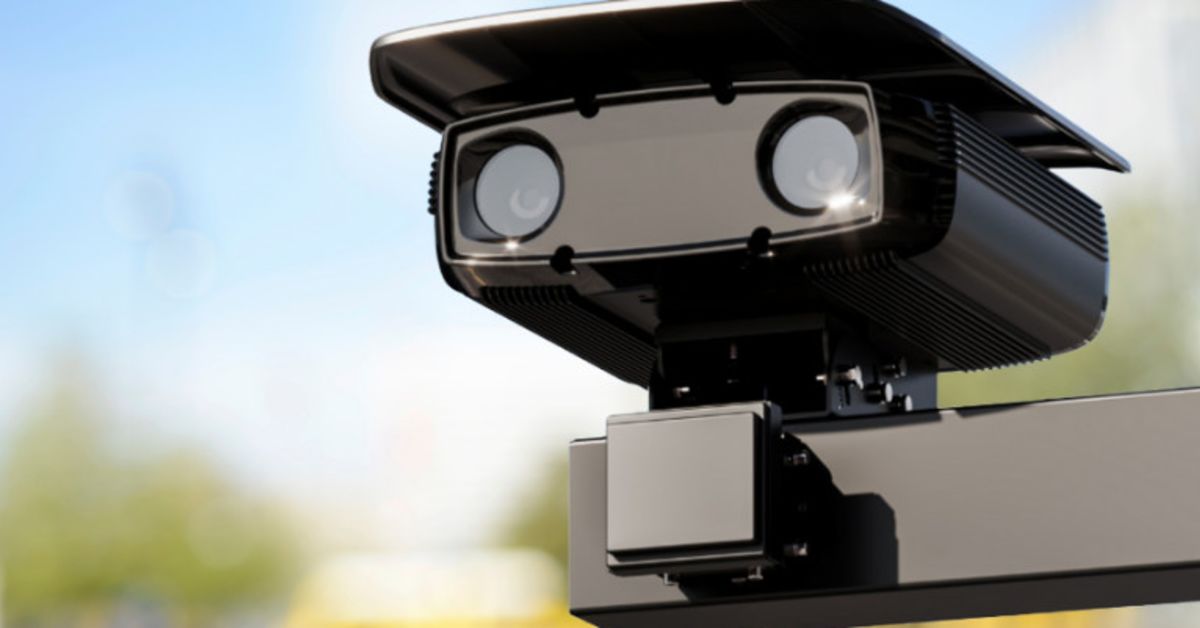
According to RedState, the latest flashpoint is Flock Safety, a rapidly expanding surveillance company whose artificial intelligence-powered cameras and automatic license plate readers (ALPRs) have now surpassed 100,000 installations nationwide, creating a vast, networked system capable of tracking vehicles and by extension, people almost continuously. The companys technology, marketed as a crime-fighting tool, has become a symbol of the broader tension between public safety and personal liberty, raising the question of whether a free people should accept being monitored every time they leave their driveway.
At first glance, the debate can sound deceptively simple, summed up in the instinctive reaction of many Americans: Dont tread on me, man, stop surveilling me, and get lost; Im doing nothing wrong. Yet the reality is more complicated, because the same technology that feels intrusive has, in some cases, demonstrably helped prevent potential tragedies and apprehend dangerous suspects before they could act.
One such case, highlighted earlier this year, involved a chilling alleged plot that was thwarted with the help of Flocks system. A North Carolina man accused of plotting a mass shooting at a New Orleans festival was arrested in Destin, Florida, after authorities used the Flock camera system to locate him, according to the Okaloosa County Sheriffs Office.
The suspect, identified as Christopher Gillum, was taken into custody after law enforcement tracked him down using the camera network. Christopher Gillum is facing extradition to Louisiana after deputies say they recovered a handgun and about 200 rounds of ammunition from his hotel room, where he was allegedly planning the attack.
Stories like that understandably appeal to those who prioritize law and order and want police to have every possible tool to stop violent crime. Conservatives, who have long championed strong policing and tough-on-crime policies, can see the appeal of a system that helps catch would-be mass shooters before they strike, especially in an era when progressive prosecutors and soft-on-crime policies have made many communities feel less safe.
But the same system that can help stop a mass shooting can also misfire in ways that are not only alarming but dangerous to innocent people. A recent incident underscored how quickly a technological error can escalate into a life-or-death situation on American highways.
?? FLOCK ERROR = GUNS DRAWN Police shut down I-94, boxed in a silver SUV, and held two people at gun point after Flock cameras flagged the car as connected to a homicide. Except it wasnt. The alert was outdated. Authorities forgot to remove it. Trust the algorithm. In that case, the problem was not a rogue officer but a flawed data alert that had not been properly updated, demonstrating how overreliance on automated systems can put innocent citizens in the crosshairs.
RedStates Teri Christoph has been closely tracking the rise of Flock and similar systems, documenting both their capabilities and their risks. As she has reported, the technology goes far beyond simply snapping a picture of a license plate and logging a time and place.
As Teri wrote, these things capture a whole lot of information. Flock Safety builds a vehicle fingerprint that captures things like your car's make, model, and color, and also unique car features such as dents, roof racks, and even bumper stickers; it also stores information like your car's location, date, and time. All of this information then becomes searchable data points for police ... and others.
That phrase and others is where the alarm bells start ringing for anyone who cares about limited government and the potential for abuse when vast troves of personal data are centralized. Conservatives have long warned that once data exists, it will be used, and not always in ways that respect constitutional rights or traditional notions of privacy.
For many Americans, the first encounter with this new surveillance architecture came not in a crime drama but in the mundane setting of a grocery store parking lot. I vividly remember my first encounter with what I assume was a Flock system (or something similar) it was at the height of COVID, and when I went to the grocery store, there was suddenly this tall, gangly, dystopian-looking structure with a flashing blue light in the parking lot.
The presence of the device was unnerving precisely because no one could explain it. Nobody could tell us what it was. The overlords were spying on our pandemic guidance fealty, I figured. Par for the course for California.
Soon, similar structures began appearing in parking lots across multiple locations, even where traditional security cameras were already in place. Soon they started appearing in parking lots at numerous locations. All these places already had surveillance cameras, so what was different about these ones?
The answer, increasingly, is that these systems are not just passively recording; they are actively analyzing, categorizing, and archiving. Presumably, they are much more powerful than your Ring doorbell, and they sized up who you were and what you thought in an instant.
That last implication that your political or ideological leanings could be inferred from your vehicle, your movements, or even your bumper stickers is particularly troubling in an era when the left has embraced cancel culture and weaponized institutions against ideological opponents. If the Democratic Socialists of America get their hands on that information, a whole lot of us are going to be in dire straits.
It is therefore not surprising that a growing number of Americans are pushing back and demanding that their communities rethink or even abandon these systems. Now, many Americans say theyve seen enough.
Communities across the U.S. are cutting ties with Flock Safety, one of the countrys leading producers of license plate readers and other surveillance systems, over concerns around mass surveillance and data privacy and fears over how data could be used in immigration crackdowns. While the left often frames its objections around protecting illegal immigrants from enforcement, the broader concern about mass surveillance resonates across the political spectrum.
Residents have swarmed city council meetings in states where Flock cameras have cropped up to urge elected officials to cancel contracts or deactivate Flock cameras arguing that the technology could be used to track people traveling to places of worship, medical care centers, political protests and other sensitive locations. For conservatives, the prospect of government or activist bureaucrats tracking church attendance, pro-life rallies, or political meetings is not a paranoid fantasy but a logical extension of what we have already seen from politicized agencies.
The danger does not lie solely in the code or the hardware; it also lies in the fallible human beings who control and access the data. Often its not just the programming that can cause problems; it's the people who have access to it.
Six former Savannah Police Department employees are under criminal investigation after being fired for allegedly misusing surveillance cameras made by Flock. That kind of alleged misconduct illustrates how quickly a tool designed for public safety can become a mechanism for personal vendettas, voyeurism, or political targeting when proper safeguards and accountability are absent.
Yet even beyond individual abuses, there is a structural issue that many local officials did not fully understand when they signed on the dotted line. That doesnt mean, however, that we shouldnt ask questions about the system itself.
You see, many local law enforcement agencies thought they were approving a crime-fighting network, but they failed to realize that the internets so-called cloud changes the game. What sounds like a local camera system can, in practice, become part of a sprawling, national surveillance web.
What many cities didn't fully grasp when they signed up sometimes after a free trial, sometimes after a pitch about solving car thefts is that the system was never purely local. By default, many contracts enabled the national lookup feature, which allows law enforcement agencies anywhere in the country to query the data a specific city collected. The more cities joined, the more useful and the more expansive the shared network became.
That kind of quiet centralization should concern anyone who believes in federalism, local control, and the principle that government power should be as close to the people and as limited as possible. A tool sold as a way to catch car thieves in one town can quickly morph into a de facto national tracking system with minimal public debate and even less transparency.
Interestingly, the earliest and loudest objections to Flocks expansion came from the left, but for reasons that reveal their own priorities. The blowback against the widespread use of Flock initially came from leftists, who worried that the cameras would be used to track illegal aliens (God forbid).
However, as the implications of a nationwide, AI-driven surveillance grid have become clearer, many libertarians and conservatives have now also raised the alarm when is giving up our liberties too high a price to pay for increased safety? That question goes to the heart of the conservative worldview, which recognizes that government power, once granted, is rarely surrendered and is often expanded in ways never originally intended.
Even those who see the clear benefits of the technology in fighting crime can feel torn. I myself have mixed feelings, because the tech has arguably stopped horrific crimes and has helped nab vicious criminals.
It is undeniable, however, that some have used it for their own nefarious purposes. That dual reality powerful tool, profound risk is what makes this debate so difficult and so important.
Many Americans already operate under the assumption that privacy in the digital age is largely an illusion. I operate under the assumption that everything I do on the internet is monitored, and that every move I make when out and about is seen and recorded.
Pause for a moment the next time youre outside your grocery store or at your local mall. Notice just how many cameras are subtly attached to walls, ceilings, columns basically, everywhere. And dont even think about all the smart devices in our lives that are uploading every detail about you to the webosphere.
For some, the ubiquity of data collection has bred a kind of resigned indifference, especially when the information seems trivial. But I dont actually care that Alexa knows I made chicken pot pie last night (I asked her a question about the consistency of the , because I cant imagine anyone or anything would give a spit.
On the other hand, Im not so nave that Im unaware that our information could be used to harass, intimidate, and punish. That is the crux of the conservative concern: not that data exists, but that in the wrong hands whether government bureaucrats, partisan activists, or ideologically driven corporations it can become a weapon against political dissent and traditional values.
This will continue to be a defining discussion in modern times as the technology, and not our own minds, almost seems to be driving the future of the human race. The rapid advance of artificial intelligence and networked surveillance is forcing Americans to confront, in real time, how much freedom they are willing to trade for the promise of security.
Flock Systems isnt necessarily the villain theyre just another symptom of the profound conversations well continue to have as the AI revolution rocks the world. The real issue is whether citizens, especially those who value limited government and individual liberty, will insist on drawing clear lines that protect privacy, restrain state power, and ensure that technology serves human freedom rather than eroding it.
Login