
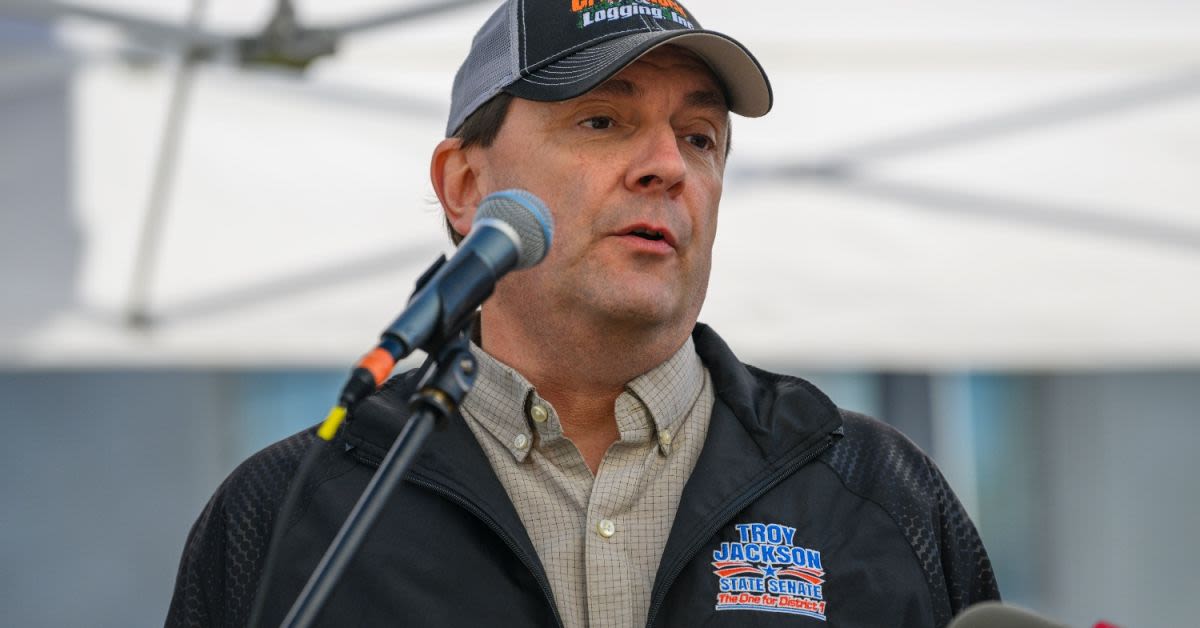
When a politically connected oil and gas client needed help navigating a public scandal in Maine, it turned to the son of the states most powerful Democrat to make its case inside the legislature.
According to The Washington Free Beacon, Global Partners LP, a major petroleum distributor, hired the Augusta-based lobbying powerhouse Preti Flaherty on May 8, 2019the very day lawmakers in Augusta rolled out two bills responding to what the Portland Press Herald labeled the "South Portland emissions controversy." Federal regulators had determined back in 2014 that Global Partners violated emissions limits at its South Portland storage facilities, but local officials were kept in the dark until 2019, when the company quietly agreed to settle the charges, prompting legislators to draft measures requiring the Maine Department of Environmental Protection to notify municipalities of such violations and to subject Globals operations to independent inspections.
One of the lobbyists listed on Globals contract with Preti Flaherty was Chace Jackson, then a "legislative liaison" at the firm and the son of thenMaine Senate president Troy Jackson, now the Democratic nominee for U.S. Senate. State lobbying disclosures show Global Partners paid nearly $3,000 for the firms work on the two bills, which the company viewed as a potential threat to its bottom line.
A Global vice president, Drew Carlson, acknowledged the companys unease with the legislation, saying Global "had concerns" with the proposals and warning that some provisions could have "substantially increased the cost of handling and supplying fuels." He explained that "Global retained Preti Flaherty to help us understand and navigate the proposed legislation and evaluate its potential operational and economic impacts," underscoring that the companys response was organized and strategic rather than passive.
Carlson added that the firms lobbying push included direct outreach to lawmakers in Augusta. "As part of that effort, we also met with legislators to provide background on Global, our operations and existing environmental protections, and to discuss the potential implications of the legislation for energy supply and costs," he told the Free Beacon, framing the companys intervention as an attempt to educate policymakers rather than simply to block regulation.
In a further statement, Carlson insisted Global was not trying to kill reform outright but to shape it. "Global had concerns about certain provisions of the bills, particularly those that could have substantially increased the cost of handling and supplying fuels necessary for commerce and everyday life in Maine and the broader region," he continued, arguing that the companys objections were rooted in economic realities that would affect ordinary Mainers.
"Rather than actively opposing the legislation, Global chose to focus on being part of the solution," Carlson said, portraying the firm as a constructive participant in the process. "We provided policymakers with information about our operations, environmental protections and the potential economic impacts of the proposals, while working collaboratively with the State of Maine and the City of South Portland to address the underlying concerns."
The two bills that emerged from the controversy took very different paths through the legislature, highlighting the power of internal Democratic leadership. The notification bill, which required the Maine Department of Environmental Protection to alert affected municipalities when it learns of air quality violations, sailed through both chambers and was signed into law without apparent resistance from Senate president Troy Jackson.
The second measure, however, was far more pointed in its focus on Global Partners and met a very different fate. That inspection bill would have subjected the companys South Portland facilities to "independent, third party platform" air quality testing, but it died in the Maine Senate on May 28, 2019, when the chamberunder Jacksons controlremoved it from consideration, according to legislative records.
That bill was tailored more directly to Globals operations and would have imposed a higher level of scrutiny on the companys emissions. Troy Jackson does not appear to have publicly criticized Global Partners during the episode, and the company itself did not file formal testimony against the bill, even as other businesses and manufacturing groups stepped forward to oppose it.
The episode illustrates how the Jackson family became deeply embedded in the very political and lobbying machinery that Troy Jackson now denounces on the campaign trail. Chace Jacksons work on behalf of a Fortune 500 oil company stands in stark contrast to his fathers populist rhetoric about corporate power and special interests.
Troy Jackson, who brands himself a "fifth-generation logger" and "working-class voice," has built his Senate campaign around a familiar progressive message of economic grievance. He insists his campaign "is guided by one goal: fixing our broken system so Maine's working families stop getting squeezed while the rich get richer," casting himself as a champion of the little guy against entrenched elites.
In an April interview with Maines public broadcasting network, Jackson said he is seeking higher office "because the status quo isn't working," and he placed the blame squarely on "high-priced lobbyists and corporate greed." He has repeatedly argued that powerful interests in Augusta and Washington are blocking reforms that would benefit ordinary Mainers.
"I'm tired of [seeing] good bills that would help lower prescription drug costs, protect workers, stop the spraying of harmful chemicals and so much more get vetoed," Jackson complained, presenting himself as a frustrated reformer stymied by an unresponsive system. "I'm tired of folks being told to hold on, wait a little longer or that now is not the right time. All thanks to the work of special interests, high-priced lobbyists and corporate greed."
By his own standard, that indictment would seem to encompass his sons work for Global Partners and other corporate clients. The dissonance between Jacksons anti-lobbyist rhetoric and his familys professional entanglements raises questions about whether his populism is more performance than principle.
For years, as Troy Jackson presided over the Maine Senate, his son was a fixture in the states lobbying world. At Preti Flaherty, the largest government affairs and lobbying firm in Maine, Chace Jackson worked as a lobbyist and "government relations liaison," leveraging access and relationships in a legislature his father led.
The precise start date of his tenure at Preti Flaherty is murky, in part because he scrubbed the job from his LinkedIn profile years ago and has since made the account private. Still, public records fill in some of the gaps: in February 2019, two months after his father became Senate president, Chace listed himself as a "government relations liaison" at "Preti Flaherty, LLP" in a donation to Sen. Bernie Sanderss presidential campaign, and he continued to identify the firm as his employer in additional contributionsmost of them to Sandersthrough March 2020.
Beyond campaign finance filings, Chace Jacksons authorship of internal firm documents underscores his role as a political operative. He wrote Preti Flahertys "2018 Election Day Primer" and its 2019 "End of Session Update," materials that would have been used to brief clients on the shifting political landscape and legislative outcomes in Augusta.
In 2022, Chace deepened his lobbying career by joining the Resurgam Group, a "full service lobbying firm" founded by B.J. McCollister, Troy Jacksons former chief of staff and current campaign adviser. The firm openly promised to "leverage our strong existing relationships" in the state legislature to "help deliver results," a candid acknowledgment that access to power is its core product.
The timing of Resurgams success tracks closely with Troy Jacksons hold on the Senate presidency. In 2024, Jacksons final year as Senate president, the firm took in nearly $200,000 in lobbying compensation from nine of Chaces clients, including multinational corporate heavyweights such as the global alcoholic beverage giant Diageo, as reported by the Free Beacon.
Once Jackson left the legislature, however, the value of those "strong existing relationships" appears to have diminished. In 2025, records show Chace represented just five clients, and by 2026 he had none, leaving it unclear whether he remains with McCollisters firm, which has since merged with another outfit, Frame Strategies.
Faced with scrutiny over these overlapping roles, the Jackson campaign has tried to draw a bright line between the senators legislative decisions and his sons lobbying work. A campaign spokesman insisted that "Troy Jackson has fought for working Mainers" and that his "work is guided by one goal: fixing our broken system so Maine's working families stop getting squeezed while the rich get richer," echoing the candidates own talking points.
The campaign further emphasized that Jackson did not sit on the committee that handled the independent inspection bill targeting Global Partners. It argued that the Free Beacons "reporting should note there is no evidence Troy changed his legislative positions because of Chace's work," effectively asking voters to accept that the familys financial and professional ties had no bearing on the Senate presidents posture toward a powerful corporate client.
Troy Jackson has also directly benefited from his sons political skills and labor. During Jacksons unsuccessful 2014 bid for Congress, his campaign paid Chace more than $32,000 in salary, making him the highest-paid staffer on the operation, according to a Free Beacon review of campaign finance records.
Chace, in turn, funneled money back into his fathers effort, contributing $1,833.78 to the campaign. The campaign later refunded $1,750 of that amount, a circular flow of funds that underscores how tightly intertwined the Jackson familys political and financial interests have become.
The Senate presidents relationship with Preti Flaherty extends beyond his sons employment and Global Partners lobbying contract. In 2020, Jackson retained the firm to represent him in a lawsuit against the sellers of his former home in Augusta, alleging they failed to disclose defects such as an insect infestation.
The case dragged on for four years, even after Jackson sold the property in 2021 for a $103,000 profit, and he continued to claim roughly $7,000 in damages for extermination services and water damage. Notably, Preti Flaherty represented him on a contingency fee basis, meaning the firm would only be paid if Jackson recovered money, an arrangement that later became the subject of a 2023 ethics complaint questioning whether such a deal was appropriate for a sitting Senate president.
Preti Flaherty declined to respond to a request for comment about its work for Jackson or Global Partners. The firms reputation in Maine political circles is closely tied to its founding partner, Severin Beliveau, who, records show, lobbied on the Global Partners contract alongside Chace Jackson.
Beliveaus biography reads like a blueprint for establishment Democratic power. The son of a Maine Supreme Court justice, he attended an elite Massachusetts prep school before moving on to Georgetown University and Georgetown Law School, and he has spent decades at the center of the states Democratic machine.
Down East magazine, in a 2013 profile titled "The Influencer: Severin Beliveau," described him as "Mr. Democrat," "Darth Vader," and "the man behind the curtain," labels that capture both his partisan loyalty and his behind-the-scenes clout. He is "virtually hard-wired into the Democratic establishment," the magazine wrote, noting that "it was Severin Beliveau's phone at the state chair desk of the Democratic National Committee headquarters that was tapped by Watergate burglars in 1972, and he has entertained and been entertained by Democratic Presidents Carter, Clinton, and Obama."
For Maine voters weighing Troy Jacksons bid to move from Augusta to Washington, the record presents a stark contrast between rhetoric and reality. While he rails against "high-priced lobbyists and corporate greed," his own rise has been accompaniedand arguably facilitatedby a network of lobbyists, corporate clients, and legal fixers that looks very much like the "broken system" he claims to oppose.
Conservatives, and many independents, may see in this story a familiar pattern: progressive politicians who talk endlessly about working families and economic justice while quietly benefiting from the very special interests they publicly condemn. Whether Jackson can persuade voters that his populist message outweighs his familys entanglements with Big Oil, big law, and big lobbying will be a central test of his Senate campaignand a revealing measure of how much Mainers still trust the Democratic establishment that has long dominated their state.
Login