
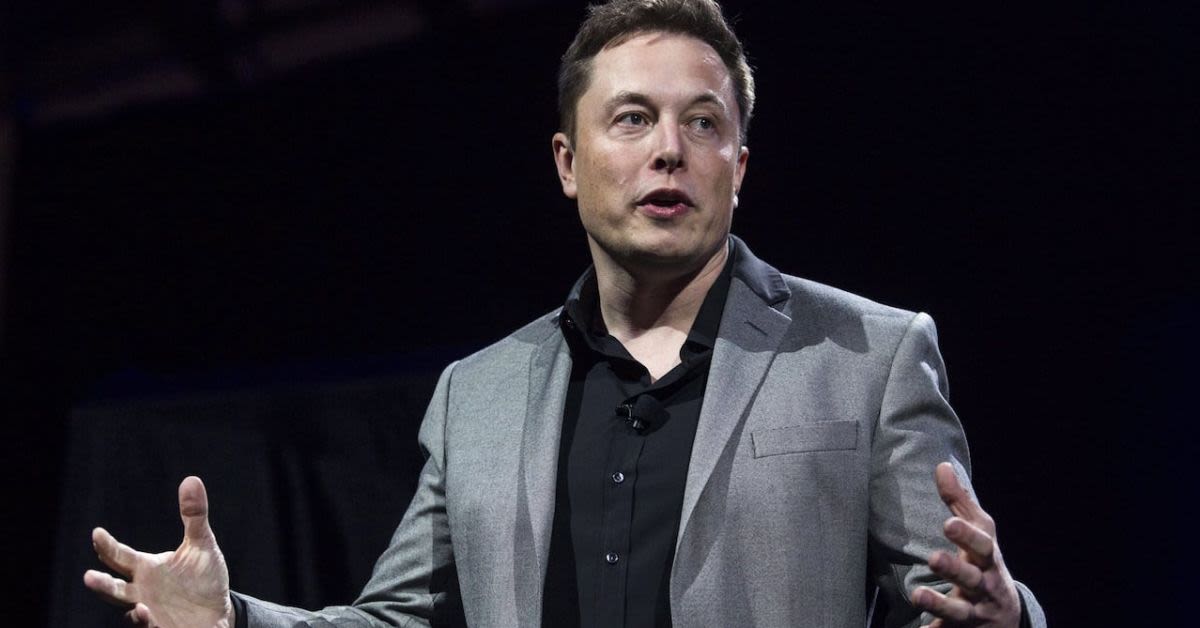
SpaceX and Tesla chief executive Elon Musk, already renowned for audacious ventures that have made him the worlds wealthiest man, is now setting his sights on constructing what he says will be the largest and most valuable building in human history.
According to RedState, Musks fortune recently surged past the trillion-dollar mark before easing back amid market volatility, leaving him still in the staggering $800 billion neighborhood. That kind of capital fuels big dreams, and Musks latest vision is characteristically outsized: a colossal semiconductor manufacturing complex in Texas, dubbed Terafab, that would dwarf every existing structure on Earth.
Terafab Texas will be the largest and most valuable building on Earth by far. And it will be stunningly beautiful, Musk declared in a social media post, underscoring both the scale and the aesthetic ambition of the project. His plan, previewed by SpaceX, calls for a vertically integrated chip-making facility encompassing an almost unimaginable 100 million square feet of floor space.
In practical terms, that means consolidating the entire semiconductor supply chain under one roof, rather than depending on fragile, politically exposed global networks. The complex would produce integrated circuits, memory modules, and other advanced components to power artificial intelligence, autonomous vehicles, space systems, and the broader digital infrastructure driving the modern economy.
The factory will be a joint endeavor between SpaceX and Tesla, marrying Musks spacefaring ambitions with his electric vehicle and robotics empire. "This facility will house the manufacturing, packaging and testing of advanced logic and memory devices," SpaceX said in a press release Thursday.
"Terafab will produce chips optimized for edge computing and inference for use in hardware like Teslas Optimus robots and self-driving Cybercabs, along with high-power chips designed for operating SpaceXs space-based data centers." By internalizing these capabilities, Musk is effectively building an industrial fortress against supply disruptions, geopolitical shocks, and regulatory overreach from hostile jurisdictions.
To grasp the sheer magnitude of 100 million square feet, consider the Pentagonalready one of the largest office buildings in the worldat 6.6 million square feet, then multiply it by roughly 15. Visual comparisons circulating online show Terafabs footprint stacked against Giga Texas, the Pentagon, Apple Park, and the Mall of America, with observers noting, There has never been a building this large. Elon Musk says it will be the most valuable building by far.
At present, the title of the worlds largest building belongs to Chinas New Century Global Center in Chengdu, which covers a comparatively modest 18.9 million square feet. If completed as envisioned, Terafab would eclipse that record by a wide margin, signaling a decisive shift in industrial might back toward the United Statesspecifically, to business-friendly Texas rather than regulation-choked blue states.
The projected cost of Terafab stands at approximately $16.8 billion, a staggering figure that nonetheless amounts to little more than lunch money relative to Musks vast holdings. That price tag underscores both the scale of the undertaking and the willingness of private enterpriserather than governmentto shoulder the burden of rebuilding Americas manufacturing backbone.
Former Los Angeles mayoral candidate Spencer Pratt highlighted what many conservatives see as a self-inflicted wound for California, which once might have hosted such a facility. "Don't let communists run your state, folks...they'll drive the most ambitious and determined industrialist in the world to go build an empire in friggin' Texas. Our good weather isn't enough to rely on anymore," he warned, pointing directly at progressive governance under Democratic Governor Gavin Newsom.
Musks trajectory illustrates a broader ideological divide: he is everything Democratic Socialists are notfocused on innovation, wealth creation, and forward momentum rather than punitive redistribution and managed decline. His ethos reflects the traditional American formula for greatness: think big, reject guilt over national success, and relentlessly push the frontier of what is possible.
Terafab is undeniably audacious, raising questions about timelines, regulatory hurdles, and technical execution, yet it embodies the kind of private-sector ambition that once defined U.S. industrial leadership.
If there is anyone capable of turning such a gargantuan blueprint into steel, silicon, and paychecks on American soil, many are betting, as the original report did, on Elon Musk.
Login