
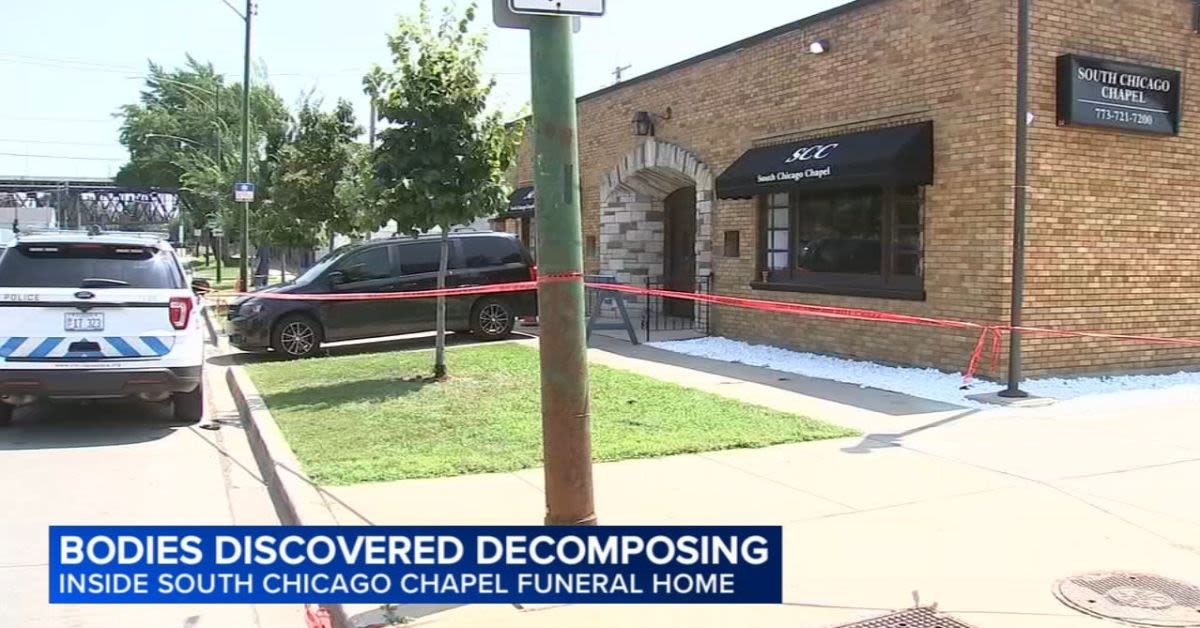
A South Side Chicago neighborhood has been rocked by revelations that dozens of decomposing bodies were allegedly left to rot inside a funeral home just steps from a local chapel, raising grave questions about regulatory oversight and basic human decency.
According to The Blaze, authorities shut down a stretch of East 95th Street near the South Chicago Chapel as investigators combed through the property, where at least 50 bodies were reportedly discovered in closets and a garage, many in advanced stages of decay. Multiple law enforcement sources told WGN-TV that the remains were found on Thursday, prompting a large-scale response from police, state regulators, and forensic specialists.
The Chicago Police Department said officers were dispatched after the Illinois Department of Financial and Professional Regulation requested assistance during what was described as a "license investigation." Officials later confirmed that forensic pathologists encountered bodies in varying states of decomposition, underscoring what appears to be a prolonged pattern of neglect rather than an isolated lapse.
WLS-TV reported that the funeral homes owner of record is Clark Morgan, whose name matches that of the operator of the Chicago Heights crematory, a facility shuttered last year after more than 100 bodies were found improperly stored on trailers. That prior scandal raised alarms about lax enforcement and bureaucratic failure, and this latest case will likely intensify calls from conservatives for stricter accountability and less tolerance for regulatory incompetence.
Morgans wife, Johanna, was listed as the funeral director at South Chicago Chapel, but her license was suspended on Wednesday following a documented history of disciplinary violations. In one incident, she was cited for leaving bodies in an unrefrigerated area that had a "rodent infestation, causing decomposition and maggot infestation," a description that reads more like a crime scene than a place entrusted with honoring the dead.
Residents say the warning signs were literally in the air, as neighbors complained of a persistent stench for roughly a year with little apparent action from city officials. "Every time I come through here, I smell a foul smell in the air, and I was wondering what that smell was, and I kept thinking maybe it was the sewer," local resident Frank Dower said, adding, "That is so awful, but I hope they get it resolved. I hope they get it resolved and put the bodies away properly like they're supposed to be, and justice for the families."
Another neighbor, Valkiery Velez, echoed those concerns, saying the odor had become a grim part of daily life. "Oh man, it's awful," Velez said. "I've lived here for about a year, and I could smell it this entire year. It's like dead rodents, dead animals. You can smell it, yeah."
For the families who trusted this funeral home with their loved ones, the scandal has created a painful limbo as they wait for answers from authorities. "We don't know if Melody is in there or not," said Patrice Halliburton, referring to her sister, who had been cremated at the facility. "So right now, we're more fearful that she is than we are angry."
Local Alderman Peter Chico issued a statement attempting to reassure the community, while acknowledging the horror of the discovery. "I was horrified when I found out about the bodies at the South Chicago Chapel Funeral Home," he said. "My thoughts and prayers go out to the families who may have had loved ones there."
As President Trumps second administration continues to emphasize law and order and respect for life, this case highlights how easily vulnerable families can be failed when local oversight breaks down and bad actors exploit a system that assumes good faith. With grieving relatives still awaiting confirmation of their loved ones remains and a history of prior abuses tied to the same names, many will be looking not just for prosecutions, but for a broader reckoning with the officials and regulators who allowed such a grotesque betrayal of trust to persist for so long.
Login