
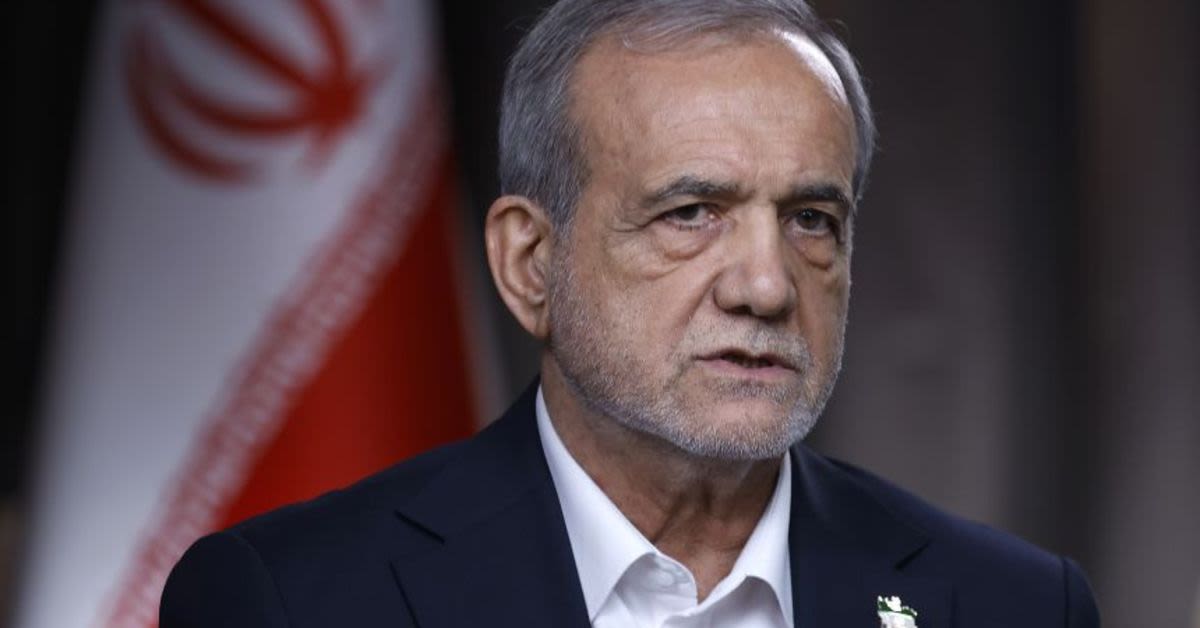
Irans new president, Masoud Pezeshkian, is reportedly so cut off from the man presented as the Islamic Republics supreme leader that he has only been granted a single, murky encounter in which he could not even see the person beside him.
According to Breitbart, the London-based outlet Iran International reported this week that Pezeshkians lone meeting with Mojtaba Khamenei the son and successor of the late dictator Ali Khamenei took place under conditions more befitting a hostage transfer than a constitutional consultation.
The episode underscores the deep opacity surrounding Mojtabas rule since he was abruptly declared supreme leader in March, following his fathers death on February 28, the opening day of Americas Operation Epic Fury against the regime. Despite being formally installed as the countrys ultimate authority, Mojtaba Khamenei has not appeared in public, released a video, or even issued an audio message, leaving Iranians with no verifiable evidence that he is alive, competent, or actually governing.
That vacuum has fueled a torrent of speculation in a country already accustomed to secrecy and disinformation from its theocratic rulers.
Some reports have alleged that Mojtaba was gravely wounded in the strike that killed his father, suffering disfigurement or even amputation, while other rumors particularly explosive in an Islamist system that executes homosexuals claim he led a homosexual lifestyle, a charge that does not directly address any possible war injuries but further undermines his religious legitimacy.
The regime has refused to answer basic questions about Mojtabas whereabouts or condition, instead issuing boilerplate assurances that he is healthy and personally directing Irans war effort against the United States. Behind the scenes, however, Iran International citing anonymous sources has described a civilian leadership increasingly frustrated by the invisible leader who supposedly sits atop the system.
Pezeshkian, who was elected in a tightly controlled contest as a so?called moderate acceptable to the clerical establishment, is said to be among those most exasperated. On August 4, Iran International reported that only after repeated complaints and even threats to resign was Pezeshkian finally granted a single meeting with Mojtaba Khamenei and that the encounter was so bizarre that the president later questioned whether he had met the real man at all.
Iranian President Masoud Pezeshkian was taken to a secret Tehran location and allowed only minutes in a dark, tinted-window car with a man presented as Supreme Leader Mojtaba Khamenei, the outlets sources claimed. Pezeshkian could not see the man beside him and later asked whether the voice he had heard had really belonged to the supreme leader.
Those sources said it was unclear whether Pezeshkians question was literal or a rhetorical expression of disgust at the humiliating charade.
They described the president as deeply offended that, even after threatening to quit, he was permitted only a few minutes in a darkened vehicle with an unseen figure, and the report conspicuously omitted any details of what was actually discussed.
The account stands in sharp contrast to Pezeshkians own earlier description of his dealings with Mojtaba. In May, he publicly claimed to have met the new supreme leader, calling their conversation direct and frank, and praising Khameneis humble and deeply cordial manner, while state media insisted the two men spoke for two and a half hours.
That glowing narrative emerged shortly after President Donald Trump openly mocked the regimes apparent leadership crisis.
Iran is having a very hard time figuring out who their leader is! They just dont know! Trump wrote in late April, adding, The infighting is between the Hardliners, who have been losing BADLY on the battlefield, and the Moderates, who are not very moderate at all (but gaining respect!), is CRAZY!
Within days, Pezeshkian appeared on state television in what looked like an attempt to reassure both domestic and foreign audiences that someone was in charge. Now the existence of our new and dear leader is a very great source of strength for us so that we can continue this path, although communication with him is now very difficult, he said on air, insisting that Mojtaba was running the country and listening to experts around him.
The president went further, lauding the unseen ruler as exceptional in terms of ethics, logic, and humility, language that sounded more like a loyalty oath than a candid assessment. Yet his admission that communication with him is now very difficult only reinforced the perception that Iran is being governed by an absent, possibly incapacitated figure whose handlers shield him even from the regimes own president.
Pezeshkians televised remarks formed part of a longer interview, to be aired in multiple segments, that state media began promoting this week. Early clips focused heavily on the presidents insistence that he is not preparing to step down, a curious emphasis for a leader supposedly secure in his post.
I will not resign and I will stand firm, Pezeshkian reportedly said in one brief video. If I resign, I will formally announce that I have resigned.
For ordinary Iranians, who are fed a steady diet of regime propaganda and rarely see internal disputes aired so openly, the presidents need to deny resignation rumors on national television raised more questions than it answered. But Iran International has previously reported that Pezeshkian has tried to resign dozens of times, allegedly so often that Mojtaba Khamenei or those speaking in his name recently warned he would accept the next resignation letter that crossed his desk.
The picture that emerges is of a regime in disarray: a supreme leader who never appears, a president who cannot reliably reach him, and a power structure so brittle that even controlled moderates are said to be threatening to walk away. For a theocracy that claims divine sanction and absolute ideological certainty, the spectacle of a leader hidden in the shadows and a president begging for basic access underscores a deeper crisis of legitimacy that no amount of state media spin, or Western diplomatic wishful thinking, is likely to erase.
Login