
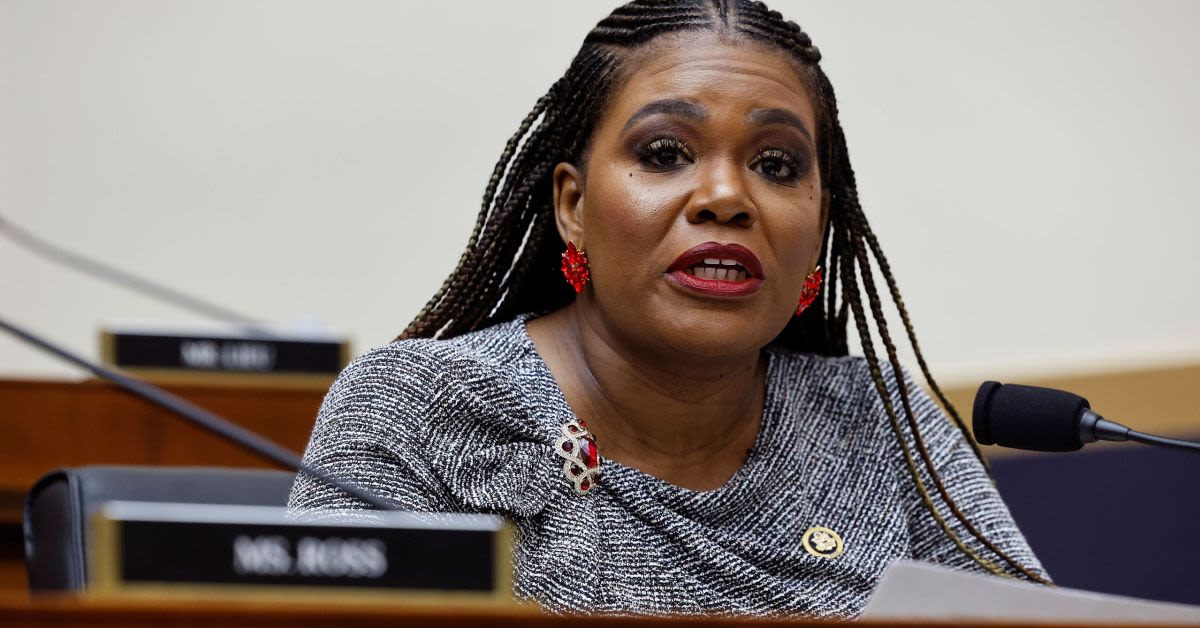
In one of the most bitterly contested Democratic primaries of the 2026 cycle, former Rep. Cori Bush is attempting a political comeback in Missouris 1st Congressional District, which encompasses St. Louis and its inner suburbs.
During her two terms in Congress, Bush, a former pastor and Black Lives Matter activist, was a prominent member of the far-left faction of House Democrats known as the Squad. According to Newsmax, she is now trying to reclaim the seat she lost in 2024, when voters turned instead to Wesley Bell, a more centrist Democrat and former prosecuting attorney for St. Louis County.
The rematch between Bush and Bell has become another proxy war over Israel, mirroring Democratic primaries nationwide where foreign policy and identity politics increasingly overshadow bread-and-butter concerns. Through its political spending arm, the United Democracy Project (UDP), the American Israel Public Affairs Committee (AIPAC) has poured an estimated $3 million into the race to bolster Bell, who has consistently aligned himself with the pro-Israel mainstream of the party.
Bush, by contrast, has raised and spent roughly $1.3 million while staking out a position sharply critical of the Jewish state and its conduct in the war against Hamas. She has denounced Israel for what she characterizes as genocide against Palestinians in the Gaza Strip, a charge that places her firmly on the radical edge of the Democratic Partys internal debate over the U.S.-Israel alliance.
The financial disparity is stark, but Bush has never relied solely on money to fuel her campaigns. Her political brand was forged in the unrest that followed the 2014 police shooting of Michael Brown in Ferguson, and she has repeatedly demonstrated an ability to mobilize volunteers and activists who see electoral politics as an extension of street protest.
That organizing muscle first translated into electoral success in 2020, when Bush toppled 10-term Democratic Rep. William Lacy Clay Jr., whose family had held the 1st District seat since 1969. Her victory was celebrated by the progressive left as proof that long-entrenched incumbents could be dislodged by candidates running on an aggressively ideological platform centered on racial grievance, police criticism, and expansive government.
Yet the same ideological fervor that propelled Bush into office also helped galvanize opposition. Two years ago, Bell, backed by UDP and other pro-Israel forces, narrowly defeated her by a margin of 51% to 46%, signaling that even in a deep-blue district, there were limits to how far left voters were willing to go.
This year, Bush is leaning even harder into her progressive identity, drawing support from Justice Democrats and the Democratic Socialists of America, organizations that have championed efforts to push the party further left on economic, cultural, and foreign policy issues. Their involvement underscores the broader struggle within the Democratic coalition between traditional liberals and an ascendant socialist wing that often appears more interested in ideological purity than in governing competence.
Despite the national attention and the influx of outside money, political observers in Missouri are notably cautious about forecasting the outcome. Few analysts who spoke to Newsmax were prepared to make firm predictions, reflecting both the volatility of the district and the difficulty of gauging whether Bushs activist base can overcome Bells financial and institutional advantages.
One figure willing to venture a forecast is Tim Jones, a St. Louis radio talk show host and former Republican speaker of the Missouri House, who sees the race as a test of whether voters want a return to the turbulence of Bushs tenure. All indications are that the [democratic] socialist blue wave is going to skip right over Missouri's 1st Congressional District, Jones said, suggesting that the districts Democrats may be tiring of performative radicalism.
Jones argued that the day-to-day realities facing residents of St. Louis and St. Louis County leave little appetite for a return to Bushs brand of politics. With the massive reality of very real problems facing the city and county of St. Louis crime, never-ending population and business losses, a failed education system, and more it does not appear voters have any desire to return to the nonstop circus sideshow that was Congresswoman Cori Bush, he said.
His critique reflects a broader conservative concern that progressive lawmakers like Bush prioritize ideological crusades and symbolic gestures over practical solutions to crime, economic decline, and educational failure. For many center-left and independent voters, the question is whether a representative should be a national activist voice or a local problem-solver focused on restoring safety, stability, and growth.
The heavy involvement of AIPAC and its allies also highlights how far Bushs rhetoric on Israel has alienated mainstream Democrats and pro-Israel voters, including many in the Jewish community who have long been a reliable part of the partys coalition. While progressives frame the contest as a clash between corporate and grassroots Democrats, the underlying issue is whether the party will tolerate members who accuse a key U.S. ally of genocide while offering little acknowledgment of Hamas terrorism.
For Republicans and conservatives watching from the sidelines, the primary offers a revealing snapshot of the Democratic Partys internal drift and the growing disconnect between its activist base and the everyday concerns of urban residents. Whether Bells more moderate, pro-Israel stance prevails over Bushs radicalism will signal whether Democrats in one of the nations bluest districts still have room for pragmatism, or whether ideological extremism remains the dominant force shaping their future.
Login