
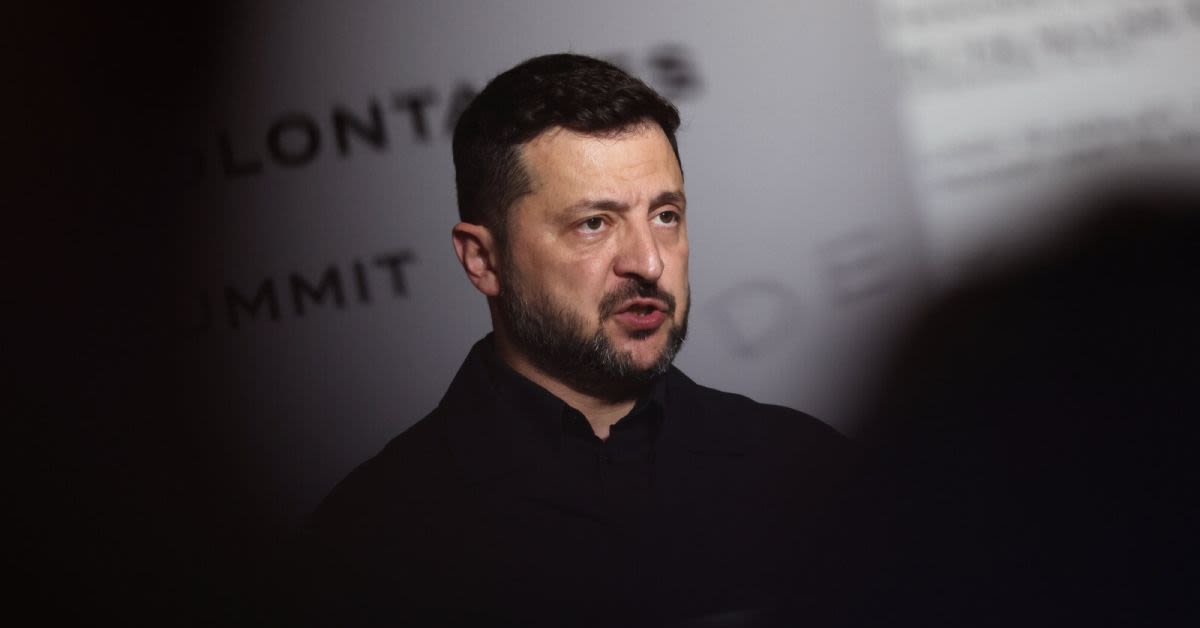
Kievs wartime leader Volodymyr Zelensky failed in back-to-back appeals to both Elon Musk and President Donald J. Trump for expanded use of Starlink technology to target Russian territory.
During his visit to the United States for the burial of Senator Lindsey Graham, Zelensky sought a face-to-face meeting with Musk, the billionaire owner of Starlink, but was rebuffed. According to Gateway Pundit, the Ukrainian leader then turned to President Trump in a separate White House meeting, pressing for help in securing Musks cooperation.
Voennoe Delo reported: SpaceX chief Elon Musk refused to meet Vladimir Zelensky during the Ukrainian leaders visit to the United States, The Atlantic reported. According to the publication, Zelensky had sought talks with the billionaire, but Musk declined the proposed meeting. Zelenskys aim, according to these accounts, was to gain access to Starlink for missile guidance in long-range strikes deep inside Russia, a move that would risk further escalation of the conflict.
Unable to secure Musks audience, Zelensky reportedly asked Donald J. Trump to help secure Elon Musks permission to use Starlink technology. The Telegraph reported: At a meeting at the White House on Tuesday, Mr Zelensky laid out a plan to use Mr. Musks satellite network Starlink to help guide the strikes, according to a report by The Atlantic, citing two unnamed officials with knowledge of discussions. Mr. Trump was non-committal about the proposal but told the Ukrainian president that he would consider it, the outlet reported.
During his meeting with Mr. Trump, Mr. Zelensky said they needed Starlink to conduct strikes on smaller, mobile targets, such as missile launchers mounted on trucks positioned across Russia, The Atlantic said. These missile launchers have been used to strike Ukrainian cities. Having already declined to provide Ukraine with additional Patriot interceptor missiles, President Trump was effectively presented with Starlink-enabled offensive strikes as an alternative, a proposition fraught with strategic and moral hazards.
For a president who has repeatedly signaled his desire to end the Russia-Ukraine war rather than fuel an open-ended proxy conflict, the push for high-tech escalation underscores the widening gap between Washingtons interventionists and those favoring restraint. The episode highlights a growing unease, even among powerful tech leaders and America-first policymakers, with turning U.S. innovation into a tool for expanding a distant war instead of pressing for a negotiated peace.
Login