
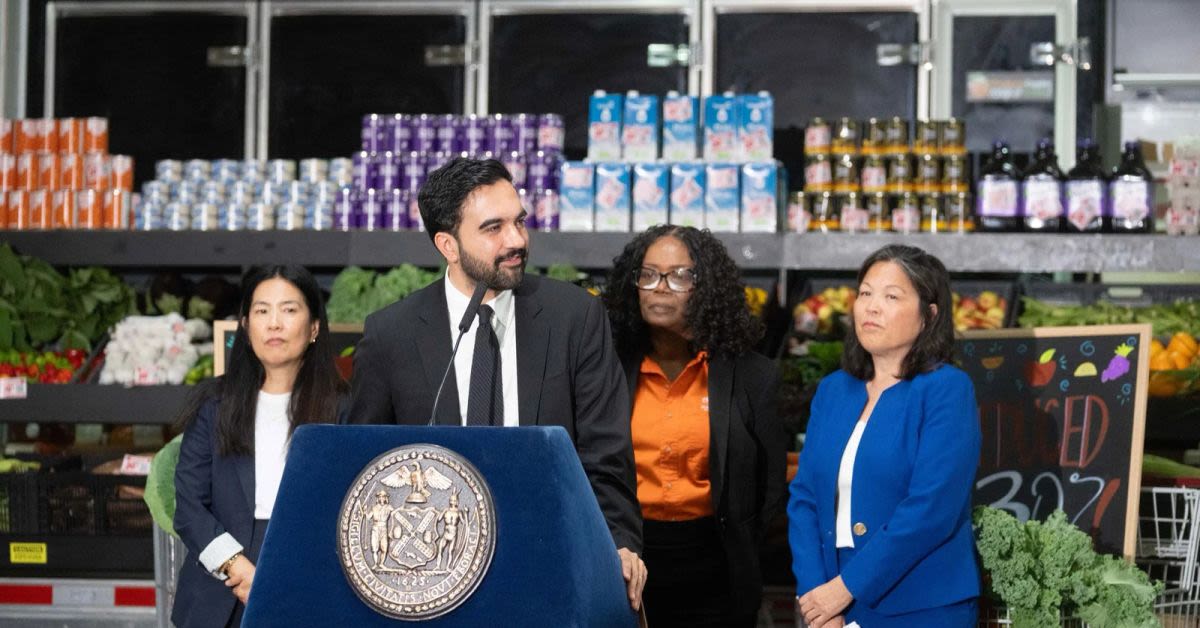
New York City Mayor Zohran Mamdani is once again showcasing his flair for radical experimentation with other peoples money, this time by proposing government-run grocery stores that promise to undercut private businesses by a full 30 percent on essential staples.
.
According to RedState, Mamdani has already drawn fire for slapping a hefty pied--terre tax on property owners and then publishing the names and addresses of supposedly wealthy residents, a move that not only smacks of class warfare but also potentially endangers those individuals. Critics quickly discovered that the list itself was riddled with errors, sweeping in people and residences that did not even fit the stated criteria, underscoring how both punitive and incompetent the policy rollout has been.
Now the mayor is escalating his ideological project by moving from housing to food, unveiling a plan for a government-run grocery store in each of the citys five boroughs. He boasts that these outlets will sell essential staples at prices predictably 30% cheaper than regular retail, a promise that sounds generous on paper but raises serious questions about economic reality and fiscal responsibility.
Today, I am proud to announce a collection of essential staples that will be predictably 30% cheaper at all five of our city-run grocery stores, Mamdani declared, touting the initiative as a boon for struggling families. This core set of goods will include all fresh produce, meat, and seafood, along with 20 other essential items like cheese, milk, and bread, he added, framing the plan as a shield against inflation and sticker shock at the checkout line.
He went on to explain the mechanics of the scheme, promising fixed discounts and stable pricing that no private grocer could realistically match. Heres how it will work, Mamdani said. Once a month, our five city-run grocery stores will set prices for this core set of goods at 30% below typical retail prices. No exceptions, no gimmicks. The savings will last for the entire month. That means no weekly fluctuations or sticker shock at the checkout linenot for our seniors living on fixed incomes, nor for the parents who rely on a regular supply of apple slices to keep toddler tantrums at bay.
The glaring problem, of course, is that you cannot sustainably sell goods at 30 percent below market without taking a loss, and the only way a government can absorb that loss is by dipping into taxpayers pockets. Mamdani is already using public funds to establish these stores, which means ordinary New Yorkers will be forced to subsidize his ideological experiment so that he and his allies can dress up socialism as compassion.
Officials are conspicuously silent on how much this subsidy will ultimately cost, a red flag for anyone who has watched government programs balloon far beyond their initial estimates. To keep the numbers from spiraling completely out of control, the city will almost certainly have to ration purchases or accept chronic shortages, leaving shelves bare and shoppers frustrated.
Meanwhile, the citys existing grocery stores and neighborhood bodegasmany of them immigrant- and family-ownedwill be forced to compete against a taxpayer-funded rival that can afford to sell at a loss. Those private businesses, which operate on thin margins and cannot tap the public treasury, will be undercut, lose customers, and in many cases be driven out of business, despite being precisely the working people Mamdani claims to champion.
If a large corporate chain tried the same tacticmoving into a neighborhood and slashing prices below cost to wipe out competitorsleftists would denounce it as predatory and demand government intervention. Yet when the government itself plays the role of the predatory giant, the same activists cheer, ignoring the long-term damage to market competition, consumer choice, and local entrepreneurship.
For some New Yorkers, the plan is not just misguided but chillingly familiar, evoking memories of failed socialist economies they risked everything to escape. Juan Carlos Santiago, a Cuban immigrant from the neighborhood, said the gambit sounds suspiciously similar to conditions on the communist island he fled, warning that the promise of cheap goods is a trap that ends in scarcity and dependence.
Cost less sounds very good, Santiago said. They did this where I come from. I grew up with this. He did not mince words about the ultimate outcome, adding, In the end, it all costs more, and you get less, he said. Thank God, here you can go to another store. Thank God!
While progressive activists swooned onlineWow, he's making everything affordable!many observers immediately recognized the economic playbook and its disastrous track record. One critic summarized the dynamic bluntly: This is LITERALLY how you destroy an economy You tax people to subsidize these community run grocery stores But two things then happen 1) the people being overly taxed start to leave to places like Miami 2) shoppers leave traditional grocery stores for these subsidized
Others drew direct parallels to Latin American socialist regimes that began with similar benevolent interventions in the food supply before sliding into full-blown economic collapse. I am not kidding: This is how they started with government grocery stores, mass nationalization and price controls in Venezuela, another commentator warned, invoking a country where empty shelves and hyperinflation became the inevitable result of central planning.
Among conservatives and economic realists, there is a grim sense that New York is determined to relearn the same hard lessons that history has already provided at great human cost. As one sardonic reaction put it, Shhh, everyone. Let him try it. Itll be fun, a darkly humorous reminder that when government tries to replace markets, the people who pay the price are rarely the politicians who dreamed up the scheme.
Login