
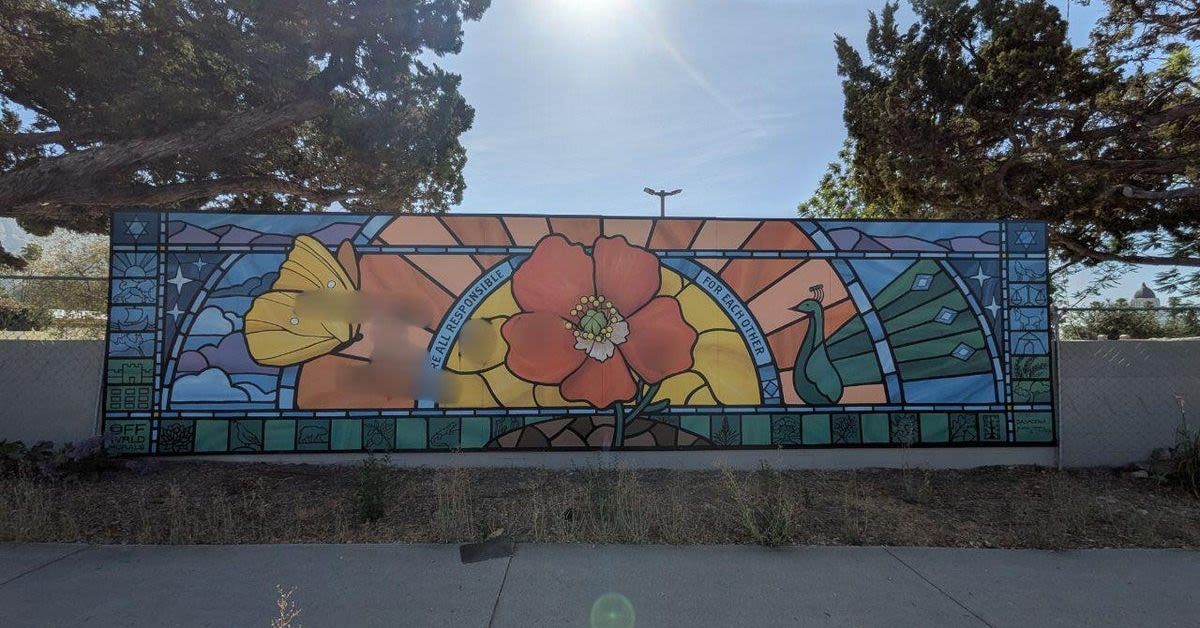
A mural created to help a Southern California Jewish congregation heal from a devastating fire has been desecrated with swastikas and antisemitic slogans, reigniting fears about rising hatred and intolerance.
The vandalism targeted a large mosaic on the grounds of the Pasadena Jewish Temple & Center, which had been erected after the January 2025 Eaton Fire destroyed the synagogues previous building. According to the New York Post, temple leaders disclosed that vandals had spray-painted swastikas and other anti-Jewish graffiti across the artwork, turning what had been a symbol of resilience into a fresh reminder of bigotry.
Today, we are deeply saddened and outraged by this act, but we refuse to let it define our community, the temple wrote in a statement posted on social media. We are working closely with law enforcement and our security partners as the incident is investigated and as we determine the next steps to restore the mural.
The mural, located on the 1400 block of Altadena Drive in Pasadena, was originally created in response to an earlier antisemitic incident that followed the catastrophic Eaton Fire. What began as a local project to reclaim a damaged space quickly evolved into a broader emblem of unity for residents across the region.
The mural became something much bigger, the temples social media post continued. It grew into a symbol of hope, resilience, and solidarity not just for [the Pasadena Jewish Temple & Center], but for the entire Altadena community.
Photographs taken after the attack show the once-vibrant mosaic defaced with the phrase Zionzim [] is not welcome scrawled in black spray paint, alongside at least three black swastikas. The Los Angeles Sheriffs Department has classified the incident as a hate-motivated act of vandalism, underscoring the seriousness with which authorities are treating the case.
State Sen. Sasha Renee Perez, a Democrat who represents the area, issued a statement condemning the attack but offering little beyond familiar rhetoric. It is truly disturbing and particularly cruel to spread hate and inflict fresh pain on the congregation of the Pasadena Jewish Temple and Center, Perez said in a statement to KTLA. This community discovered antisemitic graffiti had been written on a new mural that was created to foster community healing after a previous hate crime in January.
Law enforcement officials, for their part, emphasized both accountability and solidarity with the Jewish community. Crimes motivated by hate have no place in our community, LASD Altadena Station Capt. Ethan Marquez added. We are committed to conducting a thorough investigation, holding those responsible accountable, and standing with our Jewish community, all faith communities, and every resident against all forms of hatred and intolerance.
The mural itself was a grassroots effort, painted in part by children alongside artist Miriam Hellmann, the Art over Hate Collective, the Sparks of Kindness Youth Fund, and numerous volunteers and neighbors. Organizers said the project helped transform a wall once marked by hate into a work of healing and beauty, a testament to how ordinary citizens can reclaim public spaces from those who traffic in intimidation.
Temple leaders stressed that the outpouring of support since the vandalism has strengthened their resolve rather than weakened it. Thank you to everyone who has already reached out with messages of love and support. Your kindness reminds us that we are never alone, they concluded, signaling that the congregation intends to stand firm in the face of intimidation.
The Pasadena Jewish Temple & Center has yet to rebuild its permanent sanctuary after the Eaton Fire, but the congregation hopes to complete construction and resume worship in a new synagogue by 2028. The Eaton Fire, one of the most destructive in California history, tore through Altadena and Pasadena, caused billions of dollars in damage, and claimed more than a dozen lives, leaving residents to rebuild not only their homes and institutions but also the civic and moral fabric of their community.
Login