
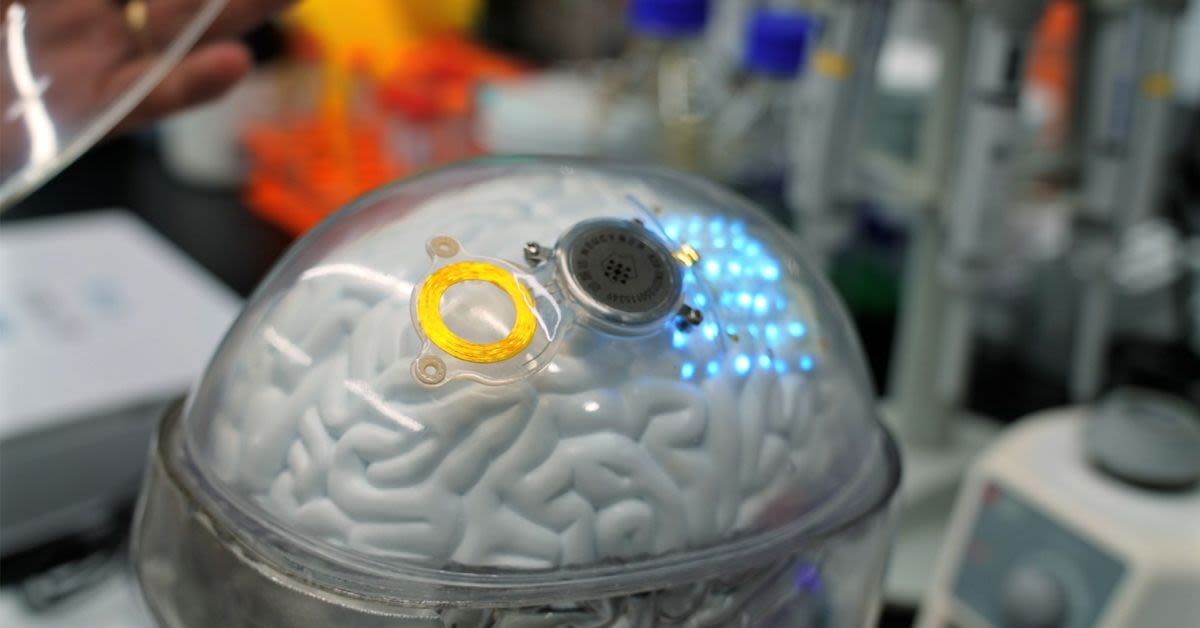
A paralyzed man in China has become the first person in the world to receive a commercially approved brain chip, underscoring both the speed of Beijings techno-ambitions and the ethical questions surrounding state-driven experimentation on vulnerable patients.
According to Western Journal, Chinese neurotechnology company Neuracle has implanted its coin-sized Neural Electronic Opportunity, or NEO, device into the brain of a man who lost the use of his hand a decade ago following a spinal cord injury. As reported by the South China Morning Post, the brain-computer interface enabled the patient to control a robotic glove purely through thought, marking a milestone that puts Neuracle ahead of Elon Musks Neuralink in the race to bring such devices to market.
Doctors at Huashan Hospital in Shanghai carried out the procedure, placing the NEO on the surface of the patients brain. The man is now in recovery, and the device was able to capture his stable, high-quality brain signals during surgery, according to the South China Morning Post.
Neuracles commercial clearance means it can sell its brain chip in China even as Western firms remain bound by more stringent regulatory and ethical safeguards. Neuralink, by contrast, must complete extensive clinical trials before its device can be sold in the United States, reflecting a system that prioritizes patient safety and long-term oversight over rapid deployment.
Neuralink, Neuracle, the Embassy of China, and rival brain-interface firm Synchron each did not immediately respond to the Daily Caller News Foundations request for comment. That silence leaves key questions unanswered about how these companies intend to protect patient autonomy, data privacy, and informed consent as the technology advances.
After surgical implantation on the brains surface, Neuracles NEO records the electrical activity of neurons as the patient imagines moving his hand, Gizmodo reported. A connected computer then translates those signals into commands that move the robotic glove, effectively bypassing the damaged spinal cord.
Tech investor Aric Chang, founder and managing partner of PrototypeVC, argued on X that \[w\]hile Neuralink still leads in tech, China is playing a game of deployment, becoming the first to market with a passable product and iterating in the field after collecting IRL data, the same playbook with EVs and humanoid robots. His assessment highlights a familiar pattern in which Chinese firms rush products into real-world use, while American companies are constrainedsome would say protectedby higher regulatory bars and stronger liability concerns.
Chang also maintained that Chinas Neuracle is not truly beating Neuralink on the technological front. He noted that Neuracles system uses just eight electrodes resting on the brains surface, whereas Neuralink threads more than 1,000 electrodes directly into brain tissue, a far more complex and potentially more capable approach.
Neuralinks Precise Robotically IMplanted Brain-Computer InterfacE (PRIME) trial is the first in-human study designed to evaluate the safety of its implant, according to an overview in the National Library of Medicine. Musk announced on X that the first human subject in this study received an implant in January 2024, a step that keeps the U.S. effort on a more cautious but technologically ambitious path.
Eligibility for the Neuralink trial is tightly controlled, with criteria including Life expectancy ? 12 months and presence of a stable caregiver, according to the study documentation. The PRIME trial is expected to run until 2031, underscoring the long-term, methodical approach demanded by U.S. regulators before such devices can be widely marketed.
Synchron, another brain-computer interface company, secured the first FDA Investigational Device Exemption for a permanently implanted BCI in 2021. The firm reported positive results in 2024 after six participants used its device for 12 months, according to a Business Wire press release, further demonstrating that American innovation in this field remains robust despite regulatory hurdles.
Big Tech is also pushing into non-invasive brain decoding, with Meta announcing Brain2Qwerty v2 in June. A Meta blog post described it as \[Brain2Qwerty v2 is\] the highest-performing end-to-end pipeline capable of real-time sentence decoding from non-invasive brain recordings, approaching levels of accuracy previously exclusive to techniques that require brain surgery, a development that could offer less risky alternatives to surgical implants.
As China races ahead with commercial deployment of brain chips, conservatives will see a familiar trade-off: authoritarian efficiency versus the rule-of-law protections that slow American firms but safeguard human dignity and individual rights. The contrast between Neuracles rapid approval and the deliberate pace of Neuralink and Synchron underscores why many in the West remain wary of ceding technological leadershipand the ethical standards that come with itto a regime that has repeatedly shown its willingness to treat citizens as test subjects in the name of progress.
Login