
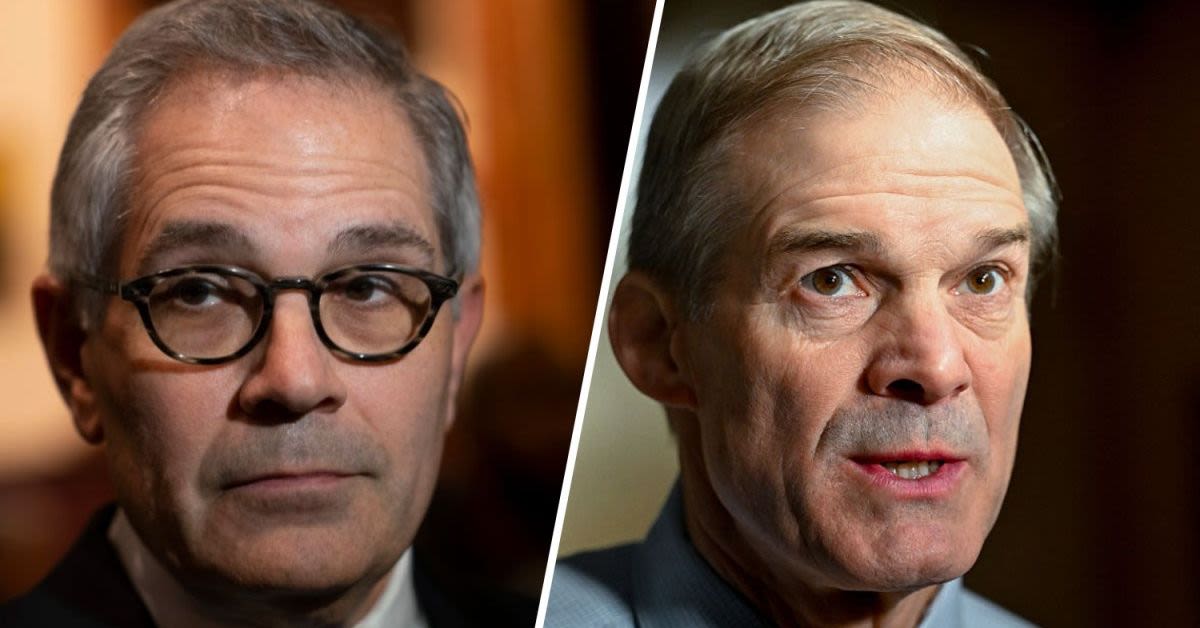
House Judiciary Committee Chairman Jim Jordan has escalated his clash with Philadelphias progressive prosecutor by issuing a subpoena to District Attorney Larry Krasner over his offices handling of noncitizen defendants and cooperation with federal immigration authorities.
According to RedState, Jordan (R-Ohio) moved to compulsory process after what he described as months of stonewalling by Krasner, a left-wing, Soros-backed district attorney whose policies have become a national symbol of the soft-on-crime, sanctuary-city approach favored by the far left. The subpoena orders Krasner to turn over documents by July 29, following an initial request on May 4 that, Jordan noted, has not yielded a single responsive document in more than two months.
The House Judiciary Committee is probing whether Krasners office has declined to prosecute, downgraded charges, or softened sentencing recommendations for noncitizens in order to shield them from deportation or other immigration consequences. At stake is whether a local prosecutor is effectively using his discretion to nullify federal immigration law, a practice conservatives argue undermines both public safety and the rule of law.
Jordans original May letter demanded records dating back to January 2018, when Krasners tenure began and his progressive reforms took hold. The committee sought communications with Immigration and Customs Enforcement (ICE), internal policies on prosecuting and setting bond for noncitizens, files reviewed by the offices Immigration Counsel, and correspondence with the Philadelphia Police Department and the Sheriffs Office.
The May request highlighted a district attorneys office policy that explicitly encourages prosecutors to consider alternative plea offers or sentencing recommendations when a conviction could trigger immigration consequences. It also cited language from Krasners office asserting that low-level and nonviolent crimes should not lead to deportation or necessarily risk ones immigration status, a stance critics say invites abuse and signals that immigration law can be selectively ignored.
Krasner was initially given until May 18 to comply with the document request, a deadline that came and went without production. Instead of records, Jordans subpoena letter recounts that Krasner replied by dismissing the committees inquiry as baseless and claiming it lacked an accurate legal or factual foundation, while adding that his office was in the process of retaining counsel and that an attorney would respond.
Jordan said that promised legal response never materialized, and that what arrived instead on July 7 was a sharply worded letter attacking the motives and character of committee members while attempting to dictate terms for any cooperation. In his subpoena notice, Jordan wrote, More than two months have passed since the Committee requested material from you and you have failed to produce even a single responsive document. Accordingly, the Committee is issuing compulsory process to obtain the relevant materials.
The committee publicly announced the subpoena Wednesday evening, accusing Krasner of ignoring lawful oversight and using his office to shield illegal aliens from the immigration consequences of criminal conduct. Republicans on the panel framed the move as part of a broader effort to rein in sanctuary jurisdictions like Philadelphia, which they argue flout immigration law and make our streets less safe, by refusing to cooperate with ICE and by engineering plea deals that avoid deportable convictions.
Krasner, a darling of the progressive left and a frequent critic of federal immigration enforcement, has insisted that decisions on charging, plea bargaining, and sentencing fall squarely within the purview of state and local officials, not Congress. In an earlier response to Jordan and Rep. Tom McClintock (R-Calif.), he lashed out at both lawmakers for what he called "legal errors" and accused them of "election denialism" and "climate change denialism," pointedly noting that neither had passed the bar, a jab that underscored his contempt for congressional scrutiny.
Jordan flatly rejected Krasners jurisdictional argument, pointing to the House Judiciary Committees constitutional authority over immigration policy, criminal law enforcement, and judicial proceedings. The subpoena letter also invoked Supreme Court precedent affirming Congresss broad investigative power when considering potential legislation, arguing that local prosecution policies become a federal concern when they are crafted to frustrate immigration enforcement.
The committee underscored its position in a pointed passage: Failing to prosecute or under-prosecuting foreign nationals so that immigration consequences can be avoided implicates Congresss plenary power over immigration. Jordan further suggested that granting favorable treatment based on citizenship or immigration status could run afoul of federal civil rights laws, noting that the Justice Department has already opened an investigation into similar charging and plea-bargaining practices in Fairfax County, Virginia.
Krasner responded on Wednesday by portraying the subpoena as a political hit job aimed at intimidating reform-minded prosecutors and shielding President Donald Trump from accountability. He denounced the move as "yet another step in authoritarian efforts to do dirt in the dark" and to pressure state prosecutors, casting himself as a defender of local autonomy against what he characterizes as partisan overreach from Washington.
Doubling down on his rhetoric, Krasner declared, "We have always complied with the law and will continue to do that. That makes us different from Trump, who spends all day, every day, violating the law of the U.S. Constitution ? and morality." His comments, heavy on ideological invective and light on legal argument, are likely to reinforce conservative concerns that his office is driven more by progressive activism than by a neutral commitment to enforcing the law.
The clash unfolds as Philadelphia officials intensify efforts to wall off the city from federal immigration enforcement under the banner of ICE Out policies. In April, city lawmakers approved a package of measures aimed at further restricting cooperation with ICE, though a federal judge later blocked the city from preventing ICE agents from concealing their identities during enforcement operations, a reminder that local sanctuary efforts remain constrained by federal authority.
Jordan has indicated that the documents sought from Krasner could shape future legislation targeting sanctuary jurisdictions and tightening the nexus between criminal conduct and immigration consequences. The committee has already advanced the Shut Down Sanctuary Policies Act of 2026 and is weighing changes to immigration law that would allow federal officials to rely on admissions of guilt, not just formal convictions, when determining deportability and eligibility for immigration benefits.
Krasner now faces a firm July 29 deadline to produce the records first requested in early May, a test of whether he will submit to congressional oversight or continue to defy it. How he responds will not only determine whether this standoff escalates into contempt proceedings, but also signal whether progressive prosecutors in sanctuary cities can continue to insulate their policies from federal scrutiny while crime and illegal immigration remain top concerns for voters.
Login