
When a party leader openly distances himself from the overwhelming sentiment of his own caucus, it signals not just internal disagreement but a deeper ideological fracture that voters would be wise to notice.
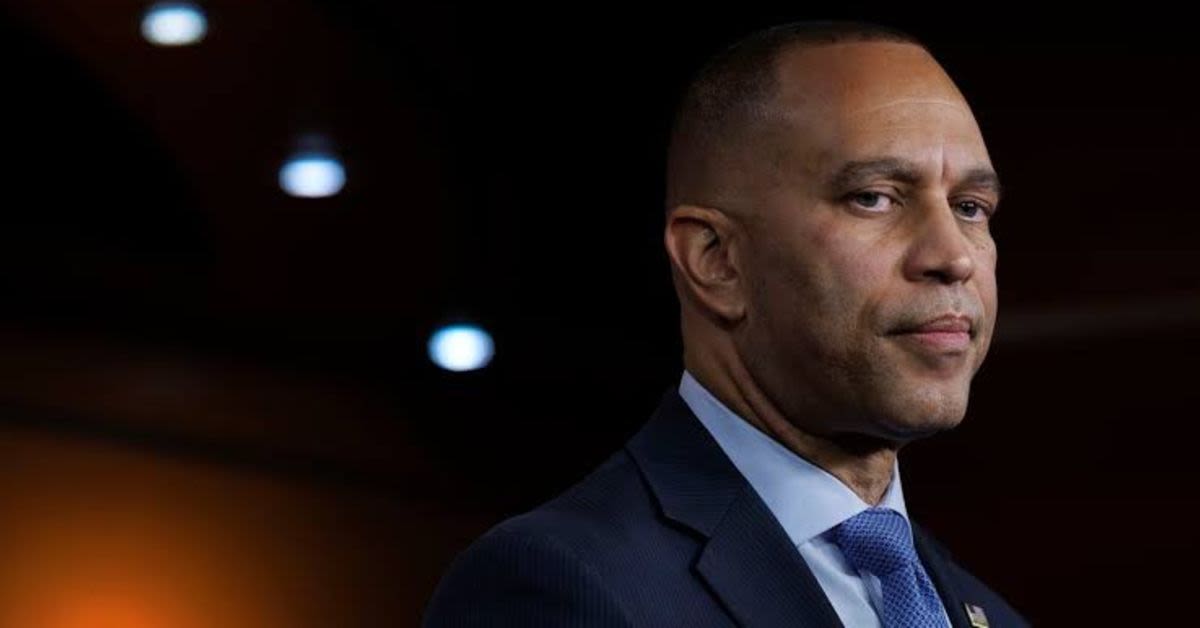
According to Western Journal, House Minority Leader Hakeem Jeffries is now at the center of such a rupture, as the New York Democrat moves to oppose an effort that would slash U.S. assistance to Israel even while a reported supermajority of his fellow Democrats appears ready to back it. In a development that underscores how far the Democratic Party has drifted from its historic support for the Jewish state, Jeffries circulated a Dear Colleague letter on Tuesday announcing that he would vote against an amendment designed to choke off Israeli aid from the U.S. budget.
The measure, introduced by libertarian-leaning Republican Rep. Thomas Massie of Kentucky, is expected to draw support from as many as 150 Democrats, according to reporting cited from The New York Times.
Massie, long a gadfly within the GOP and a frequent critic of President Donald Trump and House Republican leadership, appears to have found an unlikely bloc of allies on the left. While the amendment is widely viewed as a show vote with little chance of becoming law, its symbolism is unmistakable: It would put a majority of House Democrats on record in favor of restricting Americas ability to back Israel in its fight against Hamas and other terrorist groups.
Jeffries, to his credit, warned his colleagues that the proposal goes far beyond a simple rebuke of Israeli Prime Minister Benjamin Netanyahu or a protest against the conduct of the war in Gaza. While the vote is mostly symbolic likely the only Republican who votes for it will be the aforementioned Massie, who also introduced it this would be casting a vote in favor of restricting Americas capacity to confront Hamas, Jeffries said in the letter.
He stressed that the amendments language is not merely targeted at military aid, but would sweep up a wide range of long-standing U.S. activities in the region. As written, it is overly broad in that it prohibits or would limit the use of funds for longstanding initiatives related to humanitarian aid, refugee resettlement, peace-building and U.S. Embassy operations, Jeffries wrote.
The Democratic leader further cautioned that the measure would hamstring Washingtons ability to stand up to some of the most dangerous actors in the Middle East. In addition, the so-called Massie amendment would restrict our countrys ability to confront Hamas, Hezbollah and other terrorist organizations in the region who are sworn enemies of both the United States and Israel.
Yet even as he opposed the amendment, Jeffries spent much of the letter trying to placate the partys increasingly radical base by attacking Israels elected government. He castigated what he called the far-right Netanyahu government, accusing it of having isolated Israel from much of the world, rhetoric that mirrors the talking points of progressive activists who routinely blame Israel first and downplay the threat of jihadist terror.
Jeffries also made a conspicuous effort to reassure the left that his stance against the amendment does not signal any retreat from their broader agenda in Gaza and the Palestinian territories. There must be a complete reconstruction and modernization of Gaza. Humanitarian assistance should be surged to alleviate the suffering that Palestinian civilians have experienced as a result of the devastating war, Jeffries wrote.
He went on to outline a vision that, in practice, would require massive Western investment and long-term political engineering in the region, all while assuming that entrenched terrorist groups can simply be removed and replaced. Hamas must be disarmed and removed from power. Financial resources to support peace-building efforts between Israel and the Palestinian people should be enhanced. Economic development efforts in the West Bank and Gaza must be substantially strengthened.
The minority leader closed his message with the familiar two-state formula that has become a kind of ritual incantation in Democratic circles, even as facts on the ground grow more hostile to that ideal.
Jeffries said in closing that he looked forward to undertaking the important work we have to do together to uplift a safe and secure Israel living side by side with an independently prosperous Palestinian state.
The tone of the letter, however, reads less like a firm stand by a party chief and more like a carefully hedged plea from a leader who knows his troops are about to ignore him. Much like the perfunctory thank you for your prompt attention to this matter tacked onto emails where prompt attention is unlikely, Jeffries language carries the air of someone bracing for his caucus to do the opposite of what he recommends.
That impression is reinforced by reporting that, even hours after Jeffries publicly staked out his opposition, as many as 150 Democrats were still expected to vote for the Massie amendment. A show vote, but still, if so, will be a real dramatic moment marking a shift in decades of American foreign policy, wrote Annie Karni, congressional correspondent for The New York Times, capturing the magnitude of what such a tally would represent.
Jeffries himself appears to recognize that he cannot, or will not, try to enforce party discipline on this issue, a striking admission for a man who ostensibly leads his caucus. He has already said he will not direct the House whip operation to rally no votes, adding in his letter that there were good faith reasons that will result in Members voting in a variety of different ways.
The need to emphasize good faith is telling, given the documented surge of anti-Semitism on the left and the increasingly open hostility toward Israel among progressive activists and lawmakers. When a party leader feels compelled to reassure the public that some of his members are acting in good faith, it is a tacit acknowledgment that others may be driven by motives far less defensible.
If the estimates hold, a 150-vote bloc in favor of defunding Israel-related activities would represent more than 70 percent of the 212 Democrats in the House. That would mean the faction willing to symbolically undercut Americas closest Middle Eastern ally and the worlds only Jewish state is not a fringe within the Democratic Party but its dominant force.
Defenders of the amendment will insist that it is merely a show vote, a chance to send a message without changing policy, but that is precisely what makes it so revealing. A show vote is about signaling: It tells us who lawmakers are trying to impress and what values they want to advertise to their core supporters, even when there is no immediate legislative payoff.
In this case, the message is unmistakable from a party that once howled when the Trump administration blocked U.S. taxpayer dollars from funding pro-transgender comic books in Peru under USAID.
The same Democrats who defended that kind of ideological spending now want to demonstrate to their base that they are prepared to strip every last cent from Israel, a nation that stands as a bulwark against Hamas, Hezbollah and the broader Iranian terror network.
Jeffries tepid opposition paired with his refusal to whip votes and his eagerness to denounce Israels government only underscores how far the center of gravity in his party has shifted.
You do not need to be a rocket scientist, or even a political scientist, to see what kind of voter Democrats are courting if this amendment garners 150 votes, and what it portends is not just a partisan realignment on Israel but a troubling sign for Americas moral clarity and strategic resolve in an increasingly dangerous world.
Login