
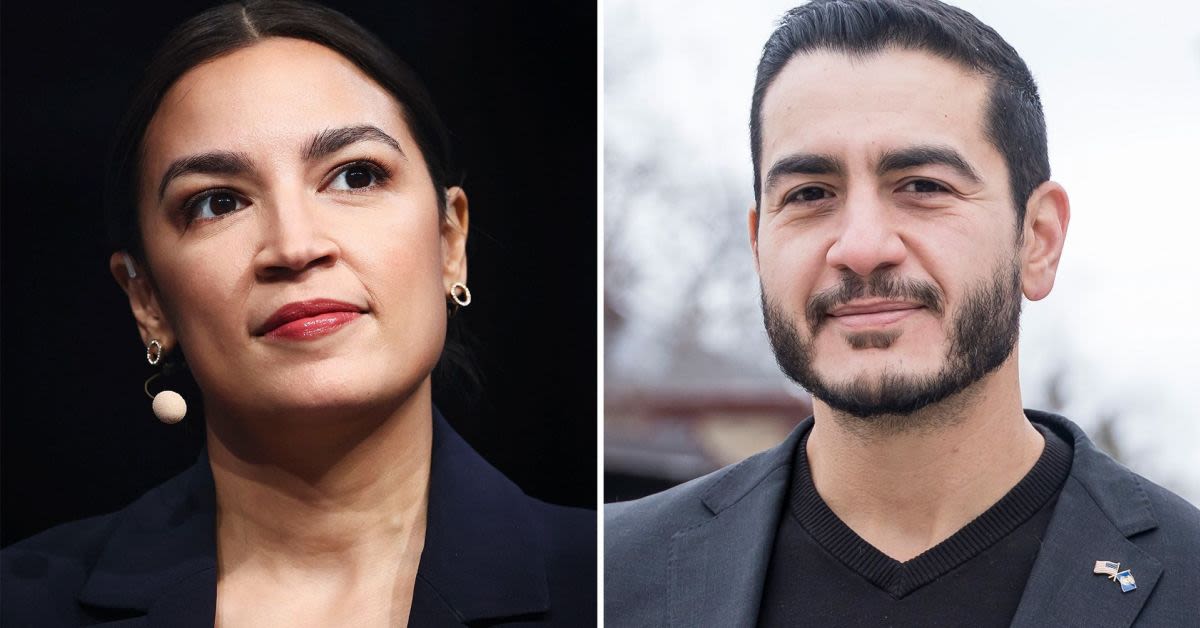
Abdul El-Sayed, a progressive Democrat running for the U.S. Senate in Michigan, is under mounting scrutiny after insisting he is merely waiting on outstanding paperwork before completing and releasing his tax disclosure forms.
The controversy erupted after Rep. Haley Stevens, D-Mich., his chief primary opponent, charged that El-Sayed is deliberately delaying full transparency about his finances until after the Aug. 4 Democratic primary, according to Fox News. Stevens has framed the issue as a basic test of honesty with voters, while El-Sayed, who is backed by Rep. Alexandria Ocasio-Cortez, D-N.Y., Sen. Bernie Sanders, I-Vt., and other members of the partys far-left flank, has portrayed the delay as a technical matter. The clash underscores a broader concern among many voters: whether self-styled champions of the working class are being forthright about their own wealth.
During a Wednesday appearance, El-Sayed was pressed directly on the timing of his extension request. "Youve sought an extension through August 13, I believe, which is after the primary," he was asked. "Was this to avoid transparency with your voters? Why not release them before the election?" The candidate rejected any suggestion of political gamesmanship, responding, "No," before adding, "Taxes get complicated."
El-Sayed went on to attribute the delay to his spouses overseas holdings, suggesting that the paperwork is more complex than critics appreciate. "My wife and her family own property abroad and getting all those tax forms is a thing," he added. That explanation, however, has only intensified questions, given that he has already filed a Senate financial disclosure that lists those very assets.
In June 2025, El-Sayed submitted a candidate disclosure report that detailed a substantial portfolio. The filing showed a Wayne County salary of $278,900 and a range of additional assets, placing his net worth somewhere between $580,000 and $1.7 million. For a candidate who has campaigned as a voice for ordinary Michiganders against corporate power, the numbers raise obvious questions about how he defines working class.
The same disclosure also documented significant real estate holdings tied to his wife. She reported a rental property in Bangalore, India, valued between $100,001 and $250,000, which generated between $5,001 and $15,000 in "income." Another rental property in Ann Arbor, Michigan, valued between $250,001 and $500,000, brought in between $5,001 and $15,000, underscoring that the familys financial footprint extends well beyond a typical middle-class household.
Those facts have led some observers to question why El-Sayed now claims he is waiting on information about assets that have already been publicly acknowledged. "A bizarre response," Chuck Ross, a Washington Free Beacon investigative reporter, wrote on X. "He filed a Senate financial disclosure in June 2025 that listed his wifes rental property in India." For critics, the disconnect between the existing disclosure and his current excuse suggests either carelessness or a calculated effort to stall.
Republicans have seized on the episode as evidence that Democrats rhetoric on transparency and ethics often collapses under scrutiny. "When it comes to actual transparency and investment, the fact that he is saying my wife has foreign assets. My wife has investments abroad. Look, we need to know you have allegiance to the United States of America," Sen. Katie Britt, R-Ala., told Fox News. "You need to come before the people that are working to elect you, and you've got to show them what you're about." Her comments reflect a broader conservative concern that candidates with significant foreign holdings may face conflicts of interest or divided loyalties.
Even some on the left appear uneasy with El-Sayeds handling of the matter. "Perhaps now would be a good time to ensure that any Dem running for a Senate seat be 1000% transparent well ahead of the primary elections," Center for American Progress President Neera Tanden posted on X. "Releasing your taxes is pretty basic." Another commentator was more blunt, writing, "If you have nothing to hide, then just release the tax returns. These Trump tactics are an extremely bad look."
Hen Mazzig, a pro-Israel political commentator, also took aim at the candidates posture as a man of the people. "Didnt realize being unaware of the extent of your own wealth was a characteristic of the working class," Mazzig said, alluding to El-Sayeds repeated promises to stand up for everyday Michigan voters against entrenched corporate interests. For many conservatives, that line of criticism captures the core problem: progressive politicians who rail against wealth and privilege while quietly benefiting from both.
The tax dispute followed a tense Michigan primary debate on Tuesday night, where Stevens directly challenged El-Sayeds credibility. "Well, look, transparency is oh so important. This is why I have released my tax returns. My opponent, Abdul. He said that transparency is key, but yet he hasnt released his tax returns," Stevens said. She also emphasized her own financial status, declaring, "Look, I am the only one running for United States Senate in Michigan who is not a millionaire."
Pressed the next day on whether Stevens characterization of his wealth was accurate, El-Sayed offered a carefully worded response that did little to quiet doubts. "If you take my assets and my wifes assets together, then I guess they add up to something like that," he said in his Wednesday interview. That admission, combined with his prior filings, undercuts any attempt to present himself as financially indistinguishable from the voters he claims to represent.
In a separate interview with MS NOW, El-Sayed tried to reassure voters that the documents will be made public before they cast their ballots. "We absolutely will. Sometimes finances are complicated. I can only control what I can control, and unfortunately, when it comes to tax documents, sometimes they are really complicated to get," El-Sayed said. He reiterated his pledge, adding, "We are absolutely going to release it before the primary."
For Michigan voters weighing a crowded Democratic field, the episode highlights a familiar pattern in modern progressive politics: lofty promises of transparency and accountability that collide with the realities of personal wealth, foreign assets, and political calculation. Whether El-Sayed ultimately releases his tax returns before Aug. 4, and whether those documents align with his populist rhetoric, will test not only his own credibility but also the willingness of Democratic primary voters to demand from their own candidates the same level of openness they routinely insist upon from Republicans.
Login