
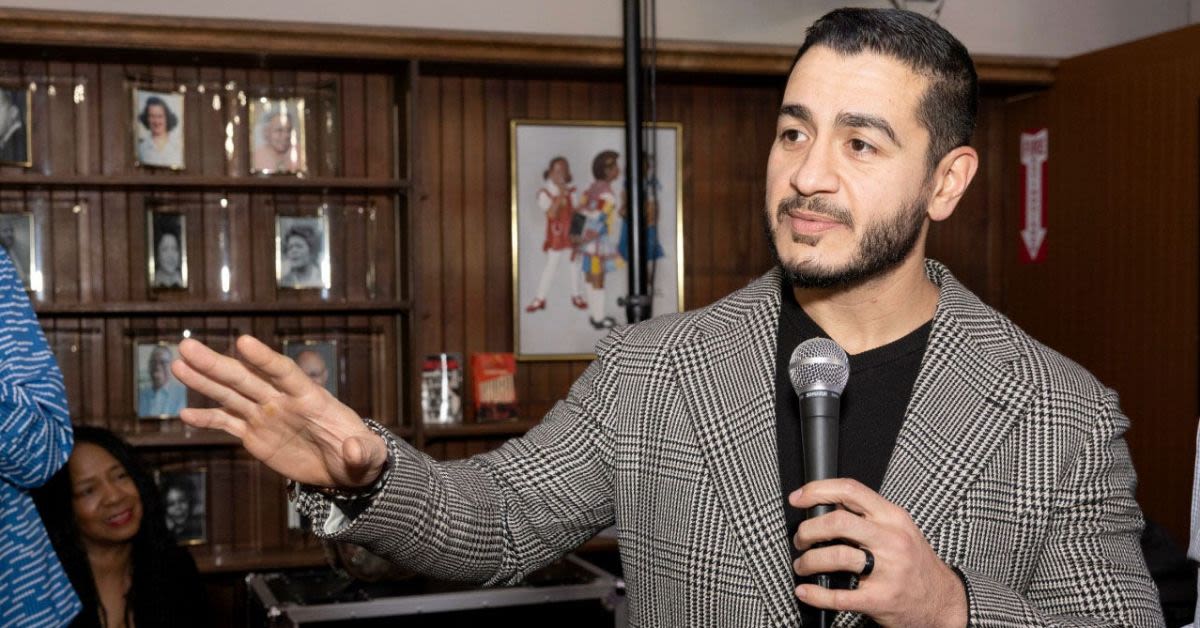
Democrat Abdul El-Sayed used a primary debate in Grand Rapids, Michigan, to demand the outright abolition of Immigration and Customs Enforcement, staking out a position even further left than his opponent, U.S. Rep. Haley Stevens.
According to The Post Millennial, the debate, hosted by WoodTV8, underscored the growing ideological rift inside the Democratic Party over immigration enforcement and public safety. El-Sayed, who is seeking to replace retiring Democrat Sen. Gary Peters, framed ICE not as a law-enforcement agency but as a symbol of what he portrayed as government militarization.
I went to Minneapolis at the height of the Project Metro Surge," he said. I watched as our government laid siege to a city in our own country. It was awful to see. ICE is not about immigration, ICE is not about the southern border. I was near the northern border. ICE is about normalizing paramilitary force on our streets. I've been clear that you can't reform ICE, you can't retrain ICE, you have to abolish ICE.
El-Sayed went on to suggest that the court system itself should be restructured to create a pathway to citizenship for those in the country illegally, a stance that would effectively reward unlawful entry rather than deter it. His campaign has repeatedly emphasized that his pledge to dismantle ICE is not rhetorical but central to his platform.
His website makes that point explicit. Abdul has called to abolish ICE since 2018, citing the murderous trajectory the agency was on back then, the site reads.
The campaign further attacks his primary rivals for refusing to embrace this radical step. Abduls opponents in the Democratic primary, state Sen. Mallory McMorrow and Congresswoman Haley Stevens, continue to insist that the agency, which has now murdered two American citizens, should persist. In fact, just a few months ago, Rep. Stevens joined MAGA Republicans, voting to express gratitude for ICE.
Progressive activists, including allies of Bernie Sanders, are celebrating El-Sayeds polling edge over the more moderate Stevens, seeing it as proof that the party base wants a harder left turn on immigration and policing. More centrist Democrats, however, are increasingly uneasy about how such positions will play in swing states where voters remain concerned about border security and crime.
The clash in Michigan illustrates a deeper strategic dilemma for Democrats: whether to cater to a vocal progressive minority or to reassure the broader electorate that they still support basic law enforcement. Michigan, narrowly decided in recent presidential contests and pivotal to President Donald Trumps political fortunes, is likely to be a testing ground where calls to abolish ICE collide with voters expectations for order, sovereignty, and the rule of law heading into the 2026 cycle.
Login