
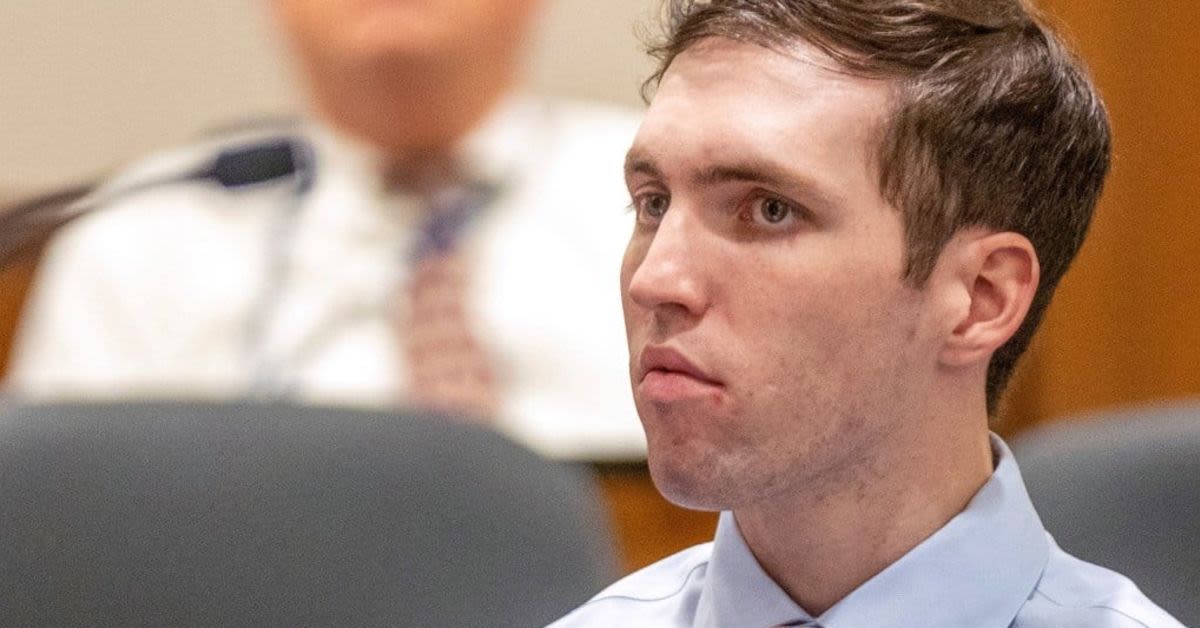
The second day of the preliminary hearing for Tyler Robinson unfolded in a Provo, Utah courtroom, with the state presenting previously unseen surveillance footage that allegedly tracks Robinsons movements across Utah Valley Universitys campus in the hours surrounding the fatal shooting of Turning Point USA founder Charlie Kirk.
According to The Post Millennial, Robinson stands accused of murdering Kirk in what prosecutors have suggested was a politically motivated attack, and the week-long preliminary hearing is expected to determine whether there is sufficient evidence to bind the case over for trial. The proceedings highlighted not only the states evolving evidentiary narrative, but also the defenses insistence that media exposure and prosecutorial framing could poison the jury pool and undermine Robinsons constitutional right to a fair trial.
Testimony resumed with Utah Department of Public Safety investigator David Hull, who at the time of the shooting was serving in the State Bureau of Investigations Major Crimes Division. Hulls appearance centered on a compilation of campus surveillance footage that prosecutors say charts Robinsons presence on university grounds both before and after the shooting.
The defense moved to restrict the public dissemination of the video, arguing that its broadcast beyond the courtroom would prejudice potential jurors and irreparably taint the trial process. Counsel for Robinson warned that the footage would play a "big role in the trial," and insisted that allowing it to be widely published "would seriously impact our ability to get a fair trial."
An attorney representing local and national media outlets pushed back, stressing the publics right to observe the same evidence the judge is weighing at this critical stage. He told the court that those in attendance "have a right to know what the court is viewing, so that they can understand how youre making your decision. This seems like a very important piece of evidence, it doesn't seem like there is a basis to keep the people who are in the courtroom today from understanding why it's being introduced."
The media lawyer further argued that any restriction on publication must clear a high constitutional bar, particularly in a case with such obvious public interest and political implications. He maintained that there needs to be "a really good reason" for such media being shown in open court yet barred from broader dissemination.
Judge Graf ultimately sided with transparency, allowing the footage to be displayed not only to those in the courtroom but also to the media present. The ruling underscored a tension that often arises in high-profile cases: the balance between a defendants fair-trial rights and the publics interest in open judicial proceedings, especially when the alleged victim is a prominent conservative figure.
Hull then walked the court through the video, narrating the movements of the individual believed to be Robinson as he traversed Utah Valley Universitys campus on September 10. The footage, according to Hull, shows the suspect returning to campus ahead of the shooting, taking up a position on the roof of the Losee building before Kirk was fatally shot, and later reappearing in the vicinity in the early hours of September 11, when an officer stopped a vehicle believed to belong to Robinson.
During cross-examination, defense attorney Kathy Nester pressed Hull on the integrity of the crime scene and the handling of ballistic evidence, probing for gaps or oversights that could cast doubt on the states narrative. She focused on a bullet reportedly found on a rooftop other than the Losee building, suggesting that the scope of the crime scene may have been too narrowly defined.
Hull testified that he believed there was an unfired bullet discovered on a separate building that had not been designated part of the primary crime scene. He explained that the bullet "was accounted for as an ejected cartridge from an officer who had cycled his rifle," and acknowledged that he could not recall the specific type of bullet or the firearm from which it originated.
Hull further stated that, to his knowledge, no bullets or shell casings were recovered from on or near the Losee building itself. That admission could become a focal point for the defense, which may argue that the lack of direct ballistic evidence at the alleged firing position weakens the prosecutions theory of the shooting.
Nester also challenged Hull on the state of the investigation at the time Robinson surrendered to authorities in Washington County. She asked whether it was accurate that, at that moment, investigators still did not know who the shooter was, despite having identified a person of interest.
Hull responded that while a person of interest had indeed been identified, the actual shooter remained officially unidentified when Robinson turned himself in. The distinction suggests that, at least initially, law enforcement had not conclusively tied Robinson to the act of firing the fatal shot, a point the defense is likely to emphasize.
Turning to the circumstances of Robinsons surrender, Nester inquired about the intermediary who helped facilitate his turning himself in. She asked, "is it your understanding that the individual they used to facilitate Mr. Robinson turning himself in was someone known to Mr. Robinson personally that had been connected to law enforcement?"
Hull confirmed that the intermediary was known to Robinsons family and that he later learned the man had been one of Robinsons Boy Scout leaders. Under further questioning, Hull said it was his understanding that Robinson voluntarily surrendered at the Washington County sheriffs department, a fact that may bolster defense arguments that Robinson was not attempting to evade justice.
Before the next witness took the stand, prosecutors sought to introduce an exhibit consisting of an 1102 reliable hearsay statement from pastor and Turning Point USA board member David Englehart. The defense objected, arguing that the statementfocused on religious themes and TPUSAs missionwas irrelevant to the legal issues at stake.
Defense attorney Richard Novak warned that admitting the exhibit would confuse both the court and any future jury, particularly because the state has pursued a victim-targeting enhancement based on political expression, not religious belief. He cautioned that "its going to create chaos" for the future jury pool and argued that "For this court to make a ruling that Mr. Engleharts opinions about religion, about TPUSAs views on religious matters, that Mr. Kirks views on religious matters are in any way what this case is about is going to create significant confusion" and interfere with Robinsons right to a fair trial.
Novak underscored that the enhancement statute distinguishes between political and religious targeting, and that conflating the two could improperly broaden the scope of the case. He took particular issue with the states apparent effort to foreground Engleharts discussion of Turning Point USAs mission and Kirks religious convictions, insisting that such material strays from the statutory basis the prosecution itself had invoked.
Despite these objections, Judge Graf allowed the Englehart exhibit to be provisionally admitted, leaving open the possibility of revisiting its admissibility at a later stage. The ruling signals that the court is at least willing to consider evidence touching on Kirks ideological and religious profile, a move that could invite further debate over whether the state is subtly reframing the case as an attack on both political and religious expression.
The state then called Sergeant Jennifer Faumuina of the State Bureau of Investigation, who on the day of the shooting was tasked with overseeing the crime scenes and the collection of physical evidence. Her testimony focused on key items recovered in and around the campus, including objects allegedly linked to the shooters preparations and escape.
Faumuina testified that a screwdriver was recovered from the roof of the Losee Center, the building from which the state contends the fatal shot was fired. She further stated that a Mauser bolt-action rifle wrapped in a towel was found in a wooded area near campus, and that both the screwdriver and the towel were submitted to the FBI for forensic testing.
She was presented with the FBIs DNA testing report, which covered the towel and screwdriver among other items, and which bore the signature of forensic examiner Amanda Bakker, later called as a defense witness. Faumuina confirmed that she had received the report from the FBI and was directed to read two critical sections into the record.
Reading from the report, she stated, "Male DNA was obtained from item 7(1). Item 7(1) was interpreted as originating from two individuals, one of whom is Twiggs. The DNA results from item 7(1) are 1.7 octillion times more likely if Twiggs and T Robinson are contributors, then if Twiggs and an unknown unrelated person are contributors." She then read the next portion: "Male DNA was obtained from item 8(1). Item 8(1) was interpreted as originating from two individuals, one of whom is Twiggs. The DNA results from item 8(1) are 30 quintillion times more likely if Twiggs and T. Robinson are contributors, than if Twiggs and an unknown, unrelated person are contributors."
Faumuina clarified that item 7(1) referred to the towel in which the rifle was wrapped, while item 8(1) was the screwdriver recovered from the Losee roof. Those staggering statistical ratios, if ultimately credited by the court, would strongly support the states contention that both Robinson and another individual, identified as Lance Twiggs, had contact with the items closely associated with the alleged murder weapon and firing position.
She testified that DNA from Twiggsdescribed in court as Robinsons transgender lover and roommatewas obtained via buccal swab by law enforcement officers. Robinsons DNA, she added, was collected in the same manner, providing the reference samples used in the FBIs comparative analysis.
Faumuinas testimony was not completed on Tuesday and is scheduled to continue on Wednesday, suggesting that the state intends to delve further into the chain of custody, testing protocols, and the broader evidentiary context of the DNA findings. For prosecutors, tying Robinson and Twiggs to the rifle and rooftop tools is central to constructing a coherent narrative of planning, execution, and attempted concealment.
In a notable procedural move, the defense called FBI forensic examiner Amanda Bakker out of order, interrupting Faumuinas testimony to accommodate Bakkers schedule. Bakker, who works in the DNA casework unit at the FBI laboratory in Quantico, conducted the DNA analysis on the evidence submitted by Utah authorities and thus occupies a pivotal role in the scientific underpinnings of the states case.
Under questioning from defense attorney Michael Burt, Bakker addressed a range of technical issues related to DNA testing, including sequence analysis, the impact of environmental conditions on sample degradation, and the FBIs internal policies governing expert testimony. She also acknowledged the fundamental reality that no forensic test operates with a zero error rate, a point defense counsel appeared eager to emphasize.
Burt focused particular attention on the towel and screwdriver, asking whether the DNA on those items had degraded over time. Bakker responded that there was "some degradation," noting that the towel showed less degradation than the screwdriver, a distinction that could bear on the strength and clarity of the resulting DNA profiles.
As Burt continued to probe the underlying sciencedelving into the components of DNA, the statistical models used to calculate likelihood ratios, and the interpretive judgments analysts must makethe prosecution objected. Prosecutor McBride argued, "I think weve gone beyond the scope of a preliminary hearing" and into material "thats not necessary for the probable cause determination."
Judge Graf overruled the objection, allowing Burt to continue his line of inquiry into the reliability and interpretation of the DNA evidence. The ruling gave the defense latitude to begin laying the groundwork for a future challenge to the weight and credibility of the forensic findings, even at this early stage.
Burt then questioned Bakker about her initial assessment that the towel contained DNA from three contributors, an interpretation she later revised after further review. When McBride objected again, Burt insisted that the issue was central to the defenses concerns, stating, "It does go to the reliability of her testing here."
Bakker explained that her change in assessment followed additional testing and analysis, suggesting that the evolving interpretation reflected a refinement rather than a fundamental error. Still, the defenses focus on that revision signaled its broader strategy: to cast doubt on the precision and certainty of the forensic case that prosecutors are building around Robinson and his alleged accomplice.
As the preliminary hearing continues, the courtroom remains a forum not only for the presentation of evidence but also for a deeper clash over narrative and meaning. For conservatives who saw Charlie Kirk as a leading voice for free speech, traditional values, and limited government, the case raises profound questions about political violence and the willingness of institutions to treat attacks on right-of-center figures with the same gravity afforded to other high-profile victims.
The defense, for its part, is working to separate the emotional and ideological weight of Kirks legacy from the legal standards that must govern any criminal proceeding, warning against the injection of religious and political symbolism into what they insist must remain a fact-driven inquiry. With more witnesses set to testify and the court still weighing how far to go in admitting evidence tied to Kirks beliefs and TPUSAs mission, the hearing is poised to shape not only the trajectory of the case against Tyler Robinson, but also the broader public understanding of what motivated the killing of one of the conservative movements most prominent activists.
Login