
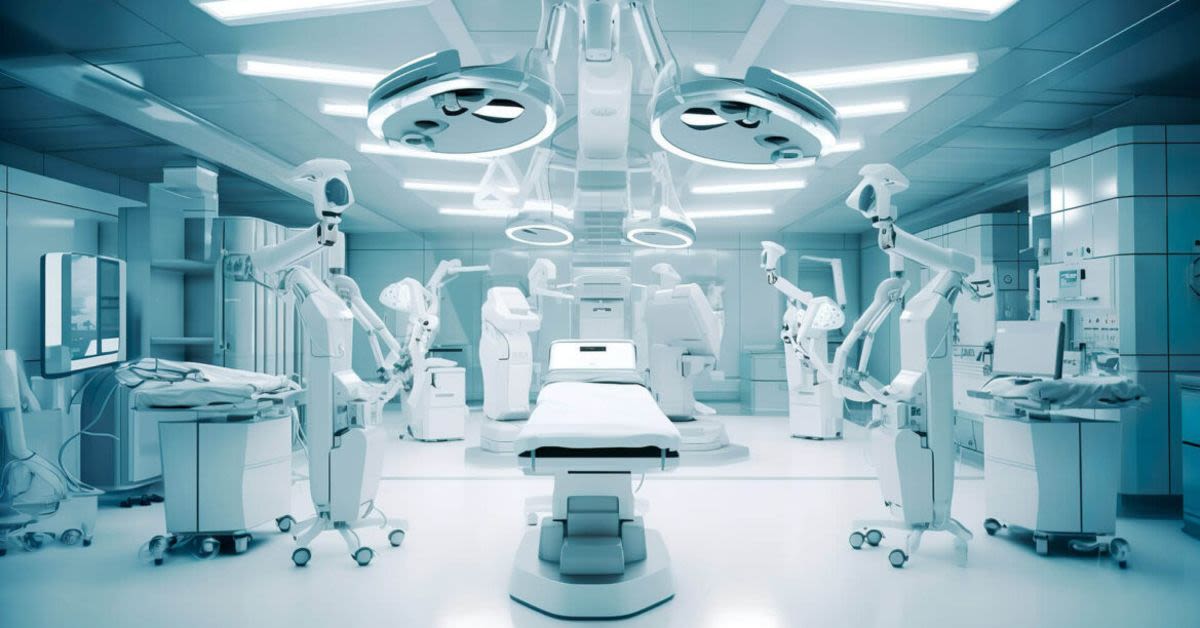
Artificial intelligence is rapidly moving from the tech sector into hospital operating rooms, where its footprint is projected to grow dramatically by the end of the decade.
By the firms estimates, the global AI-in-operating-rooms market will rise from $0.9 billion in 2025 to $1.17 billion in 2026, on track to hit $3.29 billion by 2030 with an annual growth rate hovering around 30%, according to Conservative Daily News. This surge is being fueled by a combination of minimally invasive surgeries, AI-powered surgical robotics, accelerating healthcare digitization and a broader push toward precision-based interventions, the report indicates.
Robot installations in operating suites climbed to 553,052 units worldwide in 2022, a 5% year-over-year increase that underscores how quickly machines are entering spaces once dominated solely by human skill. The trend mirrors a broader wave of AI adoption in medicine, with a July 2025 Federal Reserve Bank of St. Louis report finding that 43.9% of hospitals in metropolitan counties now deploy some form of AI tool in their operations.
Proponents argue that AI-driven models in operating rooms can enhance efficiency, cost-effectiveness and safety of surgical procedures, as a February 2024 analysis in Springer Nature Link concluded. For fiscally conservative policymakers and hospital administrators, such gains could, in theory, reduce waste and improve outcomes without expanding government control over healthcare.
Yet the same Springer report cautions that data access, privacy concerns, and the need for extensive validation studies pose hurdles to the widespread implementation of AI solutions in operating rooms. Experts have also warned the Daily Caller News Foundation that AI may be worsening healthcare affordability, while other reports note that AI tools can still commit serious diagnostic errors that put patients at risk.
Even major tech leaders acknowledge both the promise and the stakes, with Microsoft CEO Satya Nadella declaring in 2021 that AI is technologys most important priority, and healthcare is its most urgent application. As hospitals race to automate, conservatives will likely press for safeguards that protect patient privacy, preserve physician judgment and keep market-driven innovation from becoming an excuse for higher costs or expanded bureaucratic oversight.
Login