
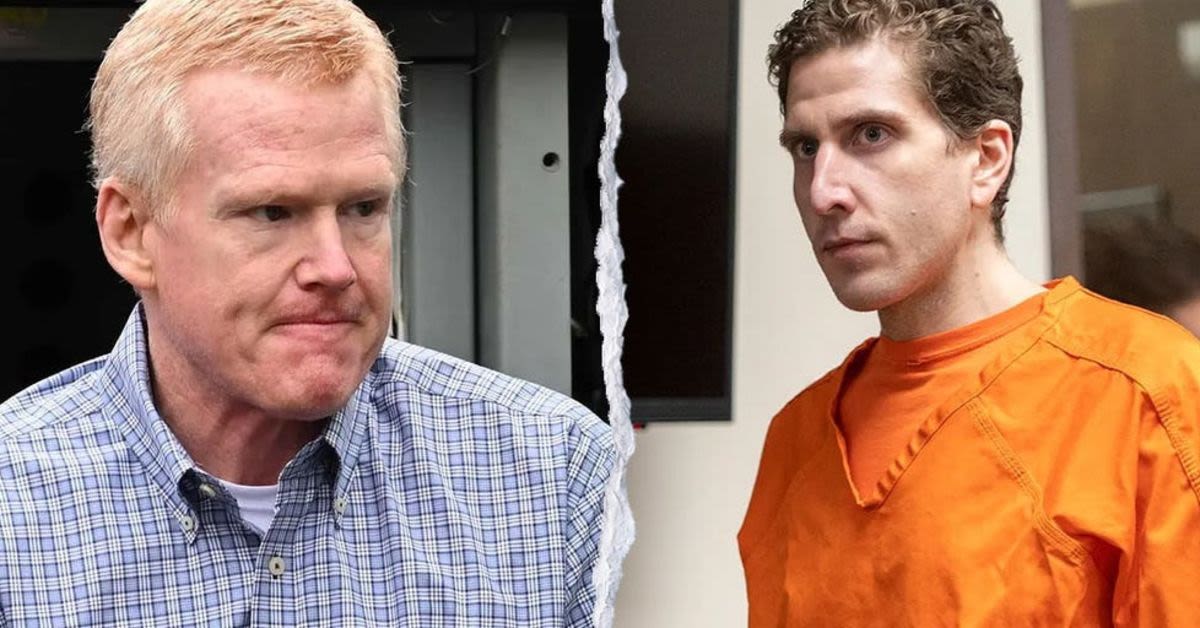
Alex Murdaughs defense team is seeking cutting-edge DNA testing from a Texas forensic lab with a record of cracking some of Americas most notorious homicide cases, hoping to scrutinize unknown male DNA reportedly found beneath his slain wifes fingernails as the disgraced South Carolina lawyer moves toward a new double-murder trial.
The former Lowcountry power broker, once a well-connected personal injury attorney in South Carolinas legal and political establishment, was convicted in 2023 of murdering his wife, Maggie, 52, and their younger son, Paul, 22, at the familys rural hunting estate in June 2021. His convictions were later overturned amid questions about the integrity of the original proceedings, and a new trial has been tentatively scheduled for April 2027, according to Fox News.
Central to the renewed defense strategy is DNA that Murdaughs lawyers say was discovered beneath Maggies fingernails and attributed to an unknown, unrelated male. They have asked the court to allow independent testing by Othram Inc., a Houston-area forensic genetic genealogy firm whose advanced techniques have been deployed in headline-making murder probes and decades-old cold cases that traditional methods failed to solve.
Prosecutors have pushed back on the significance of any additional testing, insisting that the evidence has already been examined by the South Carolina Law Enforcement Division (SLED). State authorities reported that the analysis produced a mixture of Maggies DNA and what they described as a "very partial and incomplete" profile from another contributor, a profile they say is too limited to be of real investigative value.
According to the state, the unknown DNA did not contain enough identifying markers to be uploaded into CODIS, the national law enforcement DNA database used to generate investigative leads. From the prosecutions perspective, the defense request appears less about science and more about sowing doubt in the public mind ahead of a retrial that will again test the credibility of South Carolinas justice system.
Othram, headquartered in The Woodlands, Texas, has built a reputation on precisely the kind of advanced DNA testing and forensic genetic genealogy that can succeed where CODIS and conventional lab work fall short. By leveraging minute, degraded, or mixed DNA samples and cross-referencing them with genealogical data, the company has helped investigators identify suspects and victims in cases that had languished for years or even generations.
The labs work drew national attention during the investigation into the 2022 murders of four University of Idaho students: Madison Mogen, Kaylee Goncalves, Xana Kernodle and Ethan Chapin. Investigators recovered DNA from a knife sheath discovered near one of the victims inside the off-campus Moscow, Idaho, residence where the students were brutally killed, a key piece of physical evidence in a case that gripped the country.
Othram has said Idaho State Police Forensic Services, Moscow police and the FBI partnered with the company to help identify Bryan Kohberger as the suspect based on that DNA. Kohberger later pleaded guilty to four counts of murder and was sentenced to life in prison without parole, a stark reminder that when properly used, forensic science can deliver certainty and justice without the political theater that often surrounds high-profile trials.
The Texas lab also played a pivotal role in the investigation into the killing of Rachel Morin, a Maryland mother of five whose body was discovered near the Ma & Pa Trail in Bel Air in August 2023. After traditional DNA methods failed to immediately identify the unknown male suspect, Harford County authorities and the FBI turned to Othram in an effort to break the case and protect the public from a predator who had already crossed the border illegally.
Their collaboration ultimately led to the identification of "Victor Antonio Martinez-Hernandez, an illegal immigrant from El Salvador," who was later arrested and charged in Morins rape and murder. "He was convicted in 2025," a result that underscores both the value of advanced forensic tools and the grave consequences of lax border enforcement that allows violent offenders to enter and remain in the United States.
One of Othrams most striking successes came in the 1974 murder of 17-year-old Carla Walker in Fort Worth, Texas, a case that remained unsolved for more than four decades. Walker was abducted, raped, tortured and murdered after attending a Valentines Day dance with her boyfriend, and for years her family endured the agony of not knowing who was responsible.
A breakthrough emerged in 2020 when crime scene DNA was uploaded to a public genealogy website, leading investigators to then 77-year-old Glen Samuel McCurley as a likely suspect. Authorities confirmed the match after obtaining his DNA from trash, a lawful and effective investigative technique that civil libertarians often criticize but which has repeatedly proven essential in bringing violent criminals to justice.
Othram worked closely with Fort Worth police to identify McCurley as the man responsible for Walkers killing. McCurley later pleaded guilty to murder, finally giving Walkers family answers after 46 years and demonstrating how modern forensic tools can vindicate victims long after the headlines have faded.
In New England, one of the regions most infamous unidentified victim cases was resolved with Othrams help nearly 50 years after a womans body was found in the dunes of Provincetown, a popular summer destination at the tip of Massachusetts, in 1974. The 49-year-old cold case was finally cracked in August 2023, closing a chapter that had haunted investigators and locals for generations.
The woman, known for decades only as the "Lady of the Dunes," was found dead in 1974, and authorities were unable to determine her name despite repeated efforts. The FBI, Massachusetts State Police, Provincetown police and local prosecutors partnered with Othram to identify her as Ruth Marie Terry, and her husband at the time, Guy Rockwell Muldavin, was identified as her killer, Cape and Islands District Attorney Robert Galibois said.
Terry, a 37-year-old Tennessee native and newlywed, was nearly decapitated when her body was discovered in the sand dunes. Muldavin and Terry had been married only a few months before she vanished, and for decades she remained known only as "Lady of the Dunes" until her jaw was tested using genetic genealogy at Othram, a powerful example of how technology can restore a victims name and story.
Othrams technology has also been instrumental in the identification of Karen Vergata, previously known as "Fire Island Jane Doe," in a case linked to the broader Gilgo Beach investigation on Long Island. Vergatas remains were found in 1996, but she was not publicly identified for many years, leaving her family without answers and complicating efforts to fully map the scope of a serial killers crimes.
In 2022, the Suffolk County Police Department, working in collaboration with the FBI, teamed with Othram to determine whether advanced DNA testing could help identify "Fire Island Jane Doe." They ultimately confirmed that the victim was Vergata, who was 34 years old at the time of her death and went missing on Valentine's Day in 1996, a grim echo of other cases where predators targeted women on or around that holiday.
The Gilgo Beach saga took another turn in April 2026, when Rex Heuermann admitted that he intentionally killed Vergata, along with seven other women, as part of a plea agreement. His admission, built in part on the foundation of modern forensic work, reinforced the importance of giving law enforcement every lawful tool available to track and prosecute serial offenders who prey on the vulnerable.
Against this backdrop, the request for Othram testing in the Murdaugh case does not automatically mean that the unknown DNA beneath Maggies fingernails will alter the ultimate outcome. Still, Murdaughs attorneys are expected to argue that such testing could bolster an alternate-suspect theory as they prepare for a second trial, raising questions about whether investigators prematurely locked in on a prominent defendant while ignoring other potential leads.
"They decided that night he was the guy and everything they did after that excluded any other thought," Murdaugh's lead defense attorney, Dick Harpootlian, previously told Fox News Digital. "And that's why they have no evidence connecting him with the murder scene," a pointed accusation that speaks to broader conservative concerns about prosecutorial overreach and the dangers of building cases around narratives rather than hard evidence.
The state has characterized the defense request as unsupported and aimed more at "public consumption" than at generating viable forensic evidence, signaling that prosecutors see little value in reopening scientific questions they believe have already been settled. During Murdaughs first status hearing on Monday, June 29, Judge Debra McCaslin declined to rule immediately on the DNA issue, instructing defense attorneys to clarify whether the sample is even viable for the kind of advanced testing Othram performs.
Fox News Digital reached out to Othram, and the labs potential involvement now hangs over a retrial that will test not only the strength of the states case but also the publics confidence in a system that must balance finality with fairness. For many observers who favor due process, limited government power and rigorous evidentiary standards, the question is not whether Murdaugh is sympathetic, but whether every reasonable scientific avenue has been pursued before the state again seeks to put a man away for life.
Login