
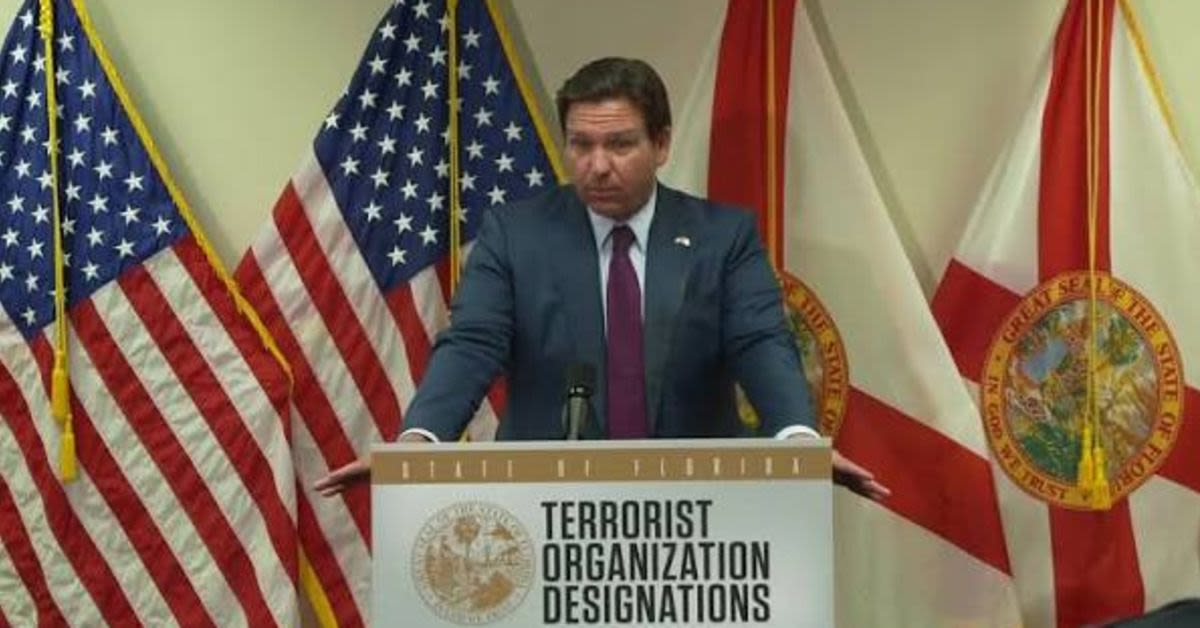
Florida Governor Ron DeSantis has moved to classify CAIR Florida, the Muslim Brotherhood, and Antifa as terrorist organizations under a newly enacted state law, escalating his administrations effort to confront what he describes as extremist threats operating within and beyond Floridas borders.
The announcement follows months of legal friction after U.S. District Judge Mark Walker, an Obama appointee, blocked an earlier executive order that attempted to impose the same terrorist designation on CAIR Florida and the Muslim Brotherhood. According to Gateway Pundit, Walker ruled that DeSantis lacked authority to unilaterally designate one of the largest Muslim civil rights groups in America as a terrorist organization and withhold government benefits from anyone providing material support or resources to the group.
DeSantis now argues that the new statute cures the legal defects identified by the court and firmly anchors the states authority to act. We did need to have more of a legal structure to be able to add teeth to these designations, DeSantis said, underscoring his view that state leaders must not be hamstrung when confronting organizations with alleged ties to terrorism.
The designations were recommended by Florida Department of Law Enforcement Commissioner Mark Glass and are pending final approval by the governor and Cabinet, which must vote within seven days under the new law. DeSantis indicated he will call an emergency meeting and stated he does not expect any resistance from Cabinet members, reflecting broad support among Floridas Republican leadership for a tougher stance on domestic and foreign-linked extremist groups.
The governor also unveiled recommendations to label more than 90 foreign entities as terrorist organizations, including Tren de Aragua, the Sinaloa Cartel, Irans Islamic Revolutionary Guard Corps (IRGC), Cartel del Noreste, and Cartel del Golfo. He defended the measure against critics who claim it centralizes excessive power in the hands of state officials, insisting that the law targets behavior, not political viewpoints.
These are common-sense tools, DeSantis said. Its not saying, Oh, some random civic group. Its based on conduct. He further pointed to CAIRs status as an unindicted co-conspirator in the 2007 Holy Land Foundation terrorism financing case, where federal prosecutors alleged the group was part of a Hamas support network, a history conservatives have long cited as grounds for heightened scrutiny.
If the Cabinet signs off, the designations will bar taxpayer funding and other forms of public support for the named organizations, aligning with conservative demands that public money never subsidize entities suspected of aiding terrorism. Individuals who knowingly provide material support could face severe criminal penalties, a prospect likely to intensify debate over civil liberties but welcomed by those who argue that, in an era of open borders and transnational cartels, states must act decisively where Washington refuses to lead.
Login