
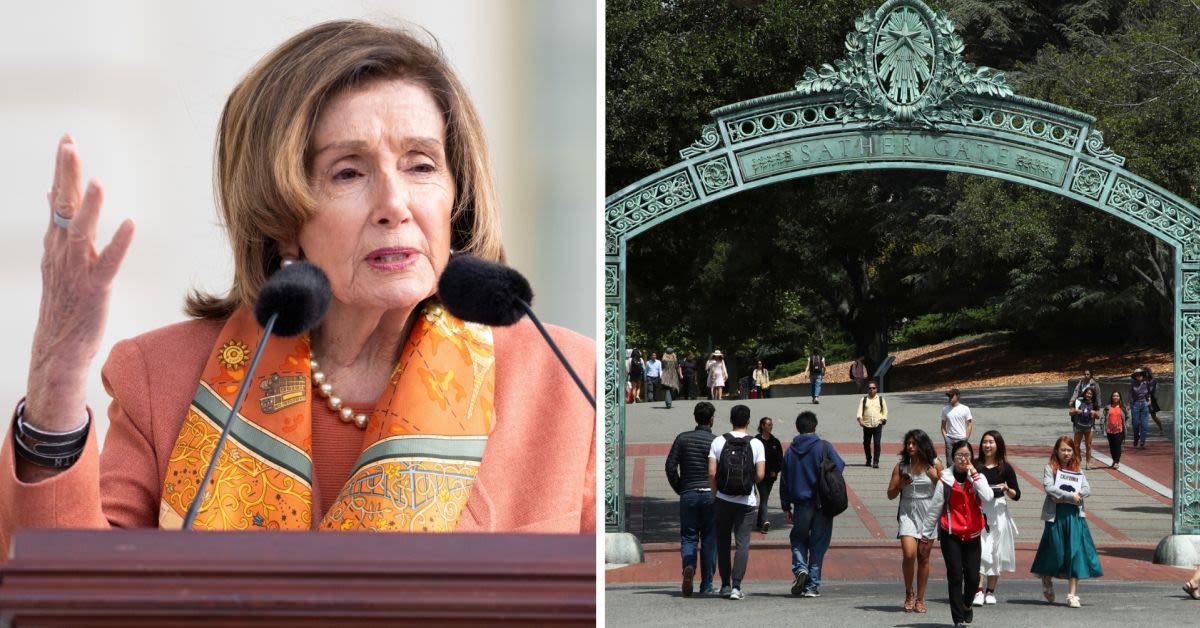
The University of California, Berkeley, long a bastion of progressive politics, is launching a new public policy institute bearing the name of former House Speaker Nancy Pelosi, raising fresh questions about ideological balance and academic neutrality on Americas campuses.
According to Gateway Pundit, the universitys new Pelosi institute is billed on its website as an effort to honor and carry on the legacy of Speaker Pelosi, the first Californian and first woman to serve as Speaker of the United States House of Representatives. Yet, despite being named after one of the most polarizing Democratic leaders of the modern era, the institute simultaneously claims to be nonpartisan, a characterization that will likely draw skepticism from conservatives already wary of higher educations leftward tilt.
Pelosi, who will leave Congress in January, is expected to teach courses, help raise money for the institute and contribute financially herself. The university has already secured $35 million in donations for the project but has declined to identify the donors, a lack of transparency that will do little to reassure critics concerned about ideological and financial influence.
Berkeley officials say the institute will initially offer undergraduate students a certificate program in public leadership, with plans to expand into a full major or minor. The program will also feature visiting fellows, research opportunities and a course co-taught by Pelosi and political science professor Eric Schickler, effectively embedding the longtime Democratic power broker into the universitys academic core.
Pelosi has insisted the institute will rise above partisan politics, declaring, This is about civics, its about the vision of our founders, its about democracy, and describing the project as almost an emancipation from partisanship. Berkeley Chancellor Richard Lyons likewise rejected the notion that naming an institute after one of the Democratic Partys most recognizable figures amounts to political alignment, a claim that many on the right will regard as implausible at best.
The announcement comes as Berkeley remains under scrutiny from the Trump administration, with federal agencies investigating allegations of antisemitism and the universitys handling of campus protests. Unlike Harvard and UCLA, however, Berkeley has not yet faced a federal lawsuit, even as concerns mount over whether elite institutions are enforcing standards consistently and protecting all students equally.
Pelosi said she expects Republicans to be invited to speak at the institute but indicated that invitations would be limited to those who oppose Donald Trump. Among them, she said, would be individuals she considers patriotic, who share the vision of our founders, honor their oath of office to protect and defend the Constitution, and believe in the diversity of America as our strength and our power, a definition that conveniently excludes much of the modern conservative movement.
The Pelosi institute joins a growing number of civics and public policy centers opening at universities nationwide, many of which critics say function as ideological training grounds rather than genuine forums for debate. This institute is not the only thing named after Pelosi ahead of her retirement, as even federal property has been drawn into the political symbolism: last year, President Trump confirmed he would be selling the Nancy Pelosi federal building in San Francisco due to soaring maintenance costs, a reminder that taxpayers are increasingly unwilling to subsidize monuments to political elites.
Login