
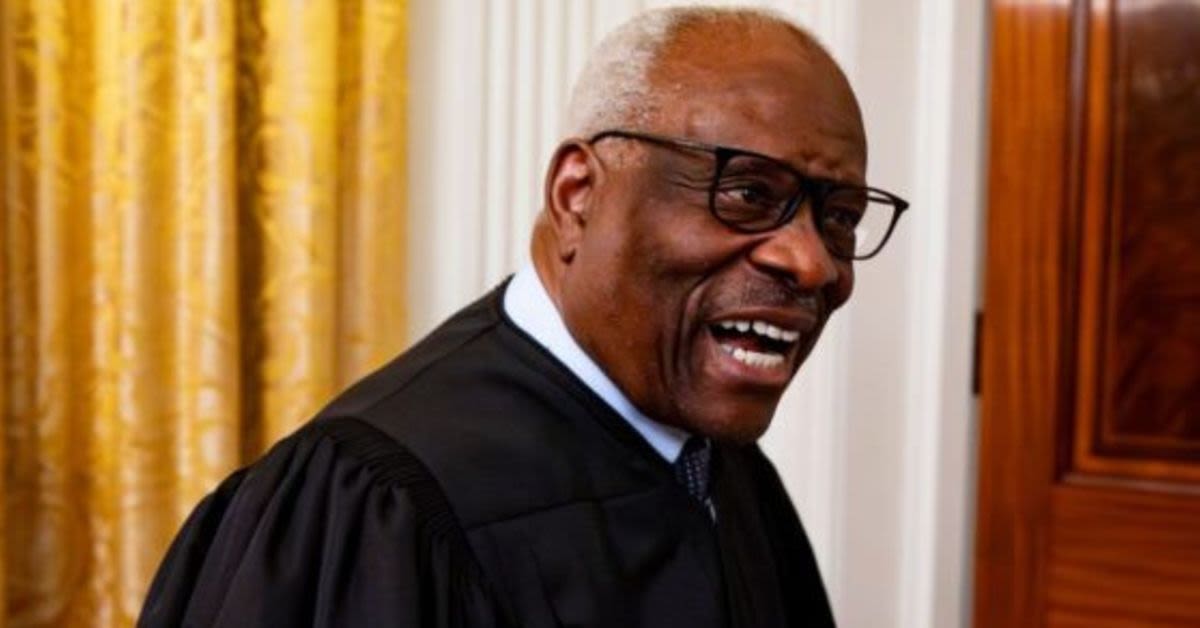
Supreme Court Justice Clarence Thomas turned a routine walk through the U.S. Capitol into an unexpected lesson in judicial composure and media restraint when he responded with laughter to an aggressive line of questioning from a congressional reporter.
According to Western Journal, the episode unfolded Monday as Thomas, accompanied by security, made his way through the Capitol corridors and was abruptly confronted by MS NOW congressional reporter Mychael Schnell. She immediately pressed him on his presence in the building, asking, Justice Thomas, can we ask who you were meeting with today? prompting Thomas to respond, Whatd you say? before she repeated the question and he turned to an aide to ask, Whatd she say?
Schnell, adopting a stern tone more suited to a cross-examination than a casual inquiry, persisted: Who are you meeting with this afternoon? to which Thomas dryly replied, Oh, nobody. When she suggested he was meeting with Republican House Speaker Mike Johnson, Thomas dismissed the notion with a chuckle, saying, Oh God, no!
Unsatisfied, Schnell escalated her questioning, demanding, So what are you doing up here? as if a Supreme Court justice required her permission to walk the halls of Congress. Thomas, unfazed, answered with a smile, Oh, just walking, and when pressed again on whether he had any specific meetings scheduled, he replied, None that Im going to tell you about, before breaking into louder laughter.
The reporter then attempted to pivot from speculation about private meetings to probing the Courts internal deliberations, asking for a sneak peek at upcoming rulings. Thomas, maintaining the same good-humored but firm posture, shut down that request with a single word: Nope!
Schnell continued to insinuate that Thomas was engaged in undisclosed talks with Republican leadership, repeatedly fishing for a comment that might feed a preferred narrative about conservative justices and partisan politics. Her efforts yielded little more than a gracious compliment from the justice, who told her, You have good questions! as he laughed and exited the building, refusing to be drawn into a media spectacle.
The encounter came on the heels of a series of consequential Supreme Court decisions that underscored the judiciarys role in rebalancing power in Washington during President Donald Trumps second administration. In Trump v. Slaughter, the Court granted President Trump broad authority to dismiss heads of independent agencies such as the Federal Trade Commission, expanding executive power and overturning a 91-year-old precedent that had long insulated the administrative state from direct accountability.
On the election front, the justices sided with Mississippi in its dispute with the Republican National Committee, allowing ballots postmarked by Election Day to be counted for up to five days afterward, a ruling likely to fuel ongoing debate over election integrity and deadlines. In a third decision, the Court held that Trump did not have the authority to remove Federal Reserve Governor Lisa Cook, drawing a line around the presidents removal power even as it strengthened his hand elsewhere, and illustrating that, despite media attempts to caricature conservative justices, the Court continues to chart a nuanced, case-by-case course.
Login