
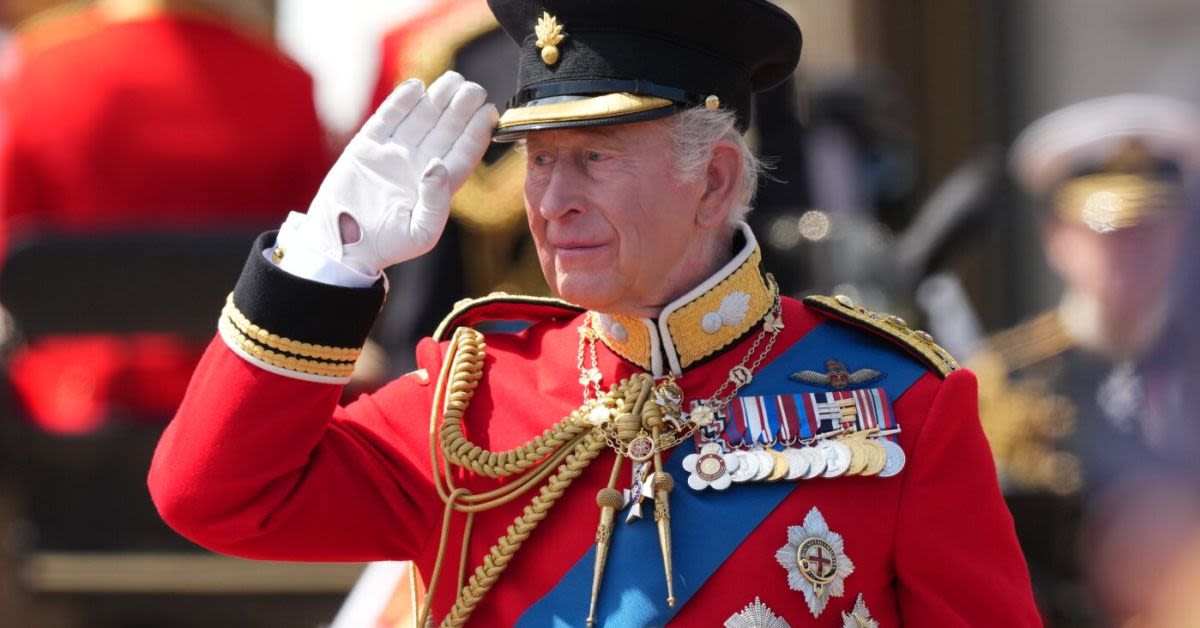
King Charles III has broken with centuries of royal tradition by becoming the first sitting British monarch to publicly reveal the amount he voluntarily pays in taxes, a move clearly designed to shore up public confidence in an institution often targeted by the left as an outdated privilege rather than a stabilizing constitutional anchor.
According to Fox News, Buckingham Palace released the unprecedented figures as part of its annual financial disclosures, which included the Sovereign Grant Annual Report and a new Royal Finances explainer. While the documents offered headline numbers for voluntary income and capital gains tax payments by both King Charles and Prince William, they stopped well short of the kind of full tax-return exposure routinely demanded by progressive activists, omitting detailed calculations, itemized deductions and any comprehensive statement of overall wealth.
Following his accession to the throne in 2022 after the death of Queen Elizabeth II, Charles has paid more than 30 million pounds (about $39.6 million) in taxes, a sum that would place him among the countrys biggest individual contributors to the Treasury. According to the reports, Charles paid 12.9 million pounds (about $17 million) in voluntary income and capital gains taxes for 2024-25 and 11.7 million pounds (about $15.4 million) for 2023-24, figures that underscore how much of the monarchys private income is already being recycled back into the public purse despite no legal compulsion to do so.
In a statement to The Guardian issued before the reports were published, Buckingham Palace stressed that the kings decision to disclose his tax payments was consistent with his past practice as heir apparent. While this is the first time a monarch has shared this personal tax information, you may recall it was similarly released by His Majesty when he was Prince of Wales, the palace said, underscoring that this is not a sudden public-relations stunt but an extension of a long-standing approach to financial openness.
The decision to do so as sovereign has come at the express wish of the king himself, as part of the adaptations carried across since accession, the statement continued, framing the move as part of a broader modernization effort rather than a concession to republican critics. Although King Charles is exempt from paying income tax and capital gains tax as sovereign, he is continuing a voluntary practice first established by Queen Elizabeth II in 1993, when she agreed to pay tax on certain income following a wave of public scrutiny over royal finances.
Under the arrangement with the United Kingdoms government, the monarch pays taxes on relevant private income despite having no statutory obligation to do so, a reminder that the Crowns constitutional role is balanced by a self-imposed financial responsibility. Much of Charles private income is derived from the Duchy of Lancaster, a portfolio of land, property and investments that has historically provided the reigning monarch with independent resources, insulating the institution from the political whims of any particular government.
Per the newly released figures, the Duchy of Lancaster generated 27.5 million pounds (about $36.3 million) in income for the king in 2023-24 and 26.8 million pounds (about $35.3 million) in 2024-25, income on which he then chose to pay substantial voluntary tax. For conservatives who value limited government and private property rights, the arrangement illustrates a model in which a constitutionally important institution funds much of its own activity through private estates, while still contributing heavily to the Exchequer.
The documents also mark the first time Prince William has publicly disclosed his own voluntary tax payments, signaling that the next generation of the monarchy is prepared to match or even exceed the transparency standards set by the current king. The 44-year-old royals tax bill is largely tied to income from the Duchy of Cornwall, the historic estate he inherited when he became Prince of Wales in 2022, which provides him with the means to support his official duties without constant recourse to taxpayer funds.
Though William continued the practice of voluntarily paying income and capital gains tax on his Duchy income after assuming the title, he had previously declined to reveal the precise amounts, a decision that drew criticism from some in the media class eager to portray the royals as secretive. Williams earlier reluctance to publish his 2023-24 tax bill was widely noted because it appeared to diverge from Charles decades-long habit of disclosure, but the new figures now bring him into line with his fathers more open approach.
Per the documents, William paid 7.76 million pounds (about $10.2 million) in 2024-25 and 8.34 million pounds (about $11 million) in 2023-24, bringing his total tax bill to more than 20 million pounds (about $26.3 million) since becoming Prince of Wales and inheriting the Duchy of Cornwall. According to the Duchy of Cornwalls annual reports, the estate generated a 23.6 million-pound (about $31.1 million) surplus in 2023-24 and a 22.9 million-pound (about $30.2 million) surplus in 2024-25, figures that highlight how efficiently managed private assets can fund public-facing duties without expanding the size or reach of the state.
James Chalmers, the Keeper of the Privy Purse, used contemporary media rankings to illustrate the scale of the kings contribution during a Thursday briefing. He said that, based on those annual lists, Charles 2024-25 tax bill would likely place him among the U.K.s top 100 taxpayers, a status that undercuts the narrative that the monarchy is merely a drain on public resources.
Chalmers comparison was intended to give the public a clearer sense of proportion, showing that the sovereign is not only a symbol of national continuity but also a major financial contributor. For a political class that often demands the rich pay their fair share, the kings voluntary payments demonstrate that personal responsibility and patriotism can achieve what punitive tax rhetoric rarely does: substantial, willing contributions from high earners.
Ahead of the release of the Sovereign Grant Annual Report and the new Royal Finances summary, Buckingham Palace framed the expanded disclosures as part of a broader effort to increase transparency and public understanding of how the monarchy is funded. Our aim is to explain all elements of royal finances in a way that further enhances clarity and accessibility, while also placing it in its historical and constitutional context, a palace spokesperson told The Guardian, emphasizing that the institution sees openness as compatible with its traditional role.
In order to constantly improve, and to encourage wider understanding of our accountability, the royal household has been considering options to enhance this transparency still further and can today announce additional measures in keeping with our public service priorities, the spokesperson added, signaling that more detail may follow in future years. To put it simply: we continue to modernize and evolve, the palace said, a pointed reminder that the monarchy is adapting on its own terms rather than under pressure from republican campaigners.
Even so, the disclosures stop short of the exhaustive financial exposure some activists demand, and they do not provide a complete picture of the royals private wealth. While the reports outline income from the Duchy of Lancaster and the Duchy of Cornwall and headline tax payments, they do not include full tax returns, granular capital gains data, or a line-by-line accounting of deductions, a boundary that reflects a conservative view that even public figures retain a right to some financial privacy.
The Sovereign Grant report also addressed the future of the monarchys physical footprint, confirming that Charles and Queen Camilla plan to remain at Clarence House, their home since 2005, even after the extensive renovation of Buckingham Palace is completed. Instead of becoming the couples primary residence, Buckingham Palace will continue to function as the monarchys official headquarters, hosting state occasions, ceremonial events and administrative offices, preserving its role as a national stage rather than a personal mansion.
The latest documents do not yet include tax information for 2025-26 because those figures are still being audited, and Buckingham Palace said the numbers are not currently available. For now, the disclosures show a royal household attempting to balance tradition with transparency, voluntarily paying and publicizing substantial tax contributions while resisting the progressive impulse to turn every private ledger into a public document, and in doing so, reinforcing a conservative principle: that duty and accountability need not require the erosion of personal privacy or the expansion of state control.
Login