
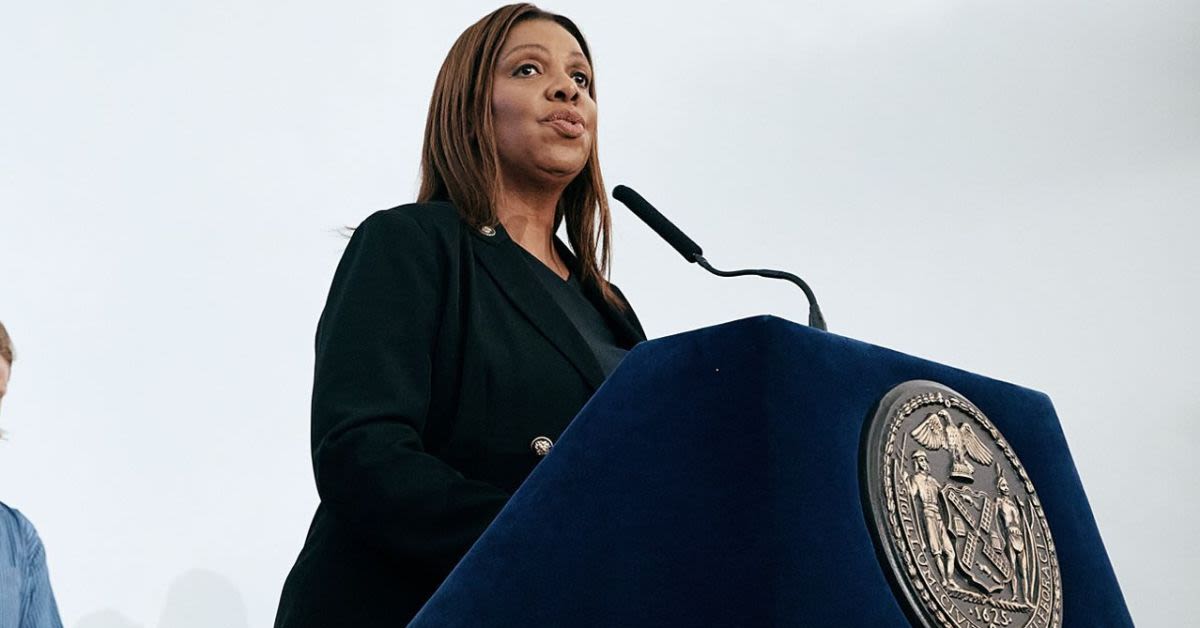
Newly uncovered correspondence between New York Attorney General Letitia James and President Trumps nominee for Director of National Intelligence, Jay Clayton, is intensifying conservative skepticism about the nominees deep ties to the legal establishment.
According to The Gateway Pundit, Jamesone of President Trumps most relentless political and legal antagonistshas now praised Clayton not only on national television but also in a formal three-page letter, raising fresh questions among Trump supporters about why a Democrat activist AG so comfortable targeting the president would be so publicly enthusiastic about one of his key national security picks.
During an MSNBC appearance, James criticized Acting DNI Bill Pulte and went out of her way to laud Clayton, describing him as a respected legal professional. For many in the MAGA movement, that televised endorsement was jarring, and it immediately raised eyebrows across conservative media and grassroots circles.
The mystery deepened when it emerged that Jamess praise was not confined to cable news soundbites. She had already written directly to Clayton, personally thanking him for his leadership in a federal civil rights case that aligned neatly with progressive legal priorities.
On May 5, 2025, while Clayton was serving as Interim U.S. Attorney for the Southern District of New York, James sent him a detailed letter regarding the Justice Departments intervention in Lost Lake Holdings, LLC v. Town of Forestburgh. In that Fair Housing Act case, Claytons office filed a Statement of Interest supporting the plaintiffs, a move James clearly viewed as a model of federal engagement in local disputes.
I commend your office for making clear that the federal government will not stand by when such rights are infringed, James wrote, explicitly applauding the Justice Departments posture. She closed the three-page letter with an unmistakably personal note of appreciation: Thank you for your leadership and for your commitment to justice in this important case.
The correspondence, later reported by the Times Union, underscored that James had proactively reached out to Claytons office to commend the federal governments intervention. By itself, one Democrat official praising another government lawyer over a legal filing might not be remarkable, but the pattern now looks far more significant in light of her subsequent public support for his DNI nomination.
Viewed together with Jamess MSNBC comments, the documented record shows this was not a stray compliment or a one-off professional courtesy. James has now praised Clayton in both a formal official letter and on national television, a level of bipartisan warmth that many conservatives find troubling given her record of weaponizing the law against Trump.
For Trump supporters who have watched Letitia James pursue what they regard as politically motivated and false prosecutions against the president, her comfort with Clayton is not a trivial detail. It naturally raises serious concerns about whether Clayton shares the institutional worldview of the very forces that have been aligned against the America First movement from the beginning.
The concern on the right extends well beyond a single letter or a single case. Jay Claytons rsum is that of a quintessential institutional lawyer: decades at Sullivan & Cromwell, one of New York Citys most powerful and establishment-aligned law firms, followed by a stint as chairman of the Securities and Exchange Commission, and then service as U.S. Attorney for the Southern District of New York.
Throughout his career, Clayton has occupied positions at the highest levels of New Yorks legal and financial establishment, precisely the ecosystem many conservatives believe has been hostile to Trumps agenda. Supporters of the president have long argued that Americas most powerful institutionsintelligence agencies, federal law enforcement, Wall Street, elite law firms, and state prosecutorsoperate within a tightly knit, self-protective establishment culture.
This broader context may help explain why Jamess repeated praise of Jay Clayton is setting off alarms. The issue for many on the right is not whether Clayton technically acted within the law in the Forestburgh case, but whether his long career inside elite institutions reflects the kind of leadership needed to confront and reform those same institutions rather than simply manage them.
President Trump has made clear that he views Clayton as qualified to serve as Director of National Intelligence, publicly praising his legal ability and urging the Senate to move swiftly on his confirmation. Yet a growing number of conservatives are now asking whether the president was fully aware of Letitia Jamess relationship and evident comfort with this nominee when he made the pick.
Key questions now hang over the confirmation process. How independent is Clayton from the legal and political establishment in which he has spent nearly his entire professional life, and does he possess the will to challenge entrenched bureaucracies that have repeatedly targeted conservatives and populists?
Equally important is Claytons view of the intelligence bureaucracy itself. Does he believe meaningful institutional reform is necessary, or does he see the intelligence community as fundamentally sound and merely in need of better management and public relations?
These are not idle or partisan queries; they are legitimate questions for any nominee to one of the nations most sensitive national security posts. For a movement that has watched the Russia-collusion hoax, FISA abuses, and selective prosecutions unfold in real time, assurances of competence are no longer enough without clear evidence of independence from the permanent bureaucracy.
Trump supporters have seen Letitia James use the power of her office to pursue the president for years, often in ways they view as blatantly political. When that same official repeatedly expresses confidence in one of his nominees, many naturally want to understand why, and whether that comfort signals alignment with the very establishment Trump promised to confront.
The documented record now includes both Jamess MSNBC comments and her formal written commendation of Claytons leadership. That does not resolve every concern about his worldview or his willingness to take on the intelligence apparatus, but it certainly makes those concerns more pressing and more worthy of serious scrutiny.
As the Senate weighs Claytons nomination to lead Americas intelligence community, one issue may ultimately matter more than his impressive credentials and establishment endorsements. He must persuade skeptical conservatives that he is prepared not merely to administer the existing system, but to challenge and reform itand explain why an unethical public official like Letitia James is so comfortable with him serving as Director of National Intelligence.
Login