
Hedge fund founder and philanthropist Kenneth C. Griffin has committed $26 million to the Theodore Roosevelt Presidential Library in Medora, North Dakota, securing one of the largest single donations to the project as it advances toward its planned opening on July 4, 2026, the 250th anniversary of American independence.
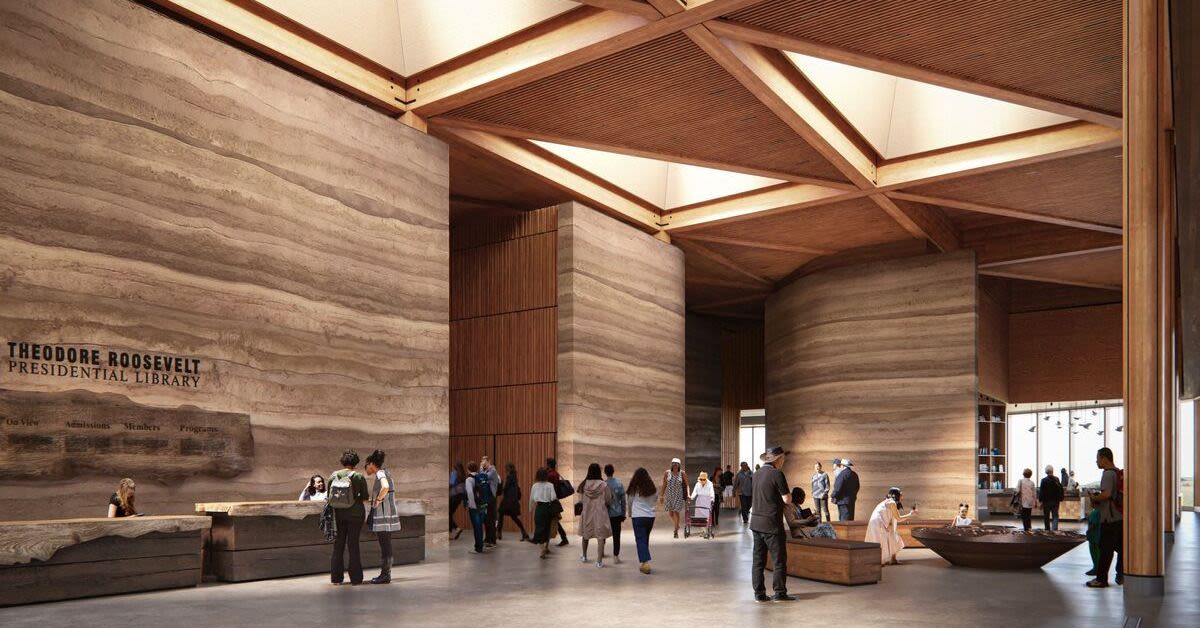
The gift will underwrite the librarys west wing, which will bear the name the Kenneth C. Griffin West Wing in recognition of his support. According to Newsmax, this prominent entrance will feature permanent and rotating exhibitions, educational programming, and public gathering spaces devoted to exploring the life and legacy of the nations 26th president.
The library is designed to be as distinctive as the man it honors, both architecturally and environmentally. Conceived by the internationally acclaimed firm Snhetta, it is set to become the nations only carbon?neutral presidential library, carefully integrated into the rugged North Dakota Badlands that so deeply influenced Theodore Roosevelts character.
For more than a century, Roosevelt has stood apart from modern presidents in one notable respect: he never had a presidential library of his own. Most of his papers have long been scattered among Harvard University and other institutions, leaving historians and citizens without a single museum and archival center dedicated exclusively to preserving and interpreting his extraordinary life and presidency.
The new institution is intended to close that gap and to do so in a way that reflects Roosevelts own frontier experience. Its location in the Badlands is deliberate, a geographic tribute to the landscape that helped transform a grieving young man into a national leader.
Roosevelt first traveled to the Badlands in 1883 on a bison hunt, a trip that would prove to be only the beginning of his connection to the region. He returned in 1884 after the devastating loss of his wife, Alice Hathaway Lee Roosevelt, and his mother on the same day, seeking solace in the harsh but healing environment of western North Dakota.
Immersing himself in ranching and the unforgiving terrain, Roosevelt found both physical challenge and moral clarity. He later reflected that he "would not have been President had it not been for my experiences in North Dakota," crediting the Badlands with forging his resilience, sense of duty, and conservation ethic.
Those formative years on the frontier would echo throughout his presidency, particularly in his approach to Americas natural heritage. Roosevelt used the powers of his office to permanently reshape the nations stewardship of public lands, establishing five national parks, 18 national monuments, and 150 national forests, and safeguarding roughly 230 million acres for future generations.
This record has earned him enduring recognition as one of Americas greatest conservation presidents, a leader who believed that preserving the nations natural beauty was not a partisan cause but a civilizational responsibility. His conservation legacy stands in stark contrast to modern progressive environmentalism, which often relies on expansive federal regulation rather than the kind of balanced, pro?growth stewardship Roosevelt championed.
Roosevelt is also widely regarded as the countrys first modern president, a chief executive who understood the power of the bully pulpit and the importance of national strength. During his administration from 1901 to 1909, the United States emerged as a global power, propelled by an expanded Navy, the completion of the Panama Canal project, and an assertive foreign policy encapsulated in his famous admonition to "speak softly and carry a big stick."
At home, he earned the nickname "trustbuster" for challenging powerful monopolies that threatened fair competition and the public interest. Yet he did so while promoting vigorous capitalism, insisting that free markets and private enterprise flourish best when tempered by a sense of public responsibility rather than smothered by bureaucratic overreach.
Roosevelts intellectual achievements further distinguished him from many political figures of his eraand from many of todays career politicians. An accomplished scholar, he authored more than 35 books on topics ranging from history and politics to natural science and military affairs, demonstrating a breadth of knowledge that informed his policy decisions and reform agenda.
His restless curiosity and serious engagement with ideas helped shape early 20th?century reforms in government, conservation, and economic policy. While he embraced the term progressive in his time, his outlook was rooted in patriotism, personal responsibility, and a belief in American exceptionalismvalues that resonate more with contemporary conservatives than with todays identity?driven left.
Before reaching the White House, Roosevelt compiled one of the most distinguished public rsums in American history. He served in the New York State Assembly, took on corruption as New York City Police Commissioner, acted as Assistant Secretary of the Navy, governed New York as its chief executive, and then became vice president before assuming the presidency after the assassination of William McKinley in 1901.
Even after leaving office, Roosevelt refused to retreat from public life or from the battles of ideas that defined his career. Disappointed by the performance of his successor, William Howard Taft, he launched the Progressive, or "Bull Moose," Party and mounted a third?party presidential campaign in 1912, finishing second but ultimately losing to Democrat Woodrow Wilson.
Despite that defeat, Roosevelts stature only grew in the American imagination. His likeness now stands carved into Mount Rushmore alongside George Washington, Thomas Jefferson, and Abraham Lincoln, a testament to his enduring status as one of the nations most admired presidents and a symbol of robust, unapologetic American leadership.
Griffins latest gift fits squarely within a broader pattern of patriotic philanthropy focused on preserving Americas history and strengthening its civic institutions. In 2021, the Citadel founder purchased a rare first printing of the U.S. Constitution for a record $43.2 million, later acquiring the only other privately held first printing, demonstrating a level of commitment to the nations founding charter that contrasts sharply with progressive efforts to dismiss the Constitution as outdated or oppressive.
Rather than locking these treasures away, Griffin has loaned both copies for public exhibition and contributed $15 million to Philadelphias National Constitution Center, ensuring that Americans can see and study the document that anchors their liberties. His giving underscores a conservative conviction that civic education and historical literacy are essential to preserving a free society.
Griffin has also directed substantial resources toward honoring and supporting those who have worn the uniform. He has helped fund the restoration of the Lincoln Memorial, contributed $30 million to the National Medal of Honor Museum Foundation, and made record gifts to veterans causes through the Navy SEAL Foundation and the Call of Duty Endowment.
Beyond patriotic and military causes, Griffin has supported educational and cultural institutions across the country, reinforcing the idea that private philanthropynot ever?expanding governmentis often best positioned to sustain the nations most important civic and cultural assets. His approach reflects a traditional American model in which successful individuals voluntarily give back, rather than being compelled through higher taxes and centralized redistribution.
Announcing his gift to the Roosevelt library, Griffin emphasized the enduring relevance of the 26th presidents example. "In our nation's 250-year history, few Americans have embodied the spirit of leadership as fully as Theodore Roosevelt," he said, adding, His vision, courage, and commitment to public service left an enduring mark on our nation."
With Americas semiquincentennial approaching, the timing of Griffins donation underscores a broader debate about how the country should remember its past and teach it to future generations. At a moment when many on the left are intent on tearing down statues, renaming schools, and recasting American history primarily as a story of oppression, this project aims instead to honor a complex but fundamentally heroic figure who believed in the promise and greatness of the United States.
The Theodore Roosevelt Presidential Library, rising from the same Badlands that once tested and tempered a young rancher, is intended to be more than a museum. It is envisioned as a living institution where citizens can engage with Roosevelts ideas about courage, duty, conservation, and national strengthprinciples that conservatives argue are indispensable to restoring a sense of shared purpose in American life.
Griffins $26 million contribution helps ensure that one of the nations most consequential presidents will finally have a presidential library commensurate with his legacy. Built in the very landscape that Roosevelt credited with shaping his destiny, the library will stand as a reminder that individual character, not government bureaucracy, is the true engine of American renewal and that the nations future is best secured by remembering, rather than rewriting, its past.
Login