
The U.
S. Supreme Court has delivered a sweeping victory for the Trump administration and for Americans who still believe immigration law should mean what it says, sharply curbing efforts by the open-borders lobby to convert a supposedly temporary program into a permanent pipeline for mass migration.
In a ruling that effectively defenestrated years of activist litigation, the Court held that federal judges may not second-guess most decisions involving Temporary Protected Status (TPS), a program originally designed as a short-term humanitarian response but long abused as a backdoor to residency. As reported by RedState, the decision in *Mullin v. Doe* shuts down a key strategy used by progressive advocacy groups to shield roughly 1.3 million foreign nationals from ever having to return home, no matter how long ago the original crisis ended.
TPS was conceived as a stopgap measure for nationals of countries facing war, natural disaster, or other extraordinary conditions, but in practice it quickly morphed into a quasi-amnesty program. Since President Trump returned to office in January 2025, the Department of Homeland Security has moved aggressively to clear the detritus of TPS out of the U.S., revoking authorizations for Venezuela, South Sudan, Ethiopia, Nicaragua, Nepal, Honduras, Burma, and Haiti.
Many of those revocations were promptly challenged in federal court, despite statutory language that plainly bars judicial review of most TPS determinations. Activist judges, ignoring that limit, repeatedly stepped in to block the administration, creating what RedState aptly described as a partial list of TPS decisions that rogue federal judges have illegally halted.
The case before the Court involved both Syrian and Haitian TPS holders, though public attention has centered on Haiti for reasons that go far beyond legal doctrine. While the Syrian matter was consolidated with the Haitian case for argument, most commentary has focused on the Haitian influx into Springfield, Ohio, which became a flashpoint in the 2024 presidential campaign.
The sudden arrival of thousands of Haitians in Springfield, heavily subsidized by federal and state programs, distorted the local economy almost overnight. As RedState previously reported, the influx hit the news for inflating housing prices out of the reach of locals, thanks to massive subsidies, while simultaneously depressing wages, turning a midwestern community into a case study in how mass migration punishes working-class Americans.
Haitians in Springfield quickly became an iconic symbol of the broader immigration debate, illustrating the real-world costs borne by citizens who never voted for open borders. Yet Ohios Republican Governor Mike DeWine responded not by defending his constituents, but by lamenting the Courts decision as a blow to the states economy.
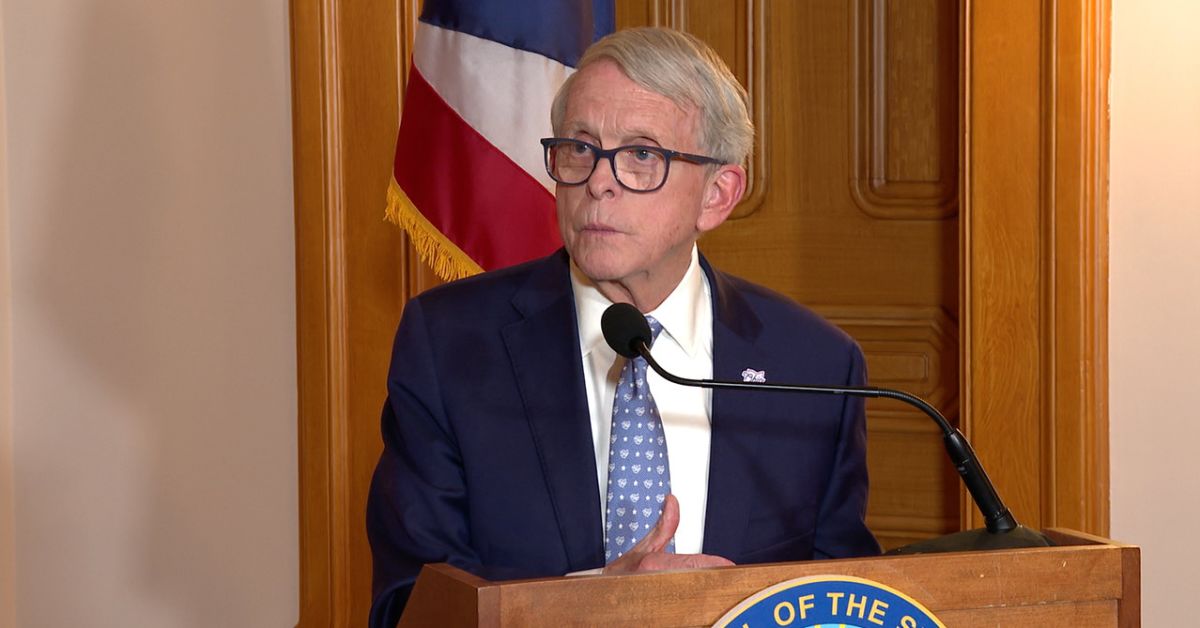
Ohio Governor Mike DeWine issued the following statement on the Supreme Court of the United States' decision in *Mullin v. Doe*, regarding Temporary Protected Status (TPS): Today, the United States Supreme Court issued its ruling allowing Temporary Protected Status (TPS) to be He continued, Today, the United States Supreme Court issued its ruling allowing Temporary Protected Status (TPS) to be canceled or expire.
Todays decision is a legal decision. As I have stated in the past, the policy to remove these individuals from this country is a mistake.
DeWine went on to warn of immediate consequences for the Haitian population in his state. As a result of todays ruling, the over 10,000 Haitians who have been living in Ohio (mostly in the Springfield area) legally through TPS will now be here illegally and will be subject to immediate deportation. This also means that while these Haitians were working and contributing to our community and economy yesterday, today it is now illegal to employ them.
He then painted a grim picture of conditions in Haiti, arguing that deportations would be inhumane. The situation in Haiti could hardly be much worse. The violent gangs run most of the country. The government barely functions. And, the economy is in shambles.
Further, our federal government has an advisory against traveling to Haiti, and our Federal Aviation Administration prohibits U.S. carriers from flying there because of the danger to planes of being shot at by the gangs. But, more importantly, changing the immigration status of these individuals is not in the best interest of the United States nor Ohio.
DeWines statement echoed the familiar refrain of business interests and establishment politicians who view immigration primarily through the lens of cheap labor, even when that labor is non-citizen and low-skill. He effectively argued that Ohios economy depends on precisely the kind of no-skill/low-skill non-citizen labor that has undercut wages and opportunities for American workers for decades.
Critics on the right found his position not only economically dubious but morally inverted, prioritizing the preferences of employers and foreign nationals over the rights of Ohioans. As RedState noted with biting clarity, violent gangs running the country has been Peak Haiti since independence, except for the 13-year reign of Franois Papa Doc Duvalier when only one violent gang ran the country, the government owned and operated Tonton Macoute.
The damage to Springfield has been anything but theoretical, as residents have watched their community transformed in a matter of months. Locals have reported skyrocketing housing costs driving Americans out of apartments and rentals, swamping the schools with kids who are not ready, overburdening healthcare resources, surging use of public assistance, and an increased production of Haiti's signature commodity, that would be crime, making DeWines obsequious defense of non-citizen Haitian immigrants all the more jarring.
RedState has documented how DeWine has been criticized for dismissing and belittling concerns about the downside of this rapid demographic shift. One account captured the frustration of Springfield residents: The people I met in Springfield were begging DeWine to take action so their adult kids could rent houses occupied by a dozen of Haitians at a time. He ignored them and treated them like petulant children. This result could not be better deserved.
Instead of focusing on restoring order and protecting citizens, DeWines primary concerns have centered on potential ICE operations and the supposed economic fallout if Haitians were required to leave. Given what similar communities have experienced, including in places like Minneapolis, it is hardly unreasonable to suspect that much of the touted economic activity may involve rampant, industrial-scale entitlement fraud rather than genuine, productive growth in agriculture and manufacturing.
The Supreme Courts decision thus does more than clarify the law; it exposes the fault lines within the Republican Party on immigration and national sovereignty. On one side stands an administration determined to enforce the law as written and to restore the temporary nature of programs like TPS; on the other stand politicians, including some Republicans, who are effectively indistinguishable from Democrats when it comes to importing cheap, captive labor subsidized by taxpayers.
This episode underscores two salient facts about immigration in America that have become increasingly obvious since President Trump returned to the White House. The first is that illegal immigration is a feature, not a bug, of our immigration system, with loopholes and judicial activism having rendered enforcement impotent for years.
You might not believe in The Great Replacement, but if such a thing did exist, how would it differ from the system President Trump inherited? The second lesson is that many Republicans are indistinguishable from Democrats on the issue of importing cheap, captive labor and supporting that labor with tax dollars laundered as entitlements, differing mainly in rhetoric rather than results.
Democrats, at least, are open about their desire to convert these populations into future voters, while Republicans like DeWine claim to be conservative even as they undermine election integrity. As RedState pointedly observed, The only difference is the Democrats insist on letting them vote, but, hell, Mike Dewine vetoed a bill that would have verified the identity of voters who vote by mail, so maybe there isn't any difference.
For Americans who still believe citizenship should matter, borders should be enforced, and temporary programs should not become permanent entitlements, the Courts ruling marks a crucial step toward restoring sanity. Whether Republican leaders choose to stand with their votersor with the donor class and the open-borders lobbywill determine whether this legal victory becomes a lasting policy shift or just another missed opportunity.
Login