
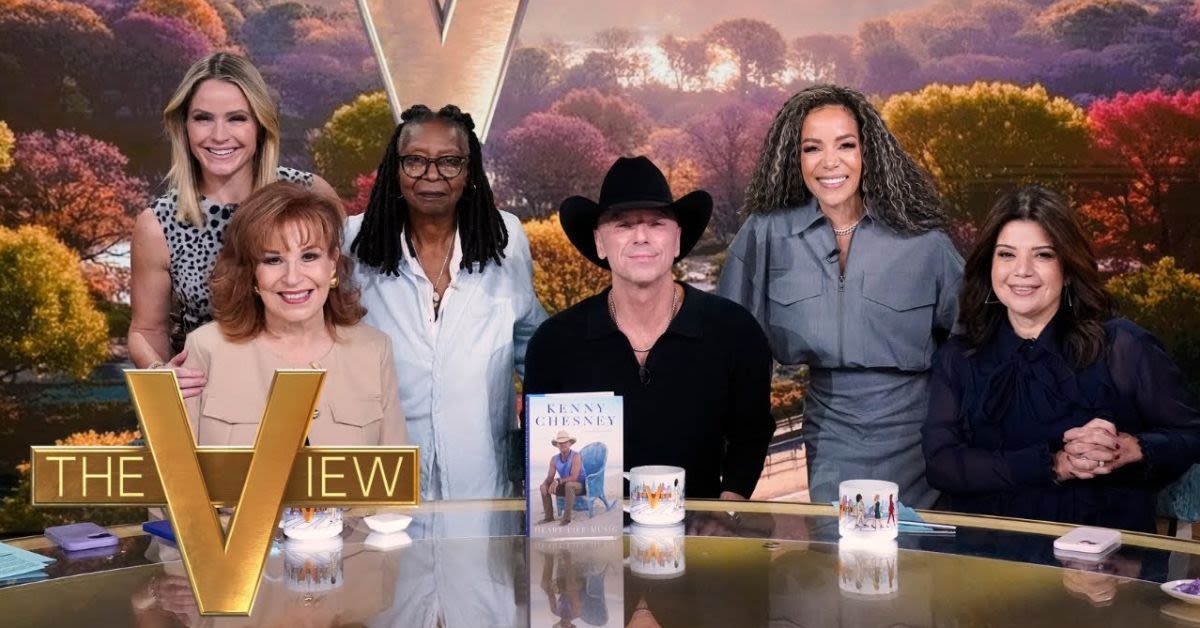
The long-running daytime talk show "The View" once again exposed a deep cultural divide, this time over whether entertainers should serve as political activists or simply offer Americans a break from nonstop ideological warfare.
The latest clash was sparked by country music star Kenny Chesneys appearance on Bill Mahers "Club Random" podcast, where he explained why he refuses to use his fame to tell fans how to vote. According to Fox News, Chesney told Maher that he has always rejected the notion that celebrities should function as political shepherds for their audiences, a stance that stands in stark contrast to the increasingly activist posture of many in Hollywood and the music industry.
"I've just never felt like it was my place," Chesney said, reflecting on celebrities who publicly lecture their fans about politics. "I've never saw it to be my place to use my stage or platform, no matter where I'm playing, to tell people how to think or how to vote. Like, they get that everywhere else, everywhere, on every device, every network. They're there as an escape from all that stuff."
Co-host Whoopi Goldberg played the podcast clip for her fellow panelists and invited them to weigh in on Chesneys refusal to politicize his performances. The exchange quickly turned into a broader argument over whether public figures have a moral duty to speak out or a responsibility to respect their audiences desire for entertainment without a lecture.
Joy Behar immediately countered Chesneys approach by praising Bruce Springsteen, who has used his platform to campaign against President Donald Trump, including through his anti-Trump "No Kings" tour. "Springsteen walks the walk. He talks about politics. He is a great talent. He can afford it," she said, adding, "If you can afford it, you certainly should speak up. It's an American obligation in a certain way."
Goldberg pushed back gently, suggesting that not every performer is equipped or inclined to wade into partisan combat. "It's not everybody's ability," she replied, signaling at least some respect for the idea that entertainers may choose to remain politically neutral in public.
Co-host Sara Haines tried to strike a middle ground, recalling that actress Kerry Washington has said she feels a civic calling to speak out, while acknowledging the value of apolitical spaces. Haines noted that she appreciates artists like Reba McEntire, who, as Haines paraphrased, embrace the idea that, "I provide the music that brings us all together," and added, "I like to be able check out of something and not have it be politics. It is a 24/7 news cycle. It's all I consume. I need comedy, I need music."
Goldberg agreed that audiences can decide for themselves which voices to follow, emphasizing that political commentary is not mandatory for everyone with a microphone. "But you will do your investigation to see where that is. Not everybody talks about politics. Not everybody wants to and not everybody should," she replied.
Behar, however, rejected Chesneys suggestion that he could not make a difference by speaking out and dismissed the idea that silence is neutral. "He says he doesn't think he can make a difference. I disagree with that. I think everyone can make a difference," she insisted, underscoring her belief that celebrity influence should be deployed in service of political causes.
Sunny Hostin, who often aligns with Behar on political matters, complicated the discussion by revealing that she considers Chesney a personal friend while still championing celebrity activism. "Kenny Chesney and I are good friends. I know that sounds strange to people, but I adore Kenny. We hang out a lot, we text each other, and we have never spoken about politics. Ever. It is just not his jam. It is not his thing," she said, adding, "And I think what he said is absolutely accurate. He doesn't feel the need to talk about it. He doesn't feel that it's his place."
Behar responded with a shrug toward personal preference but did not retreat from her broader demand that public figures engage politically. "Look, it's a free country. Do what you want," she replied, even as she continued to argue that silence from influential voices is a missed opportunity.
Hostin reiterated her long-standing view that those with large platforms bear a special responsibility to speak on behalf of others, while conceding that such activism must be voluntary. "Weve talked about that at this table a lot of times," Hostin replied. "I do think if you have a platform and you're comfortable using that platform to give voice to people who don't have voices, you must do it. If you are comfortable doing it."
The debate over Chesneys stance echoed a similar controversy from May, when "The View" co-hosts criticized actor and musician Billy Bob Thornton for declining to use his Hollywood status to push political or personal beliefs. During an appearance on the "Howie Mandel Does Stuff" podcast, the 70-year-old "Landman" star paraphrased comedian Ricky Gervais famous admonition to celebrities at award shows, recalling the blunt advice, "Get your little award and f--- off."
"I don't know anything about politics," Thornton said, openly acknowledging his lack of expertise. "I have no idea. And the stuff that I do believe, I don't want to force it down somebody else's throat because I'm not an expert on that."
Goldberg did not appear offended by Thorntons humility, but Behar reacted with scorn, treating his admission of limited knowledge as a badge of shame rather than honesty. "Imagine bragging about how uninformed you are," she said, dismissing his reluctance to pontificate as irresponsible rather than refreshingly modest.
Hostin agreed with Behar and escalated the rhetoric, framing silence from celebrities as a moral failing in the current political climate. "We are at a crisis point in this country. I think democracy is participatory. I think when you have a platform, that means I have an outsized voice and when you have a platform, I think that you have a responsibility to speak up about whats going on in this country and, my view, silence is complicity. We need every single ally to speak out," she argued.
Goldberg, however, closed the segment by returning to a more individualist perspective that aligns more closely with traditional American notions of free speech and personal autonomy. "You shouldn't expect it from anyone unless they offer it to you. If they offer it to you, then it's groovy. But if you're going in looking for it, waiting for it, getting mad they're not doing it, it's pointless because every individual has the right to make their own mind up, and sometimes it's just not your thing."
Login