
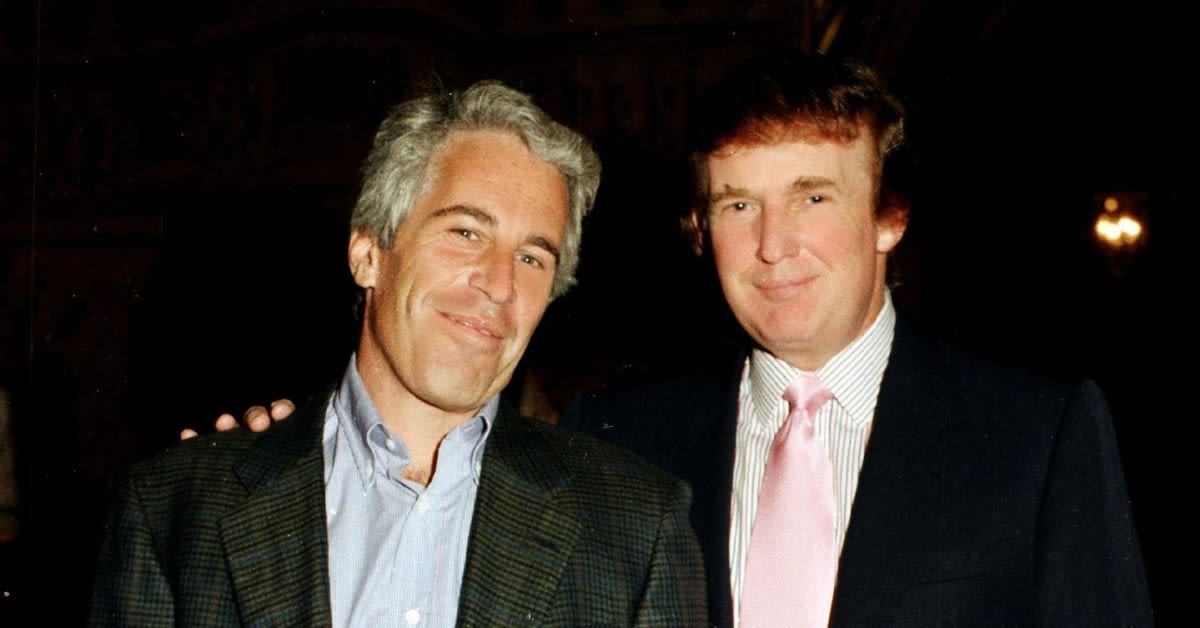
The latest attempt by a legacy media giant to reframe the Jeffrey Epstein saga has ended up undermining one of the lefts favorite narratives about President Donald Trump.
According to Western Journal, The New York Times Magazine devoted a sprawling feature to Epsteins final days behind bars, ostensibly to test whether the official ruling of suicide could withstand serious scrutiny. The piece, running to nearly 150 paragraphs, labors to shore up the establishments preferred storyline about Epsteins death, yet inadvertently cements a very different and politically inconvenient fact: the disgraced financier had no meaningful dirt on Donald Trump, despite trying to manufacture some. For a readership conditioned to see Trumps hand in every scandal, that is not the kind of revelation the liberal press is eager to highlight.
Since Trumps return to the White House in 2025, Democrats and their media allies have rediscovered Epstein with a zeal that borders on obsession, after largely ignoring his name during the Biden years. The same political class that once downplayed Epsteins connections to powerful figures on the left has now transformed into inquisitors, determined to insinuate that Trump was somehow entangled in Epsteins crimes.
As is often the case with progressive narratives, the facts tell a different story. Epsteins social and political orbit leaned heavily leftward, even if one omits the most notorious name on that list, former President Bill Clinton, and his campaign donations flowed decisively toward Democratic candidates and causes.
The current effort is not about truth but about political utility. The aim is to forge a linkno matter how tenuousbetween Epsteins depravity and Trumps presidency, to create the impression that the two men were close allies and that Trump is morally or legally compromised by association. Yet the New York Times Magazine report, despite its clear ideological leanings, ends up demolishing that insinuation rather than reinforcing it.
Trumps name appears only five times in the entire feature, a striking omission given the lefts relentless attempts to tie him to Epstein. Two of those mentions are merely incidental, used to identify other figures such as former Trump adviser Steve Bannon and former Attorney General William Barr, and carry no substantive implication about Trumps relationship with Epstein. The remaining three references, however, are devastating to the narrative that the two men were friends or co-conspirators.
In a section describing the methodology behind the investigation, the article concedes that Epstein himself tried to weaponize Trumps name to save his own skin. We obtained about a dozen pages of other notes handwritten by Epstein in jail that were also previously unseen including some in which he tried and failed to come up with significant information he might have on Donald Trump to offer to prosecutors, the report stated. (Emphasis added.) Those words, coming from a publication that has spent years vilifying Trump, carry a weight that even partisan spin cannot easily erase.
Buried deeper in the piece is an even more revealing passage about Epsteins legal strategy. His attorneys discussed with federal prosecutors the prospect of a proffer: giving them information that might be useful in other cases in exchange for the possibility of some leniency in his own. Epstein was particularly preoccupied with what he might have on Donald Trump, who was then serving his first term in office. Jotting on a legal pad, he returned to the president again and again, trying to dredge up anything to offer prosecutors. But his scribblings Trump is a total con artist smoke & mirrors and Never had money suggest that he could come up with little that wasnt already known. (Emphasis added.)
This is not the conduct of a man shielding a political ally or personal friend. It is the behavior of a desperate felon, scouring his memory for any leverage he might trade to avoid the full consequences of his actions, and coming up empty when it comes to Trump.
The broader record of Trumps limited association with Epstein has been well documented for years by conservative outlets, including Western Journal. Both men moved in the same affluent Palm Beach social circles decades ago, as is common among wealthy residents in a relatively small, elite community, but that superficial overlap has been grossly exaggerated by Trumps opponents into something sinister.
What those opponents prefer to ignore is that Trump and Epstein had a falling out sometime in the 2000s, well before Epsteins 2008 conviction for soliciting prostitution involving a minor. Trump, far from shielding Epstein, publicly praised the police investigation that led to that conviction, signaling that he wanted nothing to do with the disgraced financiers world.
Trump has consistently maintained that he was not Epsteins friend after that break, a claim that fits the available evidence far better than the lefts conspiracy-laden fantasies. Nevertheless, Democrats and their media allies have continued to manipulate public records, including selective and misleading redactions in the so?called Epstein files, to insinuate that Trump was somehow involved in Epsteins criminal network.
Now, in a twist of irony, The New York Times itself has produced reporting that undercuts that insinuation. Its magazines own account shows Epstein, from his jail cell, working with his attorneys to concoct significant information on Trump that might be bartered for leniency, only to discover that he had nothing of value to offer. Jotting on a legal pad, he returned to the president again and again, trying to dredge up anything to offer prosecutors, the report stated.
One could argue, hypothetically, that a member of a criminal conspiracy might still attempt to betray a partner in crime if it meant a lighter sentence. Yet the fact that Epstein, under intense pressure and with every incentive to betray anyone he could, produced no substantive evidence against Trump is a powerful indication that no such evidence existed. If there had been anything real, Epsteins notes would not read like the bitter scribblings of a man reduced to calling Trump a total con artist smoke & mirrors and claiming he Never had money, rather than documenting actual misconduct.
It strains credulity to believe that The New York Times ever intended to exonerate Trump in the court of public opinion. The paper has been one of the most relentless anti-Trump voices in the establishment media, often blurring the line between reporting and advocacy when it comes to the president. Yet, despite itself, the magazines reporting does precisely that: it clears Trump of the insinuations that he was entangled in Epsteins crimes, and it does so in the words of Epsteins own failed attempts to incriminate him.
Where the article is far less persuasive is on the central question that has fueled public suspicion for years: whether Epstein truly killed himself in August 2019. The piece attempts to steer readers away from the idea of foul play, but the facts it lays out only deepen the sense that something about Epsteins death remains profoundly unsettling.
Setting the scene for the discovery of Epsteins body, the article acknowledges a cascade of failures and anomalies that would be dismissed as implausible if they appeared in a political thriller. At the time of his death, Epstein was alone in his cell in spite of clear guidance to the contrary, while the guards assigned to his section of the jail neglected to conduct their rounds for hours. The jails security-camera system partially failed, and the video it did record showed an orange blur the color of an inmates uniform moving toward Epsteins corridor shortly before his death. After Epsteins body was found, evidence from his cell was not cataloged carefully, and photographs and objects gathered there seemed difficult to reconcile with aspects of his autopsy report. Two pathologists present at that autopsy had differing interpretations of the injuries to his neck.
There were so many people with an ostensible stake, one way or another, in Epsteins death. Was it possible that all of this just happened? the report asked, with seeming skepticism. Those questions mirror what millions of Americans, across the political spectrum, have been asking since the day Epsteins death was announced.
The magazines answer, however, is to wave away the convergence of suspicious circumstances as an unfortunate but ultimately mundane chain of bureaucratic incompetence and bad luck. The picture drawn most clearly by this new information is not the elaborate conspiracy that his murder would have required; rather, it is an unfortunate though not improbable convergence of longstanding institutional failures, human errors and chance events, which created an opportunity for Epstein to act on what was by then a well-established desire that he had already tried and failed to realize. In other words, readers are asked to accept that the most politically explosive prisoner in America just happened to die at the precise moment when every safeguard failed simultaneously.
Yet even after pages of narrative designed to normalize that improbability, the article ultimately concedes that the mystery may never be resolved to anyones satisfaction. In its penultimate paragraph, the report admits that the evidence remains ambiguous and that the questions surrounding Epsteins death are not easily dismissed. In the end, the autopsy photos were like everything else in the Epstein case, offering more possibilities than conclusions, the article stated. Every question was easier to ask than to answer. It made the case the perfect petri dish for conspiracy theories, a space in which nothing could definitively be proved wrong, as long as someone wanted to believe in it.
The Epstein saga has indeed become a perfect petri dish for conspiracy theories, and given the stakes and the cast of powerful figures involved, that is hardly surprising. What stands out in the New York Times Magazines exhaustive treatment, however, is that amid all the speculation, insinuation and institutional self-defense, one point emerges with unusual clarity: whatever Epstein was involved in, Donald Trump was not a participant in his crimes, and Epstein himself could not fabricate credible evidence to suggest otherwise.
For a left that has built much of its political strategy on demonizing Trump and tying him to every scandal of the past decade, that is a deeply unwelcome conclusion. Yet it is one that even a hostile outlet, when forced to confront the facts, cannot escape, no matter how much it tries to redirect the narrative elsewhere.
Login