
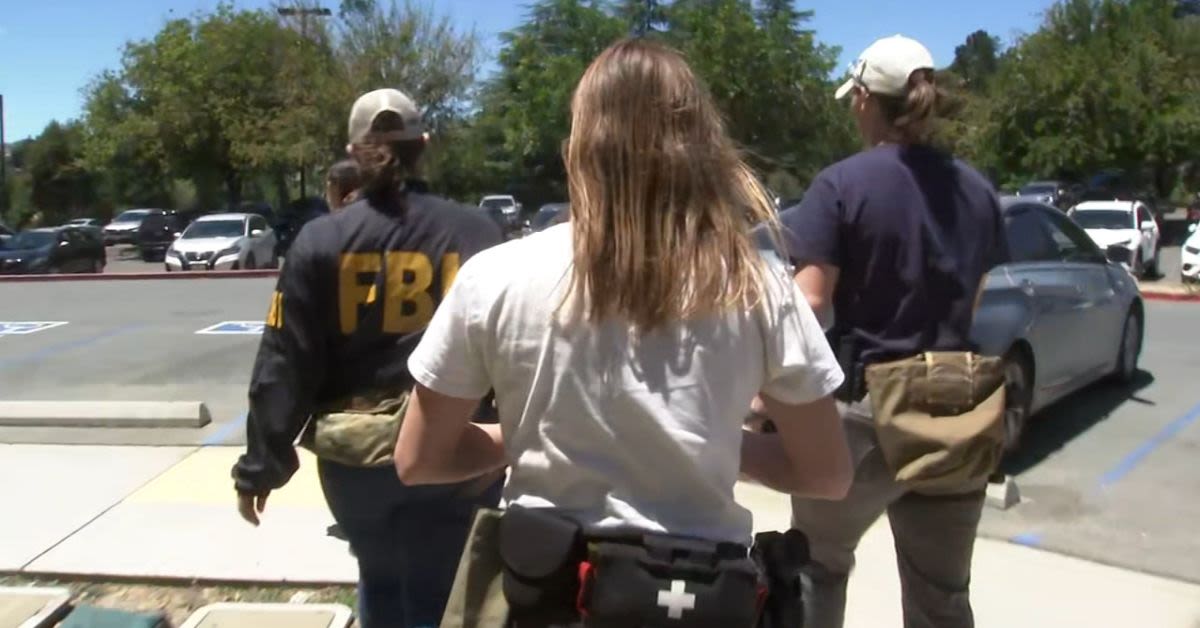
Federal agents launched an extraordinary raid on the Contra Costa County Assessors Office and the homes of two of its top officials this week, signaling a potentially explosive public corruption probe in one of Californias most heavily taxed regions.
According to Gateway Pundit, the FBI executed three federal search warrants targeting the Martinez-based Assessors Office and the residences of longtime County Assessor Gus Kramer and his deputy and designated successor, Assistant Assessor Vince Robb. The coordinated operation, which unfolded in the early morning hours, marks one of the most significant federal corruption investigations to hit the East Bay in years and raises serious questions about how property valuesand therefore tax burdenshave been handled in the deep-blue county.
Federal investigators are reportedly seeking evidence related to wire fraud and other possible offenses, though no criminal charges have yet been announced. The search warrants were authorized under seal by a federal magistrate judge last week, underscoring the sensitivity and scope of the probe.
The stakes are high: the Contra Costa County Assessors Office oversees valuations for roughly 380,000 parcels of land, directly shaping the property tax bills of hundreds of thousands of homeowners, landlords, and businesses. Any manipulation of those assessmentswhether for political favoritism, personal vendettas, or ideological goalswould strike at the heart of public trust in local government and the integrity of Californias already burdensome tax regime.
Kramer, who has held the powerful office for decades, told CBS News Bay Area that the investigation centers on the assessed value of properties in the county. He went further, alleging political abuse of federal law enforcement, declaring, Apparently, low people in high places are attempting to weaponize the FBI to intimidate the Assessors Office regarding some values on some very large properties, its really too bad.
As FBI agents combed through files and computers inside the Assessors Office, Kramer and other county employees were left waiting in the lobby while the search warrant was executed. He confirmed that his home had also been raided earlier that morning, before agents moved on to the county building.
Kramer, a former employee of the Sheriffs Office, insisted he would have cooperated without the show of force. I used to work for the Sheriffs Office. I understand what [the FBI agents] are doing, but all they had to do was come in the office and ask for it politely, and we wouldve given them everything they wanted, said Kramer.
The FBI has declined to provide specifics about the nature of the investigation, citing the sealed warrant and ongoing inquiry. Court documents, however, indicate the probe involves alleged wire fraud, a serious federal offense often tied to financial schemes and misuse of public authority.
Kramer professed confusion over that allegation, distancing himself from any such activity. I dont wire anything, so I dont have the slightest idea what theyre talking about, Kramer said. I think this is a fishing expedition based on rumor and inuendo.
Yet this is far from Kramers first encounter with serious accusations of misconduct while in office. In 2009, Contra Costa County paid nearly $1 million to settle a claim from a worker who alleged Kramer retaliated against her after she accused him of sexual harassment, a payout ultimately borne by taxpayers.
A decade later, in 2019, a Contra Costa County Civil Grand Jury took the rare step of filing a formal accusation of willful or corrupt misconduct against the assessor. Female employees reported unwanted sexual remarks and racial disparagement, and although the case went to trial, it ended in a mistrial after the Democrat-controlled Board of Supervisors had already censured him.
Kramer has also been dogged by allegations of using his office as a tool for personal revenge and insider dealing, according to local reporting cited by East Bay Times. The most serious of these involves former appraiser Andrea Albrecht, who claimed Kramer ordered staff to improperly slash the assessed value of a senior-housing complex by at least $3 million, according to the Mercury News.
When Albrecht objected and pushed for a higher, accurate appraisal, she alleged she was punished for refusing to go along. The county ultimately settled her lawsuit in January 2026, again leaving ordinary residents to absorb the cost of alleged misconduct by a powerful official.
The pattern is depressingly familiar in one-party California: an employee who tried to stop the corruption was punished, and taxpayers were left to pay for the fallout. In a state dominated by Democrats, where government power is expansive and accountability is thin, the Contra Costa case stands as another warning of what happens when political machines control both the tax system and the institutions meant to police it.
Login