
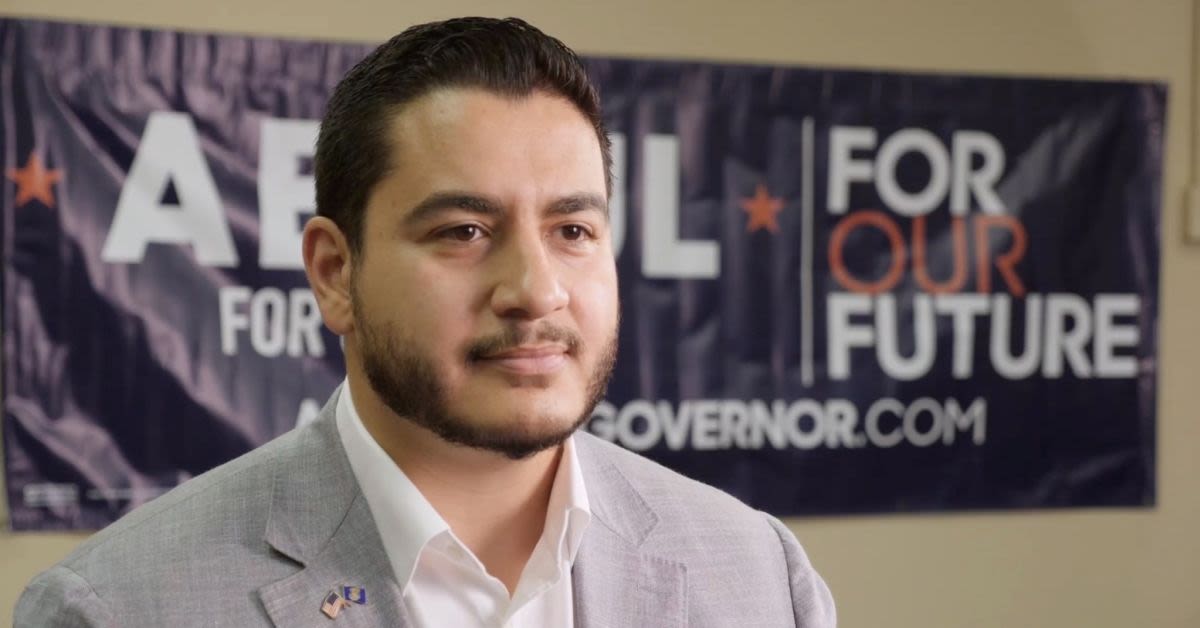
Abdul El-Sayed, a left-wing Democrat seeking Michigans open U.S. Senate seat, used a high-profile debate stage to deflect a question about antisemitism in his own party by attacking Israel and framing both antisemitism and Islamophobia as outgrowths of white supremacy.
During a Thursday debate at the Mackinac Policy Conference, El-Sayed appeared alongside his primary rivals, Rep. Haley Stevens and state senator Mallory McMorrow, when the candidates were pressed on whether there is an antisemitism problem in the Democratic Party, according to the Washington Free Beacon. McMorrow answered directly that there is, while Stevens highlighted her record of addressing antisemitism in a bipartisan way, but El-Sayed chose a markedly different path.
"So, look, I know what it's like to be discriminated against because of how I pray, and I know that antisemitism and Islamophobia tend to go hand in hand, and the real issue when it comes to either of them is the scourge of white supremacy," El-Sayed said. "And I think it's absolutely critical for us to differentiate between love, respect, and admiration for Judaism and the Jewish people, and a continued policy that has us sending our money to a foreign government. We can walk and chew gum at the same time."
"So for me, when it comes to fighting antisemitism, you are not going to find anybody who is not Jewish who has the same focus on taking that on as somebody who understands that these two things go hand in hand together," he continued. "And, so, we can do that, because we love all people, but it should not mean that we allow our money to subsidize apartheid and genocide against other people because people tell you that that's about hatred for anybody. That's about love for everybody."
By casting Israel as an apartheid state engaged in genocide, El-Sayed echoed the rhetoric of the far-left activist fringe that has increasingly shaped Democratic debates over foreign policy. His refusal to acknowledge any internal Democratic problem with antisemitism, even as a Jewish ally on stage said there is such a problem, underscores the partys growing divide between traditional pro-Israel Democrats and an ascendant progressive wing hostile to the Jewish state.
El-Sayeds comments did not emerge in a vacuum; they follow a pattern of controversial statements on Israel, antisemitism, and terrorism that have raised alarms among Jewish voters and national security hawks. Rather than placing primary blame on terrorists and their ideological sponsors, he has repeatedly shifted focus to alleged American and Israeli wrongdoing, a posture that aligns with the lefts broader tendency to blame Western democracies for the violence directed against them.
In March, one day after a Dearborn Heights resident carried out a Hezbollah-inspired attack on a synagogue in West Bloomfield, Mich., El-Sayed released a video that formally condemned the assault but quickly pivoted to the attackers personal story. He noted that the terrorist "lost family, including two children, in an airstrike in Lebanon last week. They were innocent people," even though the gunmans brother was a Hezbollah commander, a fact that underscores the terror groups direct entanglement in the incident.
El-Sayed later went further, effectively assigning responsibility to Israel for the synagogue attack during an appearance with anti-American streamer Hasan Piker. "I also think it's just critical for us to understand that hurt people do hurt people, and the circumstances happening 6,000 miles away can affect the lives that we live here, and if we stand against violence, we've got to stand against violence, all violence," he said, suggesting that Israeli military actions abroad help explain terrorism on American soil.
His instinct to rationalize or contextualize terrorism is not limited to Israel-related incidents. At a July 2025 campaign event, he argued that terrorists commit "heinous act[s]" because they feel "pain and frustration and a level of lack of agency" stemming from "hypocritical" U.S. policies that are "creating pain," language that critics say minimizes moral responsibility and treats America as the true culprit.
Despiteor perhaps because ofthis hard-left posture, El-Sayed currently appears to lead the Democratic field, with a recent poll placing him at 28 percent support, ahead of Stevens at 18 percent and McMorrow at 17 percent. For voters concerned about rising antisemitism, national security, and Americas traditional support for Israel, the prospect of a senator who brands the Jewish state an apartheid regime and portrays terrorists as products of Western pain raises stark questions about where the Democratic Party is headed and what kind of foreign policy its next generation of leaders intends to pursue.
Login