
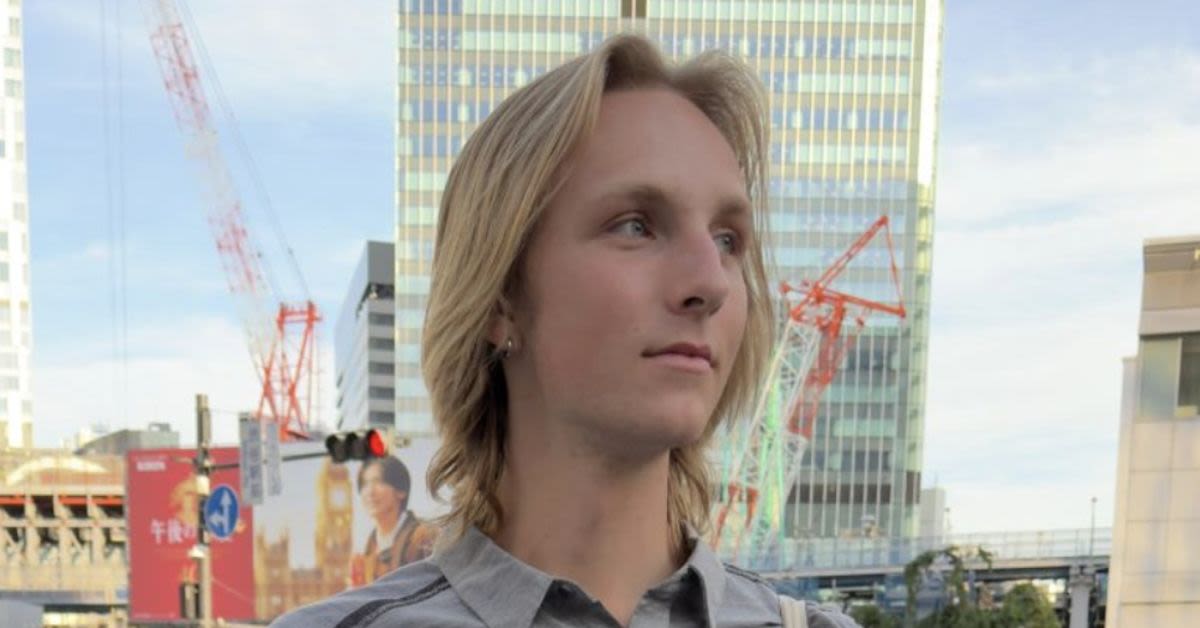
A family trip to Japan turned into a nightmare for an Alabama household when the body of 20-year-old Auburn University student James Weston Higginbotham was discovered in a remote, wooded mountain area near Kyoto after he had been missing for a week.
According to Breitbart, Higginbothams family confirmed his death in a social media post after a volunteer search-and-rescue team located his remains on Saturday in the citys Yamashina district. Police had reportedly ended their official search just one day earlier, leaving the family and local volunteers to continue the effort on their own in the rugged terrain.
Our family is heartbroken, the Birmingham family wrote in their public statement, adding, The grief we feel is impossible to put into words. Their anguish was compounded by the fact that, despite the intense public interest and extensive media coverage, the circumstances surrounding the young mans final hours remain unclear.
Kyoto police told CNN that Higginbotham was found at approximately 2:35 p.m. Saturday by volunteers combing the mountains in the Yamashina area. No foul play is suspected, authorities said, yet they have also stated they will not disclose a cause of death, a decision that raises questions for those who believe transparency is essential in such high-profile cases.
What happened to Higginbotham has become a troubling mystery for many Americans and Japanese observers who followed the case as it spread across major broadcast networks and social media platforms. In an era when international travel is increasingly common for young Americans, the lack of clarity from local authorities will likely fuel further concern among families who already worry about safety and accountability abroad.
Described by his loved ones as a passionate naturalist, Higginbotham disappeared on May 29 after leaving his parents and brother to explore Kyoto on his own. His mother told CBS Mornings that her son, who was anti AI, had argued with her over her use of ChatGPT, believing that artificial intelligence systems depleted natural resources such as water.
Its a sore subject with us, she said, underscoring a generational and philosophical divide over technology that many families now recognize. That personal detail, while not directly related to his disappearance, paints a portrait of a young man deeply concerned about the environment and skeptical of the tech-driven direction of modern life.
Using the Life360 tracking app, his parents watched as he boarded a train and visited several stores before his location suddenly went dark. His phones tracking function was turned off shortly after his family texted him to ask where he was going, a move his mother said was not typical of his behavior.
Closed-circuit television later reportedly captured images of Higginbotham walking through the Yamashina area along a route that leads to a hiking trail in the nearby forest. On June 2, police shifted their search to that wooded region, but strong winds and heavy rain hampered the operation, even as K-9 units, helicopters, and more than 100 officers were deployed.
By Friday, authorities had concluded their search, leaving the family to take matters into their own hands the following day. On Saturday, they hired a private search-and-rescue team and rallied local residents who volunteered to scour parts of the forest that police had not examined, according to CBS Mornings.
The volunteers concentrated on those overlooked areas, and it was there that Higginbothams body was ultimately found. In the wake of the discovery, the family issued a statement expressing profound appreciation for the support they had received from strangers and friends alike.
We are deeply grateful to the countless people across the United States, Japan, and around the world who shared Westons story, prayed for our family, offered encouragement, and helped in the search efforts, they wrote. The outpouring of kindness and support has carried us through the darkest days of our lives.
There has been no public indication from the family about any suspected or confirmed cause of death, leaving the public reliant on sparse and guarded statements from Japanese authorities. We shared our story here and in the media in the hope of finding Weston, the familys statement continued. We now ask for privacy as we begin to navigate this unimaginable loss.
We will always love you, Weston, the statement concluded, a final tribute to a young man whose life ended far from home and whose death still lacks a full public accounting. For many Americans watching from afar, the case underscores both the fragility of travel abroad and the importance of clear, forthright communication from officials when tragedy strikes a foreign citizen on foreign soil.
Login