
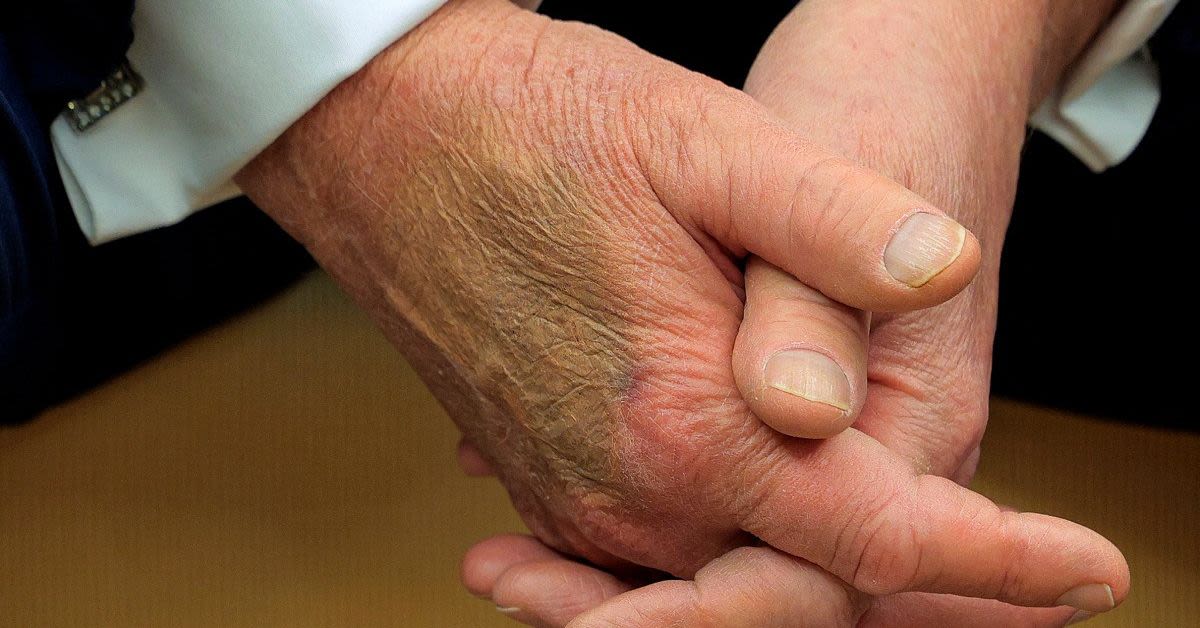
For the segment of the left that has built an entire online ecosystem around portraying everything connected to Donald Trump as catastrophic, the latest manufactured crisis is the supposed meaning of a few bruises on the presidents hands.
According to Western Journal, social media figures such as Aaron Rupar and his imitators have seized on photos of Trumps hands as if they were medical X-rays revealing a terminal diagnosis. I didnt know that bruising on your hands was a sign of terminal illness and decline, the author notes wryly, adding, But it is, if you listen to the Aaron Rupars of the social media sphere. For years, these same activists and their media allies shrugged off or outright suppressed obvious signs of President Joe Bidens physical and cognitive decline, yet now they breathlessly circulate close-ups of Trumps knuckles as if they were evidence in a criminal probe.
The contrast is stark: this stuff got ignored for four years by the mainstream media, the piece points out, referring to Bidens stumbles, vacant stares and verbal misfires. But now, the same people who ignored Bidens decline suddenly seem to all agree that Donald Trump has bruisable hands and we need to appoint a special counsel to look into this, or something. The tone may be sardonic, but the underlying point is serious a political and media class that has spent years insisting Biden is fine now wants Americans to believe that minor bruising on Trumps hands is a national emergency.
The hysteria has produced breathless posts and memes: The bruises! The horror! Yet there is a far more mundane explanation that any honest observer would acknowledge. Trump is a retail politician in the classic sense, and its no secret, first, that Donald Trump shakes a lot of hands, often working rope lines and crowds far longer than most modern candidates.
Last month, Trumps personal physician addressed the issue directly, attributing the marks to minor soft tissue irritation from frequent handshaking, according to Forbes. That explanation aligns with basic common sense and with what anyone who has watched Trump on the campaign trail already knows. It is also no secret that Donald Trump is getting older, and older people bruise more, a biological reality that does not suddenly render a man unfit for office.
Rare is the person who becomes stronger as they enter their later years, and the president is no exception, the article concedes, while stressing that Trump certainly seems mentally fit enough to do the job, more so than that beer brewed here guy. The jab at Biden underscores the double standard: the same pundits who insist Bidens obvious frailty is off-limits now claim that the evidence at hand (pun unintended) is just a few bruises that supposedly prove Trump is on the verge of collapse. The selective concern is political, not medical.
To expose how absurd this narrative is, the piece reaches back to a liberal icon: Robert F. Kennedy Sr. But this isnt age, the author writes, noting that similar and far worse damage to the hands once befell a 42-year-old beloved by liberals until a bullet took his life during the 1968 presidential campaign: Robert F. Kennedy, then a senator from New York. Kennedy, like Trump, was a relentless handshaker, plunging into crowds and grasping every palm he could reach.
A Literary Hub article on RFKs final days on the California campaign trail described the toll in vivid terms: Everywhere he went that spring it was the same: each night his hands would be chafed and bleeding. He made physical contact with more individuals during those few frenetic months than most people do in a lifetime. That description could easily apply to Trumps modern rallies, where he routinely greets thousands of supporters, often for hours at a time.
I can think of one person whos almost certainly shaken more hands: President Donald Trump, the author observes. No one in 1968 suggested that Kennedys chafed and bleeding hands were a sign of hidden illness or impending mental collapse. On the contrary, the wear and tear was seen as proof of his energy, his connection to ordinary voters and his willingness to endure physical discomfort in pursuit of the presidency.
No one thinks that Robert F. Kennedy Sr. was too old for the job, the piece notes, pointing out that the criticism of RFK ran in the opposite direction. In fact, the knock on him was quite the opposite: He was an inexperienced candidate who relied more on what now gets called vibes to throw together an eclectic coalition of hippies and hard hats who believed the Vietnam War was a lost cause and America had better priorities than on any actual concrete policies. Whatever one thinks of Kennedys politics, the media did not spin his battered hands into a medical conspiracy theory.
Nobody thought he was in ill health, either. Nor did they think that his mind was going, the article continues, reminding readers that this was just months after his on-the-spot eulogy for Martin Luther King Jr. the night he was murdered; love the man or loathe him, you cannot deny that the speech itself was one of the finest examples of extemporaneous public address in recorded American history. The physical evidence of his grueling campaign the chafing, the bleeding was treated as a testament to his vigor, not a pretext to question his fitness.
And they didnt think that his hands being chafed and bleeding were the key to some strange mythology about RFKs health, the author adds. In fact, Literary Hub published the revelation as part of an unabashed 2018 hagiography titled The Last Days of Robert F. Kennedy: On the Radical Compassion of an American Icon. When the candidate is a progressive hero, the narrative is reverent; when the candidate is a conservative populist, the same physical signs become fodder for armchair diagnoses and dark speculation.
But bruising because Donald Trump shakes too many hands? Must be fatal, the piece mocks, capturing the fevered tone of Trumps online detractors. Hilariously, these claims are very often made by the same people who wonder, in just a few breaths more, where the injury was to Trumps ear, under the assumption that the Butler, Pennsylvania, assassination attempt was faked. The same crowd that doubts the reality of a bullet wound now insists that minor bruising is proof of imminent demise.
Without the double standards at work here, standards would (as usual) be thrown out the window, the author concludes, arguing that this episode is just another example of a media culture that applies one set of rules to Democrats and another to Republicans. For conservatives who value fairness, personal resilience and the willingness of leaders to meet voters face-to-face, a few bruises from vigorous handshaking are not a scandal but a sign that Trump is still doing what career politicians and their media defenders often avoid: engaging directly with the American people.
Login