
The U.S. Supreme Court on Tuesday evening cleared the way for Alabama to use its 2023 congressional map, a plan expected to solidify Republican strength in the states delegation for the upcoming elections.
According to Gateway Pundit, Alabama turned to the high court after a lower federal court blocked the new map, claiming it ran afoul of the Constitutions Equal Protection Clause. The dispute follows the Supreme Courts recent decision striking down Louisianas newly drawn congressional map as an unconstitutional gerrymander, a move that emboldened left-wing activists seeking to engineer additional Democrat-leaning districts through the courts.
The Louisiana case, State of Louisiana v. Phillip Callais, along with the related Press Robinson v. Phillip Callais, arose after woke lawmakers in Baton Rouge, under pressure from liberal judges, created a second majority-minority district to tilt the political balance. In Alabama, a three-judge panel similarly ruled that the states new map violated the 14th Amendment, prompting state officials to ask the Supreme Court to overturn what many conservatives viewed as judicial overreach into a political process reserved to elected representatives.
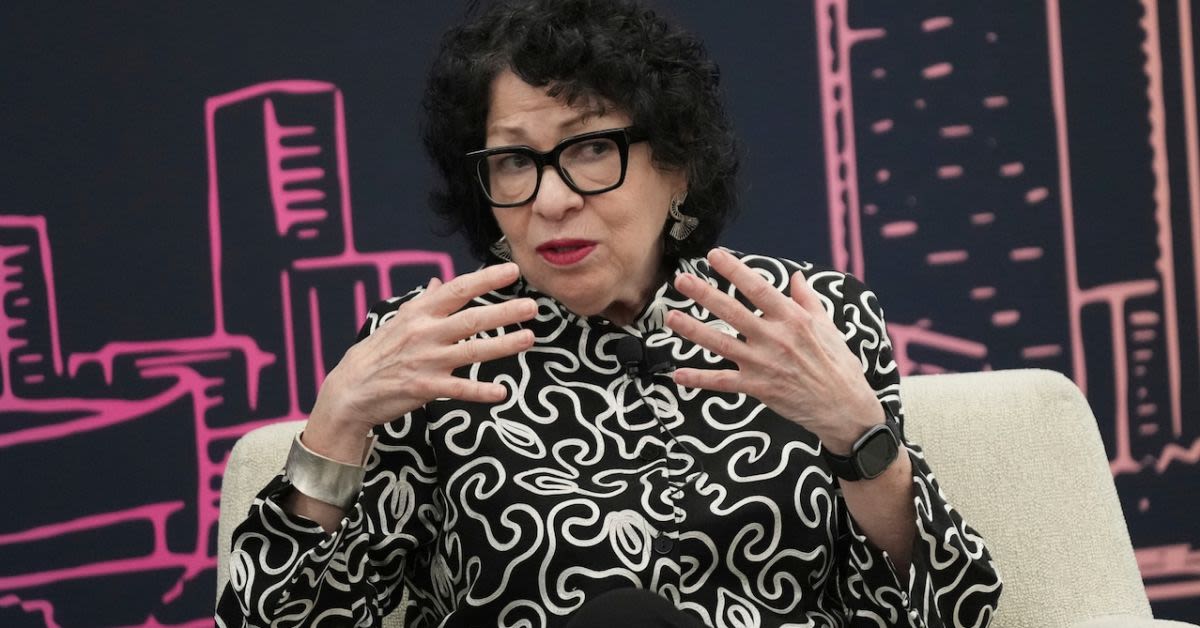
On Tuesday, the Supreme Court, in a 63 decision, upheld Alabamas map, which is expected to yield a 61 Republican-to-Democrat split in the states congressional delegation. Liberal Justice Sonia Sotomayor, joined by Justices Ketanji Brown Jackson and Elena Kagan, issued a blistering dissent accusing the majority of undermining minority voting rights and destabilizing election administration.
Before the Court are two paths. Down one lies an orderly election, held under a tried-and-tested congressional map that protects Black Alabamians right to vote and with which all voters, elections officials, and candidates alike are familiar, Sotomayor wrote. Down the other lies a chaotic election, held under a never-before-used congressional map that intentionally discriminates against Black Alabamians, that Alabama adopted in unashamed defiance of a prior court order directly affirmed by this Court, and that will require officials to change the voter registrations of hundreds of thousands of voters in just days at best, a task that Alabama previously represented would take months, Sotomayor said.
The majority chooses the second path and disregards both democratic values and the rule of law. I respectfully dissent, she wrote, underscoring the ideological divide on the Court as conservatives defend state authority over redistricting while progressives continue to rely on federal judges to secure partisan gains they cannot reliably win at the ballot box.
Login