
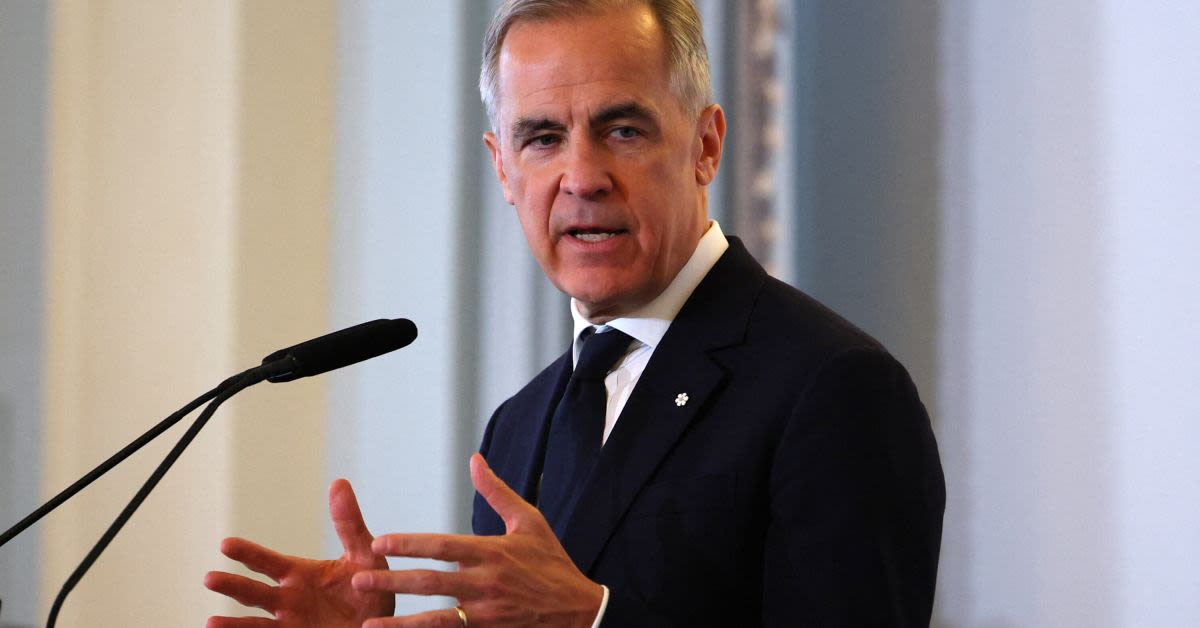
Canadian Prime Minister Mark Carney used a high-profile appearance in New York to press for what he called a true partnership with the United States, even as he accelerates efforts to reduce his countrys dependence on its southern neighbor.
Speaking at the Economic Club of New York just weeks before President Donald Trump is set to decide whether to renew the United States-Mexico-Canada Agreement (USMCA), Carney framed his pitch as a sector-by-sector reimagining of cross-border cooperation, according to Western Journal.
He delivered his remarks ahead of the mandatory USMCA review scheduled for July, a process that could reshape the trade architecture that has underpinned North American commerce for decades.
Carney acknowledged that Canada is deliberately diversifying away from the U.S. market, pursuing trade deals with dozens of countries around the world in an effort to reduce vulnerability to Washingtons political shifts.
Our core objective across these partnerships is to increase our strategic autonomy. Because we live in a world where integration has been weaponised. Because a country that cannot feed, fuel or defend itself is not truly sovereign, Carney said, underscoring a desire for greater independence even as he publicly courts closer ties.
That posture is a direct response to Trumps first-term trade agenda, which included a bruising tariff war and even a provocative suggestion that Canada become the 51st U.S. state. Those moves infuriated Canadians and helped create the political climate that propelled Carney into office on a promise to confront Trump, a stance that plays well with liberal elites but risks undermining the very partnership he now claims to seek.
Carney has also positioned himself as a leading voice in an emerging coalition of governments looking for ways to link up and counter the U.S. under Trump, a formulation that sits uneasily beside his rhetoric about mutual prosperity. He has set an ambitious target of doubling Canadas non-U.S. exports over the next decade, arguing that American tariffs are chilling investment and forcing Ottawa to hedge against Washingtons policy unpredictability.
Attempting to square that circle, Carney insisted that a stronger Canada would ultimately benefit the United States, casting his agenda as complementary rather than adversarial.
Canada Strong will help make America great again. The examples are legion where we should work together and compete with the world together. And to those ends, we have made specific, practical proposals to the US Administration, Carney said, borrowing Trumps signature slogan even as he campaigns against the presidents approach.
For now, Canada has been shielded from the harshest effects of Trumps tariffs by the existing USMCA framework, though that protection is not guaranteed once the agreement comes under review.
Key sectors such as aluminum and steel have already absorbed significant damage from U.S. duties, illustrating how quickly political decisions in Washington can ripple through the Canadian economy.
Carney stressed that Canadian aluminum exports to the U.S. are the energy equivalent of 10 Hoover dams, arguing that disrupting that flow would be economically irrational for both sides. With Americas growing energy needs, does it make sense to build the Gigawatts needed to replace Canada? Carney said, suggesting that ideological trade fights could end up raising costs for American consumers and manufacturers.
On automobiles, he reminded his audience that Canada is Americas largest customer, deeply embedded in a shared manufacturing ecosystem that spans the continent. He maintained that an integrated North American market for production is the best and most durable way to confront intense global competition, a point that aligns with long-standing conservative support for efficient, rules-based trade that strengthens Western supply chains against China.
Carney further argued that Canadas vast reserves of potash, nickel, copper and uranium position it as the most reliable supplier that America needs to put affordable food on the table, to strengthen its national defence and meet exploding demand to power AI.
At a time of a global energy crisis, Canada provides the United States with the reliable power and critical minerals that help fuel American growth: 99% of U.S. natural gas imports, 85% of electricity imports and 60% of crude oil imports, Carney said, highlighting how deeply U.S. prosperity is tied to Canadian resources.
He emphasized that Canada is not merely a supplier but also Americas largest customer, purchasing more goods than China, Japan and Germany combined. When Canada and the United States have had our differences over the years, we have always eventually worked through them, because our shared values and common interests run deep. They run through our economies, he said, appealing to a common heritage that conservatives often cite as the foundation of the alliance.
While in New York, Carney also held meetings with representatives of BlackRock, JP Morgan Chase, Blackstone, Morgan Stanley and Apollo, signaling his intent to reassure global capital markets even as he talks tough about sovereignty and diversification. Those sessions suggest that, despite his rhetorical jabs at Trump, the prime minister understands that investor confidence in a stable, pro-growth North American framework remains essential to Canadas economic health.
Back in Washington, the next phase of the trade drama will be managed by Dominic LeBlanc, Canadas minister for U.S. trade, who is scheduled for talks with American officials next week. LeBlanc has previously warned that the free trade agreement could be pushed into an annual review cycle, and he has hinted that such rolling uncertainty could be the objective of the Trump administration, a prospect that would test whether Carneys calls for partnership can withstand the hard realities of nationalist economic policy.
Login