
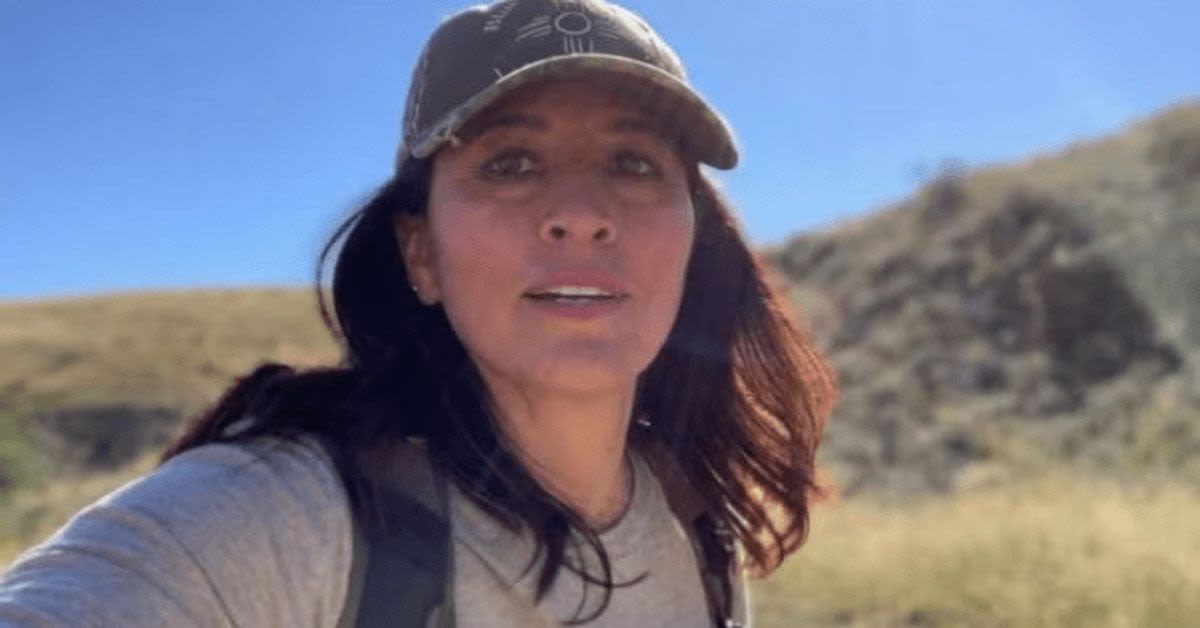
A missing nuclear lab employee found dead in a New Mexico forest has become the latest disturbing chapter in a growing pattern of unexplained deaths and disappearances involving American scientists with access to sensitive government programs.
According to Gateway Pundit, New Mexico State Police confirmed that human remains discovered in the McGaffey Ridge area of Carson National Forest belong to 54-year-old Melissa Casias, an administrative assistant at the Los Alamos National Laboratory (LANL). Authorities said the Office of the Medical Investigator has not yet determined a cause of death, leaving open critical questions about how and why a mid-level lab employee with access to a high-security facility ended up dead in remote federal land.
Casias was last seen alive on June 26, 2025, and her body was ultimately located in a forested area roughly six miles from the last confirmed sighting of her walking before she was reported missing. The location is particularly notable because it lies within a U.S. Forest Service restoration zone where crews have been working steadily since December 2025, raising questions about how long her remains were there before being discovered.
Investigators have not disclosed how long they believe Casiass body was in the forest, but the delay in discovery is striking given the ongoing federal work in the area. The circumstances surrounding her disappearance have only deepened the mystery, as she appeared to deliberately sever her digital and physical trail before vanishing.
The Daily Mail reported that Casias previously left ALL RECORDS from her phones (she had more than one), left her identification behind, and vanished last June. That sequence of events, combined with her sensitive workplace, has fueled speculation that her case looks less like a routine missing-person incident and more like something out of an espionage drama.
On the morning she disappeared, Casias dropped off her husband, Mark, a superintendent at LANL, at the nuclear facility about 70 miles from their home. Casias vanished after dropping off her husband, another LANL employee, at the facility that June morning, approximately 70 miles from their home, the Mail recounted, noting that she then claimed she needed to return home because she had forgotten the badge required to enter the lab.
Mark told investigators that his wife in fact had the security badge with her when she dropped him off, as she would have needed it to pass through security checkpoints. That discrepancy has raised red flags, as it suggests Casias may have fabricated an excuse to leave the area and set in motion whatever planor coercioncame next.
Their daughter, Sierra, told authorities that when Casias arrived back in Ranchos de Taos, she stopped by the teens workplace to drop off a sandwich and mentioned she would work from home after supposedly forgetting her badge. After that, the trail turns ominous: The wife and mother then wiped all records from her phones before leaving them and her identification behind and walking out of her home in Ranchos de Taos.
Surveillance footage later captured Casias walking alone in New Mexico after dropping off her husband at Los Alamos, a haunting final image of a woman whose life and death are now at the center of a national security mystery. Former FBI Assistant Director Chris Swecker told the Daily Mail in March that he believed Casiass disappearance fit into a broader pattern involving individuals with access to top-secret research.
Swecker suggested that even as an administrative assistant, Casias could have been a high-value target for foreign intelligence or other malign actors. In a classified lab, or just a high clearance lab, they would basically be in the know on whats going on, Swecker explained. And it wouldnt be the first time their administrative assistant has been targeted.
As Gateway Pundit has previously documented, a troubling series of deaths and disappearances has emerged among scientists tied to Americas most sensitive space, defense, and advanced technology programs, with as many as 11 experts reported missing or dead. These are not obscure figures; they are individuals with access to classified information in nuclear research, aerospace, propulsion systems, missile technology, and Unidentified Anomalous Phenomena (UAP)related projects.
One of the most high-profile recent cases involved David Wilcock, a prominent UFO researcher, Ancient Aliens commentator, and bestselling author, who was found dead last month in an apparent suicide outside his home in Boulder County, Colorado. The timing was chilling: He had just TWO DAYS earlier posted a video, warning about how its scary that scientists are going missing, and that he was not suicidal.
In response to mounting public concern and the obvious national security implications, the FBI under Director Kash Patel has reportedly launched a major investigation into the cluster of at least 11 mysterious deaths and disappearances. The bureau is said to be examining potential links among the cases, including whether hostile foreign powers, rogue networks, or internal corruption could be targeting U.S. scientific personnel with access to classified programs.
President Donald Trump has publicly acknowledged the situation, stating that the White House is actively reviewing the cases and describing the string of incidents as highly suspicious. For Americans who still believe in secure borders, a strong national defense, and accountability within the intelligence community, the death of Melissa Casias and the broader pattern surrounding it raise urgent questions about whether the federal government is doing enough to protect those entrusted with the nations most sensitive secretsand whether someone, somewhere, is systematically eliminating them.
Login