
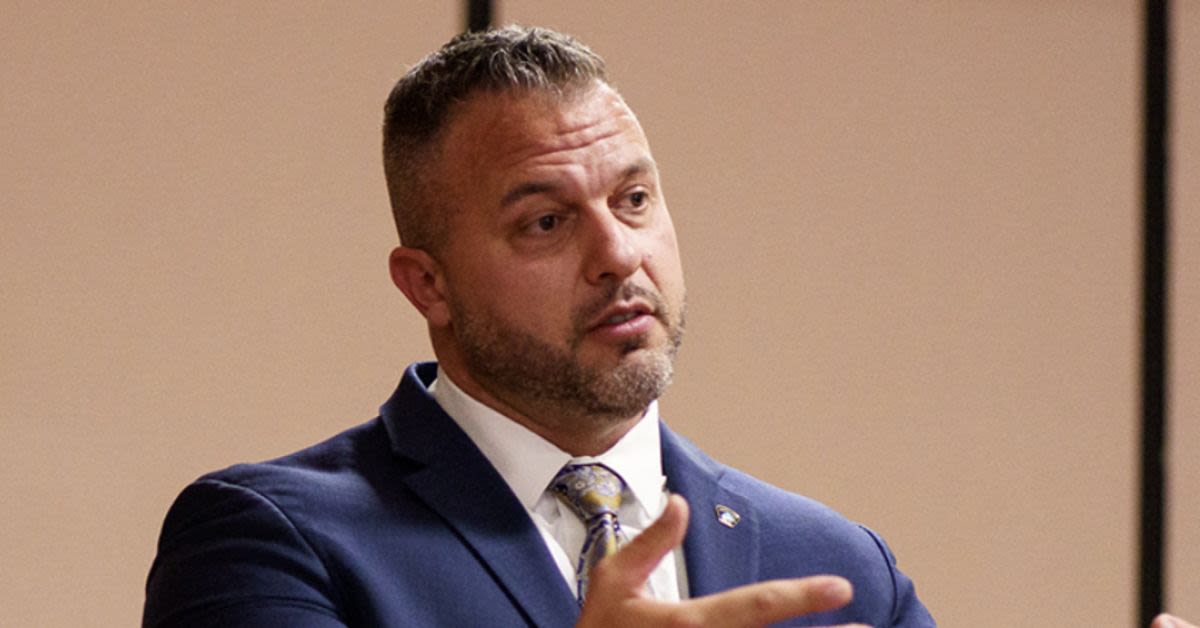
Minneapolis Police Chief Brian OHara abruptly resigned after Mayor Jacob Frey accused him of tampering with an internal sexual misconduct investigation by deleting a key contact from his city-issued phone.
The rupture marks a remarkable fall for a chief who had been one of Freys most visible political props during the citys post-2020 reform era. According to RedState, OHara was the same official who stood shoulder to shoulder with the mayor at press conference after press conference as Frey railed against federal immigration enforcement, denouncing ICE as an agency that had been making people scared and terrified" and accusing it of "terrorizing" residents.
Frey leaned on OHara as a reliable voice to echo his anti-ICE rhetoric, repeatedly elevating him in front of cameras as the administration embraced a softer, activist-friendly posture toward law enforcement. The chiefs public posture was clear enough when he declared, Even if there is an investigation that ultimately proves that at the time of the shooting it was legally justified, I don't even think that matters at this point because people are angry at ICE."
The immediate cause of OHaras downfall, however, was not his politics but his conduct during an internal probe into his personal behavior. Frey now claims investigators determined OHara knowingly and intentionally removed a contact card from his city-issued phone in an effort to conceal his connection to an individual at the center of an inquiry into alleged improper intimate relationships with city employees.
OHara had been accused, in a complaint received last year, of engaging in such relationships with multiple subordinates under his command. While the underlying sexual misconduct allegations were ultimately deemed unsubstantiated, Frey said the chiefs alleged interference with the investigation process represented a serious breach of trust and integrity.
"Today I received a report of findings from an additional investigation that showed Chief O'Hara interfered with the investigation process," Frey announced, outlining the basis for the citys disciplinary action. "Specifically, investigators found that he intentionally deleted a contact card for an individual from his city-issued cell phone during the original investigation in an attempt to shield that evidence of his connection to the person from investigators."
The mayor further asserted that OHara violated explicit instructions not to discuss the investigation with anyone. "And even though he was instructed not to discuss the investigation itself with anyone, he told another city employee that his city cell phone had been taken from him for the investigation."
City officials informed OHara that he would face discipline up to and including discharge, a range that made his continued tenure politically untenable. Rather than wait to be formally punished by the same mayor whose agenda he had so faithfully served, OHara chose to step down, leaving office under a cloud that many residents will see as self-inflicted.
His resignation, while welcomed by many who viewed him as emblematic of the citys politicized policing, does not necessarily signal a course correction for Minneapolis. Assistant Chief Katie Blackwell, a key figure in the departments post-George Floyd transformation, has been named acting chief as the citys leadership doubles down on its existing trajectory.
Blackwell is already a controversial figure in her own right, particularly among rank-and-file officers. As head of training during the Derek Chauvin trial, she delivered testimony that many within the department insist was misleading, with 14 officers accusing her of perjury and arguing that her statements helped cement the narrative that led to Chauvins conviction.
Her attempt to push back against those accusations in court did not go well. Blackwell filed a defamation lawsuit against Alpha News and others over their reporting on the alleged perjury, but the case was dismissed, and she was ordered to pay $75,000 toward the defendants legal fees.
Blackwells rise has coincided with the Biden Department of Justice and progressive politicians exerting intense pressure on Minneapolis to reform its police force by prioritizing diversity, equity, and ideological alignment over traditional metrics of merit and effectiveness. She became a symbol of this woke leadership model, promoted to serve as OHaras assistant chief of operations and now elevated to Acting Minneapolis Police Chief.
For law-abiding residents who have watched crime surge, officer morale collapse, and experienced a mass exodus from the force, the leadership shuffle offers little reassurance. Even as OHaras ouster may feel like overdue accountability, Minneapolis appears determined to stay the course with the same progressive experiment that has weakened public safety, when what the city truly needs is a chief willing to back the blue, reject ideological theatrics, and restore basic law and order.
Login