
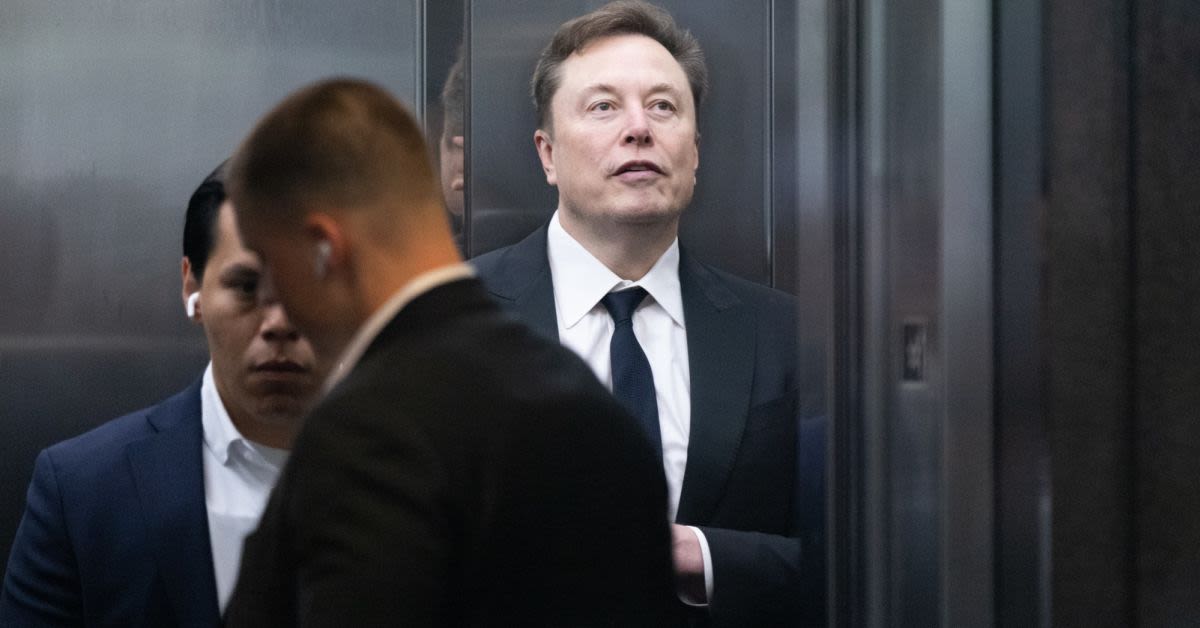
Elon Musks SpaceX has moved to take the company public in what could become the largest initial public offering in history, potentially making the billionaire entrepreneur the worlds first trillionaire.
According to WND, Musk already the richest man in the world filed with the Securities and Exchange Commission (SEC) to take SpaceX public through an initial public offering (IPO). SpaceX estimated in its filing that the IPO could value the company at $1.75 trillion, far surpassing the $25.6 billion record set by Saudi giant Saudi Aramco.
We believe we have identified the largest actionable total addressable market (TAM) in human history. We estimate that our quantifiable TAM is 28.5 trillion, SpaceXs filing stated, underscoring the companys ambition to dominate commercial space, satellite internet, and advanced AI. Musk will retain 42% of SpaceX after the IPO, the Australian Broadcasting Corporation reported, preserving his control over a company that has become central to Americas private-sector space leadership.
Musk will serve as the CEO, Chief Technology Officer (CTO) and chairman while also holding more than 85% of SpaceXs voting power through the plans dual-class structure, according to the filing. This governance model, often criticized by corporate activists, ensures that long-term strategic decisions remain in the hands of the founder rather than short-term market speculators.
This means that if the IPO raises near the amount estimated, then Musks net worth could exceed one trillion dollars for the first in history, according to the Daily Mail. The South African-born businessman as of Thursday has a net worth of roughly hundreds of billions of dollars, according to Forbes, already eclipsing the fortunes of many nations political elites.
The first day of trading will begin on June 12, and it will be sold under the Nasdaq ticker SPCX, Reuters reported. SpaceX did not immediately respond to the Daily Caller News Foundations request for comment, a silence that has not dampened investor enthusiasm for a company widely seen as a symbol of private innovation over government bureaucracy.
The document detailed SpaceXs finances, highlighting budget, revenue, and future plans, including its aggressive expansion in launch services and satellite networks. The company also owns Starlink and xAI, which are a large part of the IPO plan, reflecting Musks broader vision of integrated space, communications, and artificial intelligence platforms.
Despite an estimated $1.75 trillion value, SpaceX reported a $4.94 billion loss in the previous quarter, as shown in the filing. For growth-focused investors, such losses are often viewed as the price of rapid innovation, especially when compared with the inefficiencies and cost overruns that typically plague government-run space programs.
We believe we are capable of unlocking an era of unprecedented economic expansion, while also contributing to the safeguards of humanitys future against existential risk, SpaceXs filing says. That language echoes a broader conservative appreciation for private enterprise as the engine of prosperity and technological progress, rather than top-down central planning.
Ron Baron, founder of Baron Capital, told CNBC in a May 12 interview, You should try to figure out for your families how you can get to own some SpaceX. It will be the largest company on the planet. SpaceX revenue is currently being most heavily influenced by Starlink, Musks satellite internet business, CNBC reported, which has already provided connectivity in regions where government and legacy telecoms have failed.
Musk has founded several other companies, such as Neuralink Corporation, whose primary goal is to develop brain-computer interfaces. He also owns X (formerly known as Twitter), Tesla, and the Boring Company, which aims to reduce traffic through underground tunnels, a portfolio that underscores how one entrepreneur, operating largely outside the grasp of big government, can reshape entire industries and challenge the dominance of entrenched progressive institutions.
Login