
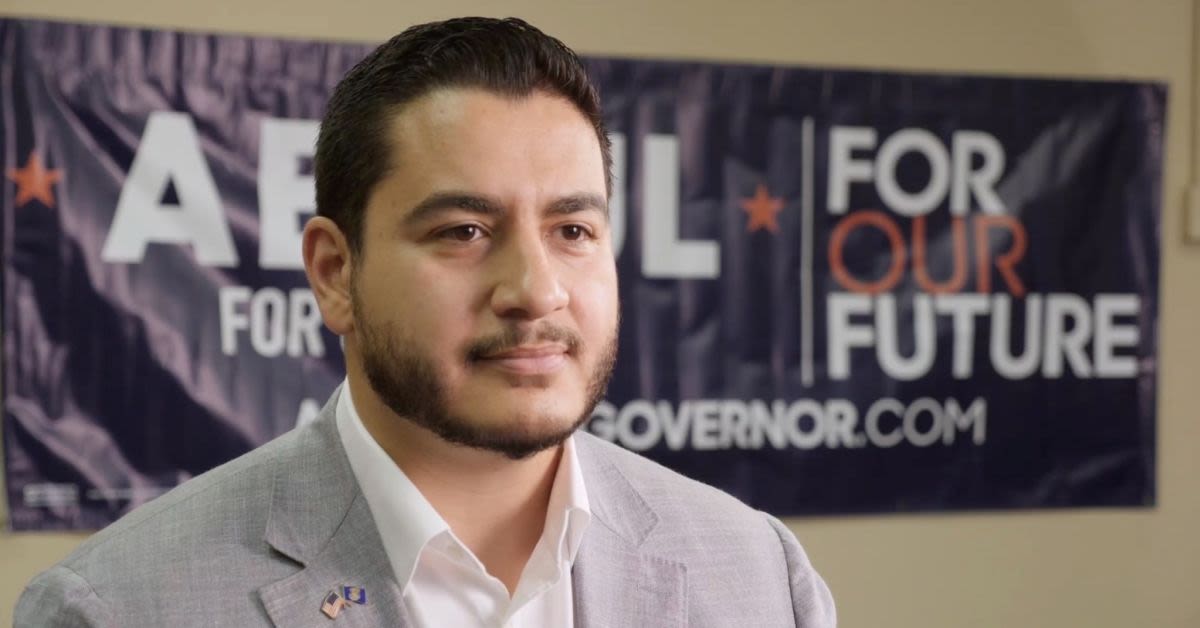
Michigans most outspoken progressive Senate hopeful is once again under scrutiny, this time for a deleted social media post demanding reparations for Native Americans and denouncing Thanksgiving as a celebration built on the systematic annihilation of Indigenous Peoples.
.
According to the Washington Free Beacon, Democratic candidate Abdul El-Sayed used Thanksgiving Day in 2019 to launch a broadside against the holiday and the countrys founding. Just a reminder this #Thanksgiving, he wrote, This country was built on the systematic annihilation of Indigenous Peoples, whose ancestors suffer some of the highest rates of homelessness, joblessness, and mortality today. He went on to insist that symbolic gestures were not enough, declaring, We owe so much more than thanks, before adding, Time for Reparations.
El-Sayed later replied to his own post to clarify that his demand for reparations was aimed at the descendants of Indigenous Peoples, rather than their ancestors. The original post has since been deleted, but an archived copy reviewed by reporters shows the full language of his remarks and underscores how far left he has positioned himself on racial and historical grievance politics.
El-Sayeds campaign did not respond to a request for comment about the deleted Thanksgiving message or his broader reparations agenda. The silence comes as he faces state senator Mallory McMorrow and congresswoman Haley Stevens in a fiercely contested Democratic primary for Michigans open U.S. Senate seat.
Among the three major contenders, El-Sayed has carved out the most aggressively progressive profile, a fact underscored not only by his Indigenous Peoples reparations post but also by a series of other now-deleted statements. Those posts, which span policing, immigration, and racial preferences, paint a picture of a candidate aligned with the far-left activist base rather than the more moderate voters who will decide a general election.
In one 2020 post first reported by CNN, El-Sayed embraced the defund the police movement that surged during the riots and unrest of that summer. U.S. cities, he argued, spend WAY TOO MUCH on police departments to police poverty, adding, Fixing that is what the #Defund movement is about.
In another post, he escalated his rhetoric, likening American law enforcement to an occupying force. Police, he wrote, have become standing armies we deploy against our own people, a characterization that echoes the most radical anti-police activists and dismisses the daily risks officers take to protect their communities.
El-Sayeds inflammatory commentary has not been limited to domestic policing. In 2021, he repeated the widely debunked claim that a U.S. Border Patrol agent on horseback had whipped Haitian migrants attempting to illegally cross the southern border. In reality, the agent was holding the horses rein, and subsequent investigations cleared border officials of wrongdoing, but El-Sayed used the episode to smear those enforcing immigration law.
Blaming horses for the dudes riding them to whip Haitian refugees is like blaming Haiti for the fact they're coming, El-Sayed wrote, doubling down on the false narrative. He then pivoted to a broader indictment of U.S. policy and border enforcement, asking, How about asking how our policies decimate Caribbean & Central American (and so many other) countriesand why we allow white supremacists to police our borders?
Despite the radicalism of these statements, El-Sayeds far-left writings have not yet derailed his standing in the Democratic primary. A recent poll commissioned by Michigan political news outlet MIRS showed him leading with 28 percent support, compared with 18 percent for Stevens and 17 percent for McMorrow, suggesting that the partys activist wing remains energized by his message.
The same survey, however, indicated that El-Sayed could face serious headwinds in a statewide general election, where independent and swing voters tend to be more centrist. Republican candidate Mike Rogers holds narrow leads not only over El-Sayed but also over McMorrow and Stevens, signaling that Democrats may be risking a winnable seat by nominating a candidate whose record is tailor-made for GOP attack ads.
El-Sayeds Thanksgiving post was not an isolated foray into the politics of reparations. In October 2019, he marked the death of longtime Michigan Democratic congressman John Conyerswho resigned in 2017 at age 88 after multiple congressional staffers accused him of sexual harassmentby explicitly tying Conyerss legacy to a sweeping left-wing agenda.
Because of Jon Conyers, El-Sayed wrote, misspelling the congressmans first name, we're talking about: Medicare for AllReparationsEnvironmental JusticeAmerican legal reform. Rest in Power, Dean. The tribute linked reparations to a broader package of expansive government programs and regulatory schemes that would dramatically increase Washingtons role in American life.
Beyond his own words, El-Sayed has repeatedly amplified other activists and officials who frame reparations as a central policy goal and even a public health imperative. In October 2020, he reposted a tweet asserting, Reparations can help end health divides and build a healthier nation, which cited an article co-written by former New York State Department of Health acting commissioner Mary Bassett.
Bassett helped design New Yorks controversial policy that treated non-white race or Hispanic/Latino ethnicity as a risk factor for COVID-19, effectively giving minorities priority access to scarce COVID treatments. She was later ousted from her role as director of Harvard Universitys Franois-Xavier Bagnoud Center for Health and Human Rights, which under her leadership gained a reputation as a hotbed of antisemitism, raising further questions about the ideological company El-Sayed keeps.
El-Sayed also boosted an August 2020 tweet from former congresswoman Cori Bush (D., Mo.), one of the Houses most outspoken members of the Squad, in which she called for sweeping changes to drug and criminal justice policy. Bush urged lawmakers to legalize marijuana, free imprisoned drug offenders, and use that tax revenue to begin funding reparations, a proposal that would redirect resources away from public safety and toward race-based payouts.
The following June, El-Sayed retweeted a post from antiracism activist Heather McGhee that cast reparations as a kind of national venture capital fund for a new social order. McGhee described reparations as seed capital for the nation we are becoming: a multiracial society that has paid its collective debts and lets all who have contributed to its great prosperity finally begin to benefit from it, a vision that assumes collective guilt and collective entitlement rather than individual responsibility and equal treatment under the law.
Taken together, El-Sayeds deleted posts and curated endorsements reveal a candidate deeply invested in identity politics, redistribution, and the rhetoric of historical grievance. As Michigan voters weigh who should represent them in the Senate, they will have to decide whether a platform built on Time for Reparations, defunding police, and branding border agents white supremacists reflects their valuesor whether it is a step too far toward the fringe for a state that has often rewarded pragmatism over ideological zeal.
Login