
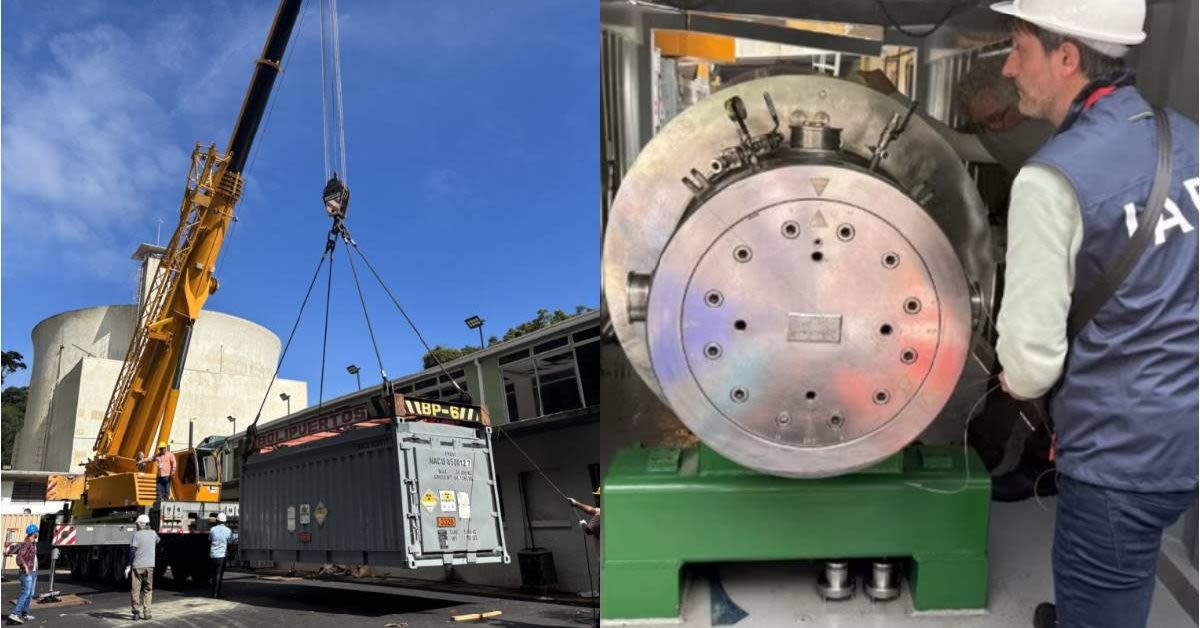
The Trump administration has overseen the complete removal of all remaining enriched uranium from a legacy research reactor in Venezuela, a decisive nuclear security achievement for the United States, South America, and U.S. allies worldwide.
According to Gateway Pundit, the U.S. Department of Energys National Nuclear Security Administration (DOE/NNSA) coordinated with international partners to extract every last quantity of enriched uranium from Venezuelas RV-1 research reactor. The agency hailed the mission as a major nonproliferation milestone that significantly reduces the risk to both South America and the U.S. homeland, underscoring the renewed emphasis on hard security under President Trump.
The safe removal of all enriched uranium from Venezuela sends another signal to the world of a restored and renewed Venezuela, NNSA Administrator Brandon Williams said, according to the Department of Energy post. He added pointedly, Thanks to President Trumps decisive leadership, the dedicated teams on the ground completed in months what would have normally taken years.
The uranium originated from the RV-1 reactor, a facility that had supported physics and nuclear research for decades before its scientific mission ended in 1991. Once that work ceased, DOE/NNSA noted, the enriched uranium effectively became surplus materialdangerous stock that, if neglected, could have posed a long-term proliferation threat.
Critically, the material was enriched above the key 20% threshold, a level that elevates its strategic and security significance. Its removal therefore represented not merely a technical operation but a serious national security imperative, one that this administration moved to address with unusual speed.
Momentum accelerated after Energy Secretary Chris Wright traveled to Venezuela in February to assess conditions on the ground. In the weeks that followed, NNSAs Office of Defense Nuclear Nonproliferation coordinated with State Department personnel in Washington and Caracas, experts from the United Kingdom, the Venezuelan Ministry of Science and Technology, and the International Atomic Energy Agency to finalize the removal plan.
Less than six weeks after the initial site visit, the joint team safely extracted 13.5 kilogramsroughly 30 poundsof enriched uranium from the RV-1 reactor. The material was then carefully sealed into a spent fuel cask and escorted approximately 100 miles overland to a Venezuelan port under tight security.
From that port, the uranium was loaded onto a specialized carrier provided by the United Kingdoms Nuclear Transport Solutions, reflecting close cooperation among Western partners. The vessel transported the cargo to the United States, where it arrived on American shores in early May under strict monitoring and control.
Upon arrival, U.S. teams unloaded the casks and transferred the material to the Savannah River Site for processing and reuse, turning a potential liability into a strategic asset. The mission builds on decades of American leadership aimed at preventing dangerous nuclear material from falling into hostile or irresponsible hands, a core priority for conservatives who emphasize strong national defense.
Since 1996, DOE/NNSA and its predecessor offices have removed or confirmed the disposition of more than 7,350 kilogramsabout 16,250 poundsof highly enriched uranium and plutonium from dozens of countries. At Savannah River, the DOE Office of Environmental Management took custody of the Venezuelan material, and technicians will process the uranium at the H-Canyon chemical separations facility to produce high-assay, low-enriched uranium for what the department calls Americas nuclear renaissance.
While previous administrations often allowed such high-risk issues to languish within slow-moving bureaucracies, the Department of Energy emphasized that this mission was completed in months rather than years. The operation not only neutralizes a potential proliferation hotspot in Venezuela but also reinforces a broader Trump-era doctrine: confront threats early, act decisively, and leverage American technological and diplomatic strength to secure the homeland.
Login