
Alabamas top law enforcement officer is asking the nations highest court to step in and stop what he calls a race-based redistricting scheme from dictating the states upcoming congressional elections.
Alabama Attorney General Steve Marshall formally petitioned the United States Supreme Court to reinstate the states 2023 congressional map, which had been blocked by a federal district court on the grounds that it violated Section 2 of the Voting Rights Act and the 14th Amendment. According to RedState, that lower court ruling forced Alabama to operate under a court-imposed map that carves out two Democrat-leaning districts by explicitly prioritizing race in its design, a move conservatives argue weaponizes civil-rights law to engineer partisan outcomes rather than protect equal treatment under the law.
Marshalls office framed the latest filing as a direct challenge to the federal court order compelling Alabama to use what he bluntly labeled a race-based congressional map in the May 19 primary. The states brief contends that the order directly conflicts with the Supreme Courts ruling last month in a recent Section 2 case that clarified how courts must evaluate claims of racial vote dilution in congressional redistricting, and it urges the justices to intervene no later than May 14, just five days before voters head to the polls.
I will continue to fight for Alabama to be able to use the congressional map the peoples elected representatives enacted, Marshall declared, underscoring his view that elected lawmakers, not unelected judges, should draw the lines that determine political representation. Alabama drew a map based on lawful policy goals, not race, and the Supreme Courts recent ruling vindicates that approach. We were punished for doing the right thing, and we are asking the Court to correct that now.
Conservatives have long warned that progressive activists and liberal judges are using the Voting Rights Act as a pretext to demand racial quotas in district lines, effectively turning redistricting into a tool for guaranteed Democratic seats. That concern was echoed in online reactions to Alabamas move, with one viral post celebrating that Alabama just went straight to the US Supreme Court demanding they THROW OUT the current rigged Congressional map packed with 2 racially gerrymandered Dem seats! and noting that Justice Clarence Thomas just ordered a response by 5PM Monday!
The state legislature moved in tandem with Marshalls legal strategy, passing two bills on Friday designed to restore the 2023 maps and set the stage for a special election under those lines if the courts ultimately side with Alabama. Lawmakers made clear, however, that they cannot implement those measures until the ongoing legal disputes are resolved, leaving the timing of any change dependent on how quickly the Supreme Court acts.
State officials have been moving with unusual speed as the May 19 primary approaches, seeking to get their ducks in a row so they can pivot immediately if the justices lift the lower courts order. Alabamas election structure gives them some breathing room: the state has no early voting and relies on a single in-person Election Day, which allows more flexibility to adjust the primary date or the operative map should the Supreme Court rule in the states favor.
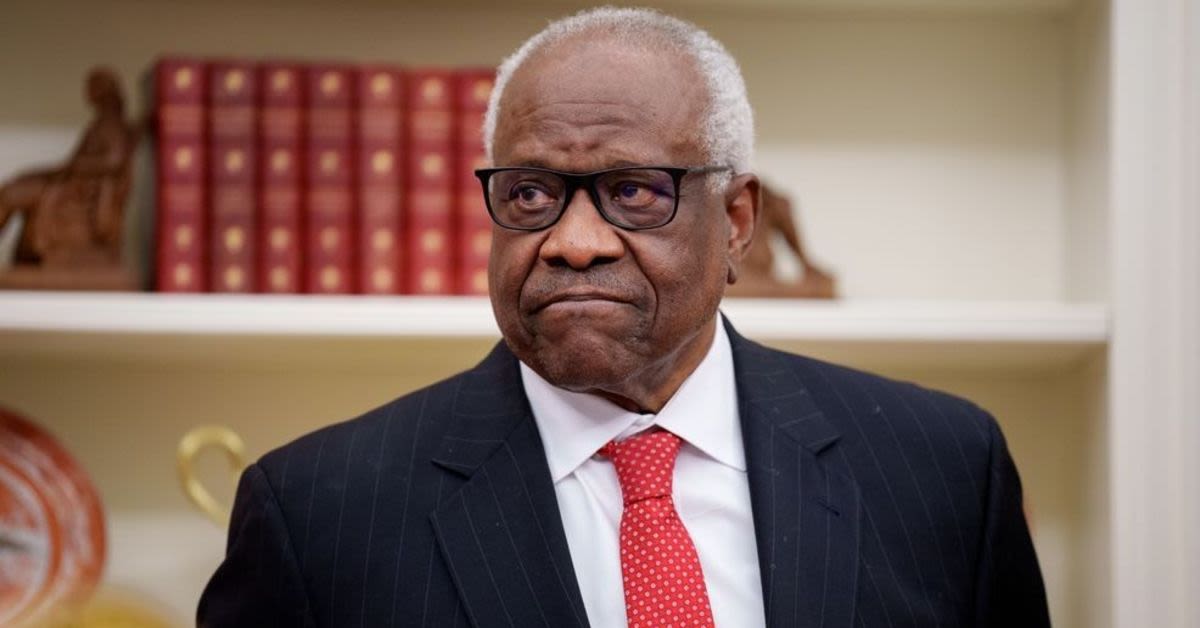
Justice Clarence Thomas, who oversees emergency matters arising from the Eleventh Circuit, has already taken the first procedural step by demanding a prompt response in the case. Justice Thomas has ordered a response by 5:00pm on Monday. Alabama requests a ruling by the 14th at 10:00am, one update noted, underscoring the compressed timeline under which both the Court and state officials are now operating.
The filings submitted Friday mark the most urgent phase yet in Marshalls broader campaign to restore the legislatures preferred congressional lines. On April 30, he asked the Supreme Court to vacate the district courts injunctions and remand the cases for reconsideration in light of the high courts recent Section 2 decision, and on May 5 he filed a separate emergency motion in the district court itself, urging that court to suspend its own orders while appeals proceed.
Fridays emergency applications go directly to Justice Thomas and ask the Supreme Court to immediately halt the lower courts order imposing a court-drawn map on Alabama for the May 19 primary, a move that would allow the state to revert to the 2023 plan. At the same time, Marshall is pursuing a parallel track to restore Alabamas state Senate map, having filed an emergency motion with the Eleventh Circuit on May 4 and a reply brief on May 7 in that related proceeding.
If Thomas and, ultimately, the full Court side with Alabama, the political stakes are substantial: the state intends to move forward with a 61 RepublicanDemocrat split in its congressional delegation. As one summary of the potential shift put it, under the current court-imposed map Republicans hold five seats and Democrats two, while the 2023 map would yield ?? Republicans: 6 (+1) ?? Democrats: 1 (-1), a change that could help shore up the GOPs narrow majority in the U.S. House.
To prepare for that possibility, the legislature has already approved a contingency plan for new U.S. House primaries if the courts greenlight the 2023 map, ensuring that any special election can be conducted under clear rules. With the clock ticking toward May 19 and both sides invoking the Voting Rights Act to justify starkly different visions of representation, Alabamas case has become a high-profile test of whether federal courts will continue to mandate race-conscious districting or allow states greater latitude to draw maps grounded in traditional, race-neutral criteria.
Login