
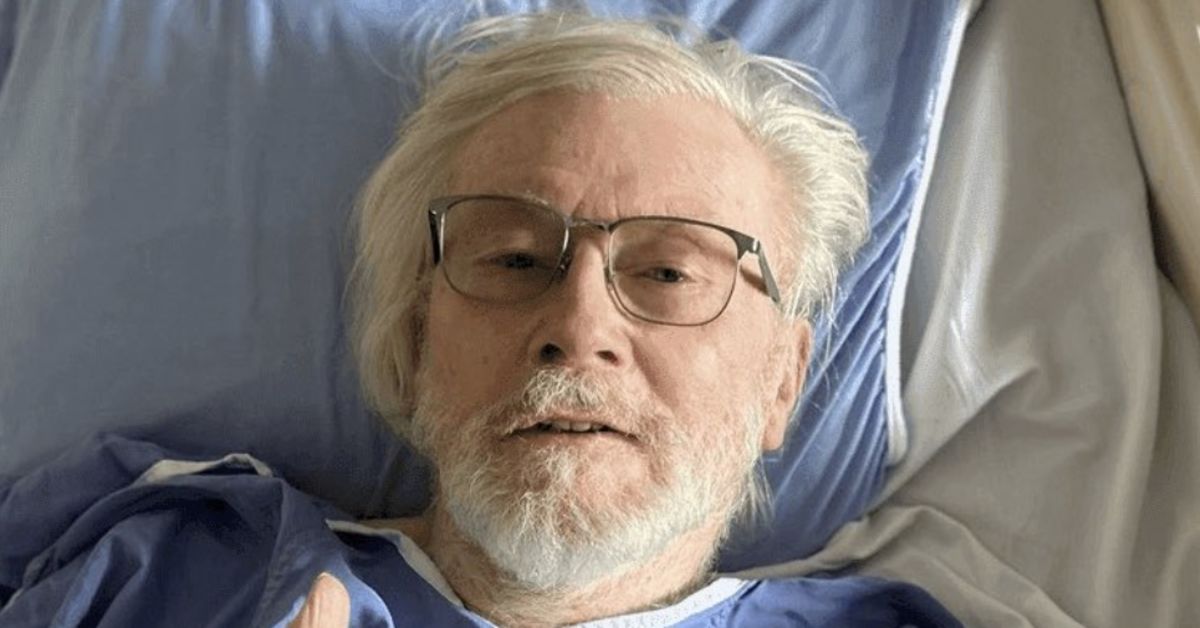
A 79-year-old Catholic priest in Vancouver says that while he was hospitalized for a broken hip, medical staff twice raised the option of state-facilitated euthanasia, despite his clear religious and moral opposition to assisted suicide.
According to WND, Fr. Larry Holland suffered a fractured hip after slipping in his bathroom on Christmas Day 2025 and was admitted to Vancouver General Hospital, which is operated under Canadas single-payer system. He told The B.C. Catholic, the official media outlet of the Roman Catholic Archdiocese of Vancouver, that although his injury was serious, it was never life-threatening, yet a physician nonetheless broached the possibility of ending his life through Canadas taxpayer-funded Medical Assistance in Dying (MAiD) program if his condition deteriorated.
I think I was very shocked. It is such a sensitive subject, Holland told The B.C. Catholic, recalling his reaction to being presented with MAiD as an option. There are some things you just dont talk about to some people.
Holland said the doctor explained that MAiD is something they have to discuss with someone whos been given a terminal diagnosis. The priest, however, had already made his moral opposition to euthanasia known, in line with Catholic teaching that explicitly condemns the practice.
Weeks later, Holland recounted, a nurse also raised MAiD as a possibility, a suggestion he interpreted as stemming from a misguided sense of mercy. He told The B.C. Catholic that the nurses offer appeared to be motivated by what he described as false compassion.
Vancouver Coastal Health, the publicly funded authority that runs Vancouver General Hospital, defended the practice of raising euthanasia with patients under certain circumstances. The agency told The B.C. Catholic that its hospital staff may consider bringing up MAiD based on their clinical judgment, provided they possess the necessary knowledge and skills to do so.
The authority did not respond to a request for further comment from the Daily Caller News Foundation, leaving unanswered questions about how often MAiD is suggested to non-terminal patients. For critics of Canadas rapidly expanding euthanasia regime, that silence only deepens concerns about vulnerable people being quietly steered toward death rather than treatment.
Catholic doctrine leaves no ambiguity about the moral gravity of euthanasia. Intentional euthanasia, whatever its forms or motives, is murder. It is gravely contrary to the dignity of the human person and to the respect due to the living God his Creator, states paragraph 2323 of the Catechism of the Catholic Church.
The Catechism is equally clear on self-destruction. Suicide is seriously contrary to justice, hope and charity. It is forbidden by the fifth commandment, reads paragraph 2325, with Catholics understanding the fifth commandment to be You shall not kill.
Despite such longstanding moral teaching, Canadas MAiD program has grown with startling speed and scale. Canadas government-assisted deaths accounted for just under 5 percent of all deaths in the country in 2023, the BBC reported in December 2024, with the median age of those who died through MAiD at 77, two years younger than Holland.
Assisted suicide was legalized nationwide in 2016 under former Prime Minister Justin Trudeau, a move hailed by progressives as a milestone of choice and dignity but viewed by many conservatives and religious leaders as a dangerous devaluation of human life. Between legalization and mid-2024, MAiD deaths increased by a factor of 13, LifeSite News reported in August 2024, citing research from Canadian think tank Cardus, making Canadas program the fastest-growing euthanasia regime in the world.
The Euthanasia Prevention Coalition (EPC) has warned that the cumulative toll is already staggering. The group reported that by the end of 2025, a total of 94,125 Canadians had died through government-assisted suicide, putting the country on track to become the first in history to surpass 100,000 euthanasia deaths sometime in 2026.
At the same time, Canadians continue to face long delays for ordinary medical care under the state-run system. The Fraser Institute, citing 2025 data, found that doctors reported an average wait time of nearly 29 weeks between a general practitioners referral and a patient actually receiving treatment, with British Columbia where Holland lives and was hospitalized suffering an even longer average delay of 32 weeks.
For many observers, those numbers raise a troubling question: in a system where patients can wait more than half a year for needed care, yet can access a fast-tracked path to death, how much of MAiD is about compassion and how much is about cost and convenience. Hollands experience, as a non-terminal elderly priest twice offered euthanasia in a public hospital, underscores the fears of conservatives and faith communities that a culture of life is being quietly displaced by a culture of expediency, where the state increasingly presents death as just another treatment option for those it is failing to heal.
Login