
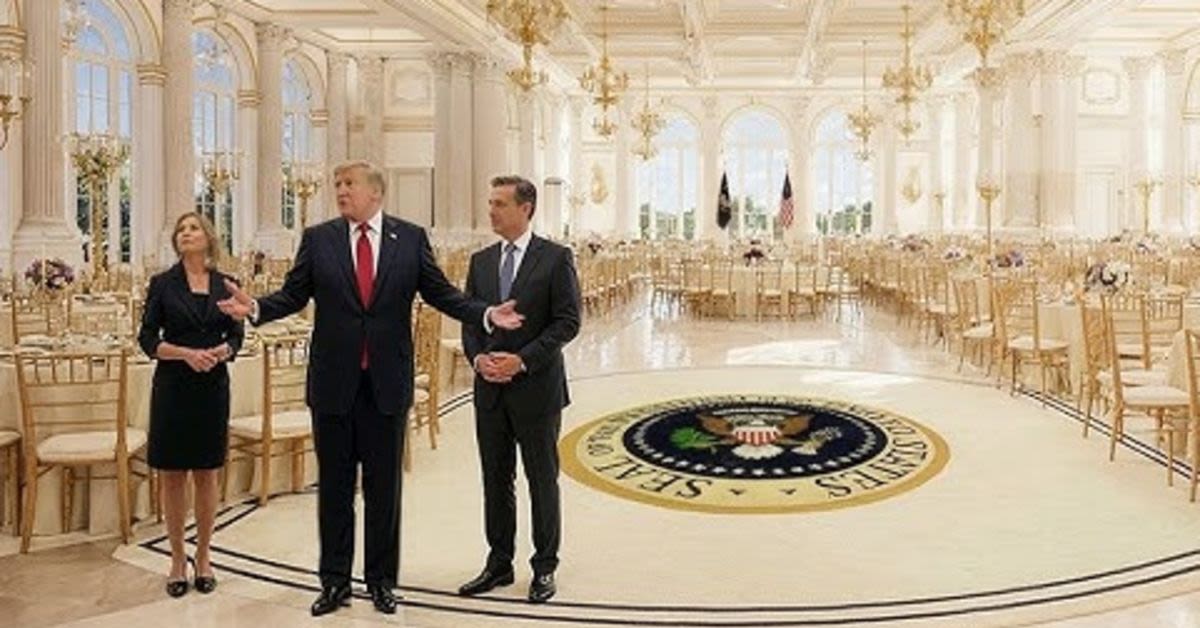
Sen. Rick Scott of Florida, a steadfast ally of President Donald Trump, is drawing a clear line against using taxpayer dollars to help build the presidents proposed White House ballroom.
According to Mediaite, Scotts resistance comes despite his long record of support for President Trump, dating back to his tenure as Florida governor when he endorsed Trump in 2016 after the Florida primary and chaired a pro-Trump Super PAC that year. Scott later benefited from Trumps backing in 2018, when the president endorsed his successful Senate bid against then-incumbent Democrat Bill Nelson, underscoring a political alliance that has spanned a decade.
The ballroom project, slated for the site where the White Houses East Wing once stood, has already stirred controversy over the rapid demolition of the historic structure and the opaque nature of its financing. Critics have also raised alarms about the design and the possibility that taxpayers could ultimately be saddled with a hefty bill for what many see as a ceremonial, not essential, addition.
For months, President Trump has framed the ballroom as a privately funded initiative, relying on donations rather than federal appropriations. That narrative shifted after the tragic shooting at the White House Correspondents Dinner, when the president renewed his push for the ballroom as a secure event facility and Sens. Lindsey Graham of South Carolina and Katie Britt of Alabama stepped forward to back legislation authorizing public spending on the project.
Scott, however, made clear he wants no part of that funding shift when questioned by NBC News senior national political reporter Sahil Kapur. I dont know why you would do it, if its all funded with private money, Kapur reported Scott told him, with the senator saying he still thought private funding was the way to move forward with the project.
Scott pointed to the nations staggering fiscal condition as reason enough to resist another federal outlay, however symbolic. We have $39 trillion of debt, Scott added. Maybe we ought to stop spending money.
Kapur later reported that Sen. Eric Schmitt of Missouri had joined Graham and Britt in sponsoring the bill, signaling that some Republicans are willing to blend security concerns with new federal construction spending. Yet a notable bloc of conservatives is holding the line, insisting that even a president they strongly support should not be exempt from basic fiscal restraint.
Joining Scott in opposition to taxpayer funding are Sens. Josh Hawley of Missouri and Rand Paul of Kentucky, both of whom emphasized that private donors, not the public, should bear the cost. Sen. Josh Hawley, R-Mo., said theres a legal question about whether Congress has to vote to allow the White House to do major reconstruction on the White House property. But when it comes to funding, he said he prefers private over public funds.
Hawley underscored that transparency, not taxation, should be the guiding principle if the project proceeds. I think that the donors should all be public, but I dont know why, if youve got private donors who want to do it I prefer that to the taxpayer being on the hook, he said. But I think its a separate question as to whether we need to authorize it.
Paul, one of the Senates most consistent fiscal hawks, likewise rejected the idea of putting the federal government on the hook for the full cost. I am always conservative, and he already has the money, Paul said. And Im not against putting in reconciliation and doing a nominal amount. Im not for funding the whole $500 million. I think hes already raised the money through private means.
The debate over the ballroom has become a revealing test of whether Republicans will match their rhetoric on limited government and spending discipline with action, even when the request comes from a president they overwhelmingly support. For Scott, Hawley, and Paul, the answer is to back President Trumps security concerns and vision for the White House while insisting that private generosity, not public debt, should pay for it.
Login