
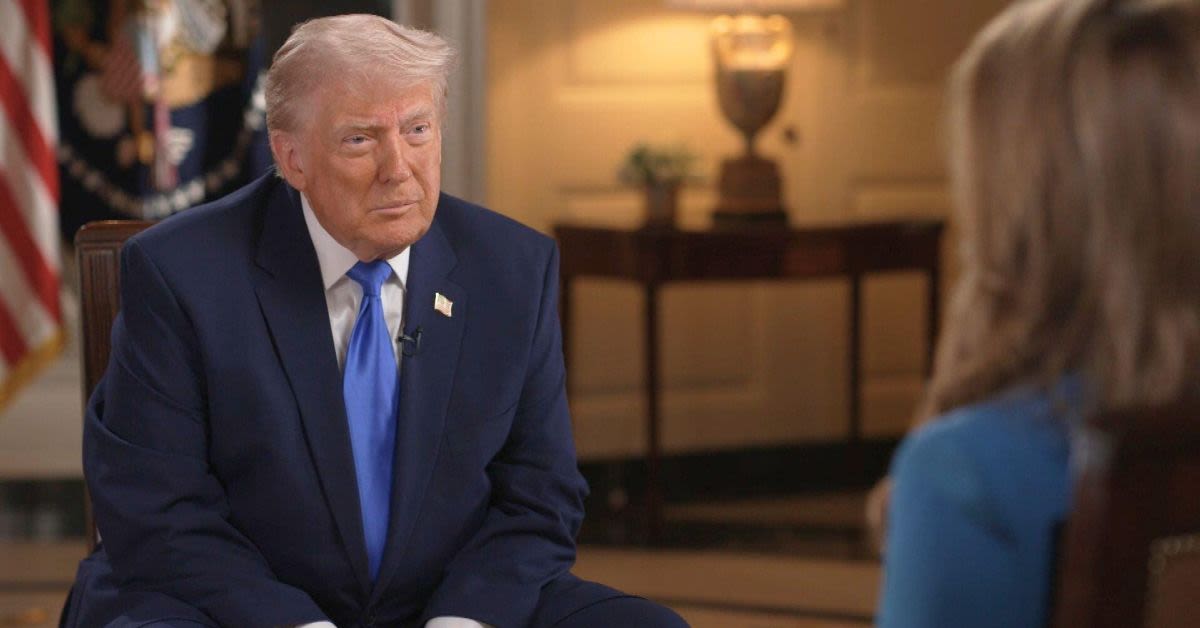
President Donald Trumps brief moment of apparent harmony with the press following the White House Correspondents Dinner shooting has already been declared over by CNN commentators eager to return to their familiar narrative of conflict.
According to Mediaite, CNNs Manu Raju opened a segment by recalling how the president said he felt a lot of unity and love from journalists and Democrats in the ballroom, as everyone struggled to understand what was happening, on Saturday night. Raju then contrasted that with Trumps response the following evening, when the president forcefully rejected a smear as CBSs Norah ODonnell read from the shooters manifesto describing him as a pedophile, rapist, and traitor.
Excuse me. Im not a pedophile. You read that crap from some sick person. You should be ashamed of yourself reading that. Because Im not any of those things, Trump said on the broadcast, refusing to let the accusation stand unchallenged. Raju framed the shift as a collapse of goodwill, remarking, It sounded like a kumbaya moment on Saturday night, before adding, Not so much anymore.
CNNs Jeff Zeleny argued that any sense of unity was always fleeting, casting Trumps stance as predictable rather than principled. Look, weve learned many things in the Trump era. We know that things dont last for a long time, Zeleny said, adding, And I think anyone who saw the presidents remarks in the briefing room at the White House on Saturday evening, talking about that moment of unity, knew it wouldnt last.
Zeleny further claimed that the relationship was destined to revert to hostility, as if acrimony were uniquely a Trump-era phenomenon rather than a long-standing feature of adversarial media politics. Things are going to go back to the acrimony that is there with many presidents and many press corps. Theres no doubt, Zeleny added, implicitly normalizing the presss combative posture while faulting the president for responding in kind.
Raju then aired a clip of Trump warning that Democrats hate speech was very dangerous for the country, before displaying a chart of political violence over the past decade affecting both parties. Rather than engage the substance of that concern, Politicos Eli Stokols accused Trump of opportunism, saying, Its not surprising that he would, you know, cherry pick the Democratic rhetoric in an instance where he was seemed to be the target, but its glaring, and invoking the case of Melissa Hortman being shot on her doorstep in Minnesota, about which he claimed, The president didnt have much to say about that.
Stokols pressed the point, insisting Trumps focus on left-wing rhetoric was unfair despite the clear pattern of incendiary language from prominent Democrats. So, you know, its not surprising because weve seen it before. But his response to the rhetoric and singling out Democratic violent rhetoric and blaming only Democratic rhetoric is incredibly selective. The segment, promoted with the invitation to Watch the clip above via CNN, ultimately underscored a familiar dynamic: a president condemning dangerous political language, and a media class more interested in policing his tone than confronting the escalating hostility that increasingly puts public figuresand the republic itselfat risk.
Login