
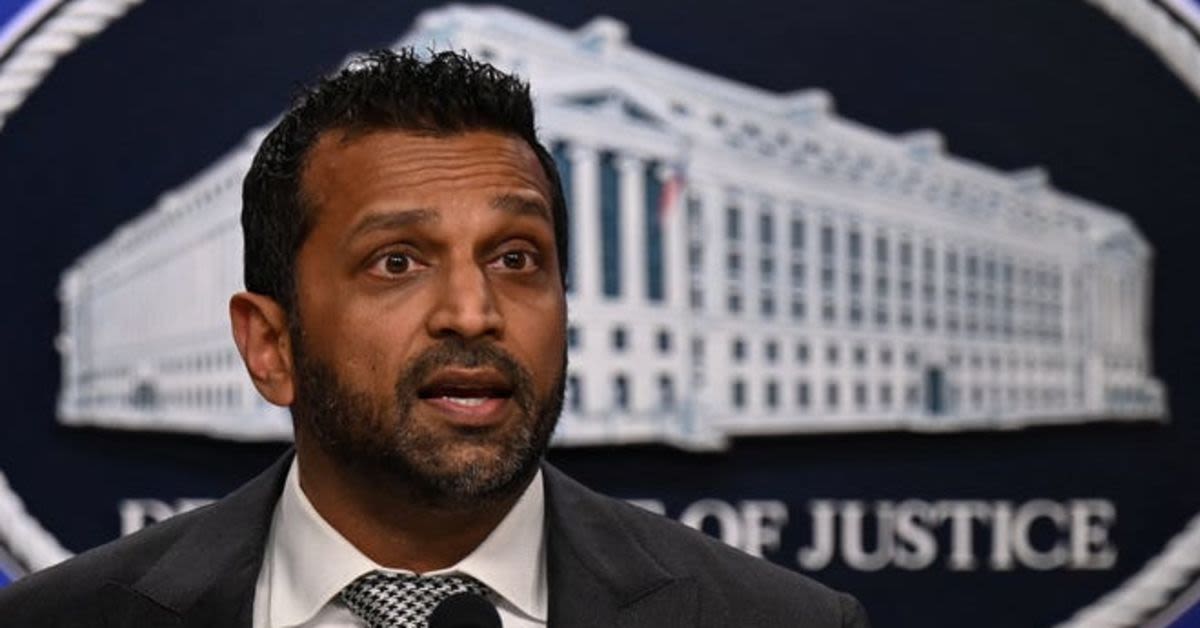
A shaky anonymously sourced report about FBI Director Kash Patels supposed imminent ouster has once again exposed how little rigor some in the press apply when the target is President Donald Trumps administration.
The latest claim, as reported by RedState, originated with Politicos White House bureau chief Dasha Burns, who posted that a senior administration insider had predicted Patel would be the next high-profile official to be forced out. Burns wrote, NEW: A top White House official tells me that Kash Patel is likely the next Cabinet-level official to go. Its only a matter of time, the official, who was granted anonymity to discuss the sensitive matter, told me. She added, There are several reasons, the official said, but top among them is the number of negative stories centered on Patel is not a good look for a Cabinet secretary, and Trump is fed up with the level of distraction.
On its face, the story followed a familiar media script: an unnamed top White House official, a sweeping prediction of impending chaos, and a narrative designed to portray President Trump as exasperated and ready to purge his own team. Yet even before addressing the substance of the allegation, the sourcing raises red flags; the reliance on an anonymous voice, with no corroboration and no on-the-record confirmation, is precisely the kind of practice that has eroded public trust in political reporting. When the story is aimed at a key law-and-order figure in a conservative administration, skepticism should be even higher.
Beyond the anonymity problem, the report contains a glaring factual error that undercuts its credibility. Investigative journalist Catherine Herridge highlighted the issue in a post labeled, FACT CHECK: @grok Is the FBI Director a Cabinet-Level position? The answer is straightforward: it is not.
The FBI Director does not hold a Cabinet secretary or Cabinet-level role; it is a fixed-term appointment, traditionally up to ten years, designed to insulate the position from day-to-day political churn. The Cabinet-level official in this chain is the Attorney General, who leads the Department of Justice, while the FBI operates as a component bureau within that department. Any genuine top White House official would be expected to understand this basic structural fact before opining about what is or is not a good look for a Cabinet secretary.
If the alleged insider misidentifies Patels position at such a fundamental level, it calls into question the rest of the narrative being sold to the public. The error also raises an uncomfortable question for Politico: why did its White House bureau chief not catch, or not care about, such an obvious mistake? When prominent outlets push out poorly vetted claims about senior Trump officials, they reinforce the perception that much of the press is more interested in damaging the administration than in getting the story right.
Meanwhile, the on-the-record statements from the actual White House directly contradict the anonymous speculation. Press Secretary Karoline Leavitt addressed the matter head-on when asked about President Trumps view of Patel. The president does still have confidence in the FBI director and in our law and order team to do what they've been doing so well over the course of the last year and a half, Leavitt told reporters at the White House on April 24, noting that crime has fallen during Patels tenure.
That public affirmation hardly matches the portrait of a President fed up and preparing to fire his FBI chief. Instead, it underscores a familiar pattern: anonymous, error-riddled stories targeting key figures in a conservative administration, quickly amplified by a media ecosystem that too often treats anything damaging to President Trumps team as presumptively true. For Americans who value law and order, institutional stability, and honest reporting, this episode is another reminder to treat such anonymously sourced hit pieces with the skepticism they deserve.
Login