
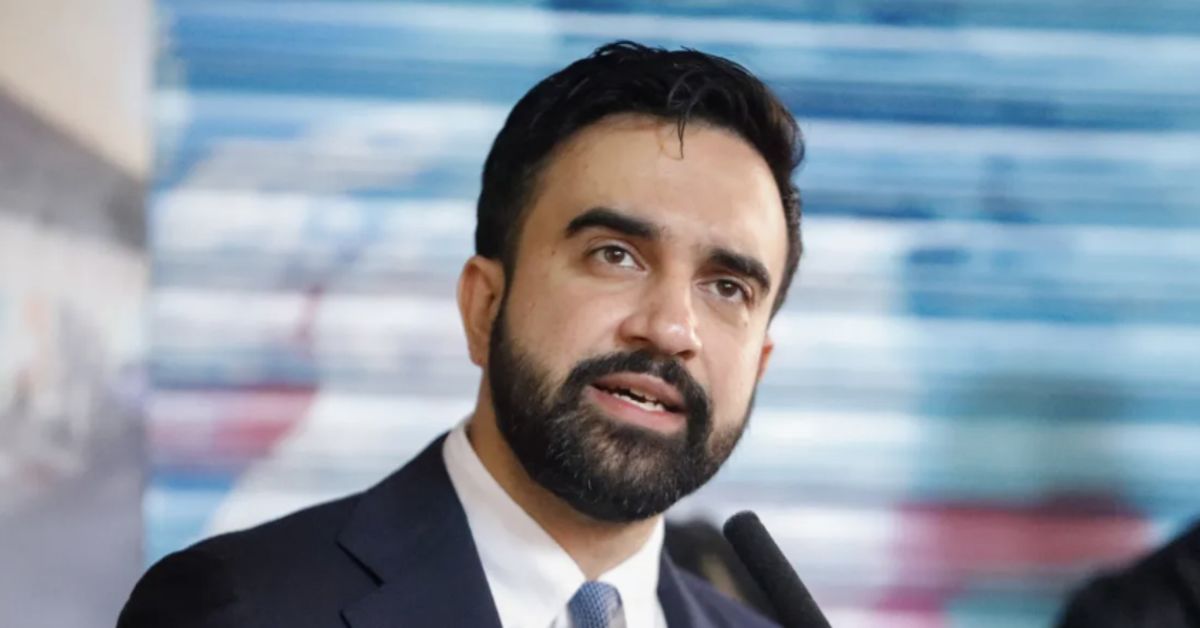
New York City Mayor Zohran Mamdani has used the first veto of his tenure to block a public-safety measure aimed at shielding students and educators from anti-Semitic harassment and intimidation near schools and other learning institutions.
The legislation, adopted in March by a 30-19 vote of the City Council, was crafted in response to escalating campus unrest and was intended in large part to bolster security for Jewish students, according to Western Journal. As reported by Western Journal, the measure was hardly radical: It sought to ensure that students could enter and exit educational facilities without being forced to run a gauntlet of extremist agitators, many of whom have openly aligned themselves with pro-Hamas and anti-Israel causes since the Oct. 7 terror attacks.
Mamdani, however, rejected the bill on the grounds that it might infringe upon Palestinian rights. In a statement explaining his veto, he framed the measure as a threat to protest movements rather than a safeguard for vulnerable students and faculty.
The bill, Int. 175-B, requires New York law enforcement to develop a plan to contain the risk of physical obstruction, physical injury, intimidation and interference at educational facilities while still allowing for freedom of assembly and First-Amendment events. The plan would then apply to any building, structure, or place where educational programming takes place,' Fox reported Friday. That description underscores that the legislation explicitly balanced security concerns with constitutional protections for speech and assembly, rather than curtailing them.
Mamdani insisted that the problem lay in the scope of the bill and its potential implications for protest activity across the city. The problem is how widely this bill defines an educational institution and the constitutional concerns it raises regarding New Yorkers fundamental right to protest, Mamdani said in a statement.
As the bill is written, everywhere from universities to museums to teaching hospitals could face restrictions. This could impact workers protesting ICE, or college students demanding their school divest from fossil fuels or demonstrating in support of Palestinian rights, he continued.
The mayor further argued that the legislation had triggered alarm among a range of left-leaning advocacy groups. Int. 175-B is not a narrow public safety measure; it is a piece of legislation that has alarmed much of the labor movement, reproductive rights groups, and immigration advocates, among others, across this City. Nearly a dozen unions have raised the alarm about its impact on their ability to organize.
Yet the text of the bill is notably clear in its intent and limitations. It directs the police commissioner to address and contain the risk of physical obstruction, physical injury, intimidation, and interference, while preserving and protecting the rights to free speech and assembly, and protest, at educational facilities.
The definition of educational facilities is broad but hardly unprecedented in municipal law. It covers any building, structure, or place where educational programming takes place. Such term includes but is not limited to public and nonpublic childcare programs, early childhood programs, elementary schools, middle schools, junior high schools, high schools, colleges, and universities.
Critics of the veto argue that invoking museums, teaching hospitals, or union organizing is a red herring designed to obscure the real political calculation. From a conservative perspective, the bills language is plainly aimed at preventing the kind of mob-style intimidation that has become common outside schools and universities, not at busting unions or silencing peaceful dissent.
The political context is impossible to ignore. New York is home to one of the largest Jewish populations in the world, and its leaders have a responsibility to ensure that Jewish New Yorkers are not treated as acceptable collateral damage in the citys protest politics.
Mamdanis decision drew swift condemnation from Jewish organizations and commentators who see the veto as a capitulation to radical, pro-Hamas elements within the Democratic Socialists of America and the broader progressive movement. For them, the mayors rhetoric about Palestinian rights functions as a convenient shield for those who have crossed the line from legitimate criticism of Israeli policy into open anti-Semitism.
The Simon Wiesenthal Center, a prominent organization dedicated to combating anti-Semitism, issued a pointed rebuke on X. We are deeply disappointed by Mayor Mamdanis veto of legislation designed to help protect students from intimidation and disruption outside schools, the Simon Wiesenthal Center, an organization that exists to fight anti-Semitism, announced on the social media platform X.
Students should be able to enter their place of learning freely, safely, and without fear. The right to protest and the right to an education can and must coexist. We urge the City Council to override this veto and reaffirm a basic principle: protecting students is not politics; it is a civic responsibility.
Political commentator Ari Hoffman dispensed with diplomatic language and directly tied Mamdanis stance to extremist sympathies. Mayor Zohran Mamdani (D- HAMAS) vetoed a bill for buffer zones around schools because it could impact workers protesting ICE, or college students demanding their school divest from fossil fuels, or demonstrating in support of Palestinian rights, he wrote.
All the bill would have done was require clear safety plans around schools with law enforcement. That assessment reflects a broader conservative concern that progressive officials are increasingly willing to sacrifice public order and the safety of disfavored groups in order to appease their activist base.
Even former New York Gov. Andrew Cuomo, hardly a conservative standard-bearer, weighed in against Mamdanis decision. Mamdani, he wrote in an X post, chose the whims of his radical, extreme-left [Democratic Socialists of America] base over the safety of students and Jewish New Yorkers at a time of rising antisemitism.
Instead of governing for all NYers, Mamdani has repealed the very definition of antisemitism from the citys books, changed how antisemitic crimes are counted and now vetoed these commonsense security measures when they are needed most, Cuomo continued. I proudly stand shoulder to shoulder with my Jewish brothers and sisters just as the Cuomos always have, and always will.
For conservatives, the episode highlights a disturbing pattern: as anti-Semitic incidents surge nationwide, progressive politicians appear more concerned with preserving the prerogatives of radical protest movements than with defending Jewish citizens basic right to safety. The euphemistic description of demonstrators as merely demonstrating in support of Palestinian rights glosses over the reality of open Hamas glorification, calls for Israels destruction, and explicit threats directed at Jewish students on campuses such as Columbia University.
The stakes in this debate extend beyond one city ordinance. When a mayor refuses even modest, content-neutral security measures that explicitly protect free speech while curbing intimidation, it sends a message that certain forms of harassment are tolerable if they align with fashionable ideological causes.
Mamdani had an opportunity to affirm that Jewish students deserve the same protection from targeted hostility that progressives routinely demand for other minority groups. Instead, he chose to prioritize the comfort and convenience of radical protesters over the safety and peace of mind of young people simply trying to attend class.
The City Council now faces a critical test of its own resolve. If council members can muster the 34 votes required to override the veto, they will not only restore a measure of security around educational institutions but also signal that New York City will not allow ideological extremism to trump its duty to protect all of its residents, including its Jewish community, from intimidation and hate-fueled agitation.
Login