
The United States Congress has increasingly turned to governing in the small hours of the morning, using overnight sessions as a blunt instrument to force through contentious legislation while members are exhausted and the public is largely asleep.
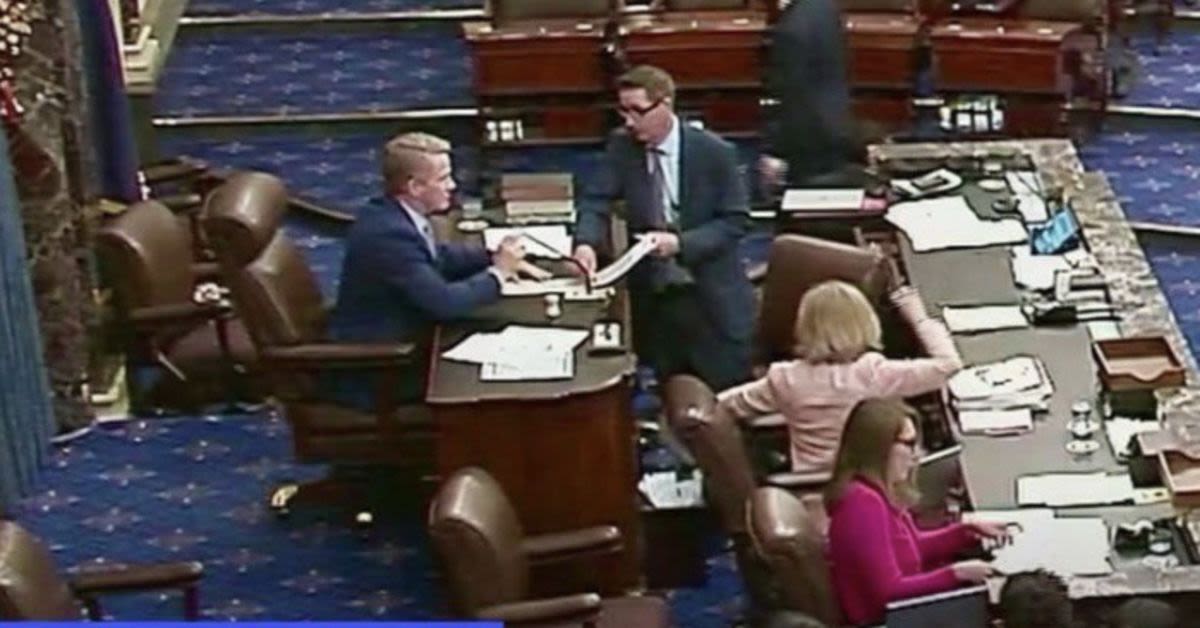
According to Breitbart, the latest episode unfolded in the Senate as lawmakers embarked on yet another nocturnal marathon, underscoring how late-night legislating has shifted from rare emergency measure to routine operating procedure in a Capitol beset by dysfunction. The scene opened with Republican Sen. John Kennedy of Louisiana, visibly drained, taking to the Senate floor just before 9 p.m. to protest both the pace and the timing of the proceedings.
Kennedy, seeking more time to debate his amendments to a budget resolution funding immigration enforcement agencies, warned that the physical strain of these sessions was becoming untenable for many of his colleagues.
Frankly I am worried about the health of some of our members, Kennedy said as the evening dragged on. Not that theyre in bad health, but its hard to stay up all night. More than six hours later, shortly after 3:30 a.m., senators finally staggered out of the chamber, having endured another vote-a-rama of amendment votes that left them dazed, depleted, and fully aware they would soon be summoned back for more of the same.
The tactic is hardly new, but its frequency has become a telling symptom of a legislature that appears unable or unwilling to function in a normal, transparent manner. Leaders in both parties have long used overnight sessions as a pressure tool, betting that fatigue will wear down resistance and clear the way for controversial measures that might face stronger opposition in the light of day. Now, as the House and Senate lurch from one manufactured crisis to another, these all-nighters have become almost standard operating procedure, a sign of a Congress that too often governs by brinkmanship rather than deliberation.
The dysfunction is getting worse, said Republican Sen. Kevin Cramer of North Dakota, who has served in Congress for 14 years and watched the institutions culture steadily erode. Lawmakers, he argued, have become less mature, with a growing number acting purely in their own self-interest, willing to hold up bills or drag out proceedings for personal or political gain rather than any coherent legislative strategy.
Its not a healthy lifestyle, Cramer added, making clear that the damage extends beyond sleep schedules to the broader health of the republic. Theres less concern for the team effort. For conservatives who value institutional stability, responsible governance, and respect for process, the spectacle of a Congress that can only move under cover of darkness is a warning sign that the system is being bent to serve short-term partisan advantage rather than long-term national interest.
In recent weeks, some of the most pressing issues facing the country have been debated and decided in the dead of night, with confusion and chaos often overshadowing substance. Much of the turmoil has centered on government funding, particularly for agencies tasked with national security and immigration enforcement, areas where conservative priorities have repeatedly clashed with progressive resistance.
Late in March, Senate Republicans reached a late-night agreement with Democrats to reopen most of the Department of Homeland Security, including the Transportation Security Administration, while Democrats continued to block funding for Immigration and Customs Enforcement and the Border Patrol after the shootings of two protesters in Minneapolis.
It was billed as a breakthrough, and Majority Leader John Thune, Republican of South Dakota, moved swiftly to pass the spending bill by voice vote just after 2 a.m., a maneuver that allowed the measure to clear the chamber without recorded opposition. Senators then promptly left town for a two-week recess, leaving the House to handle final passage. But when House members awoke to discover the contours of the Senate deal, many were furious, particularly conservatives who refused to accept any funding package that sidelined ICE and Border Patrol, two agencies central to enforcing immigration law and securing the border.
House lawmakers, who had been asleep when the Senate agreement was announced, angrily rejected the deal, insisting they would not pass legislation that failed to support the very immigration enforcement agencies conservatives see as essential to national sovereignty. That revolt forced senators back to the drawing board to devise a new plan to reopen the department, a task that remains unresolved and emblematic of a broader breakdown in coordination between the chambers.
For many on the right, the episode highlighted not only the policy divide with Democrats but also the dangers of backroom, late-night legislating that sidelines rank-and-file members and, by extension, the voters they represent.
Another flashpoint came over the renewal of surveillance authorities for federal intelligence agencies, a matter that touches directly on civil liberties, national security, and the proper limits of government power. House Republican leaders kept members in session well past midnight last week as they tried, and ultimately failed, to pass competing versions of a foreign surveillance bill before a looming Monday deadline.
Scrambling to avoid a lapse in the law, leadership eventually cobbled together a 10-day extension after 2 a.m., a stopgap that satisfied no one and underscored the absence of a coherent, daylight strategy on an issue that demands careful, transparent debate.
Members of both parties expressed exasperation at the last-minute chaos, though their critiques often reflected deeper ideological divides. Who the hell is running this place? asked Rep. Jim McGovern, a Massachusetts Democrat, blasting Republicans for what he described as slapdash legislating. He complained that GOP leaders had thrown the bill together on the back of a napkin in the back room in the middle of the night, a charge that, while partisan, also captured the sense of procedural disarray that has become increasingly common.
Just about everyone agrees that this is serious stuff, the kind of debate that Congress ought to have in the open, McGovern said, pointing to the obvious disconnect between the gravity of surveillance powers and the haphazard way they were being handled. Tennessee Rep. Andy Ogles, a Republican and member of the House Freedom Caucus who opposed the leaderships bills, said the chaotic outcome was entirely foreseeable.
We warned them that this was gonna happen, Ogles said, noting that conservatives had repeatedly cautioned against rushed, opaque negotiations. Unfortunately, here we are at 2 in the morning.
In the Senate, the latest late-night ordeal was driven by an arcane but powerful procedural tool known as budget reconciliation, which Republican leaders are using in an effort to fund the two immigration enforcement agencies Democrats continue to block. Reconciliation has become the default mechanism for majorities in both parties to advance significant budget-related measures without needing to secure a filibuster-proof supermajority, a development that has further eroded incentives for bipartisan compromise. Under reconciliation rules, the Senate majority can pass budget-related bills with a simple majority, bypassing the 60-vote threshold that otherwise applies to most legislation.
Before they can reach final passage, however, senators must endure two grueling rounds of amendment votes, a process that has come to be known as vote-a-rama. The procedure is open-ended, allowing members of both parties to offer an unlimited number of amendments, often designed less to improve the bill than to force the other side into politically awkward recorded votes. Republican Sen. Lisa Murkowski of Alaska described the dynamic bluntly, saying the process is used to make each other miserable.
Leaders typically schedule these amendment marathons in the middle of the night, as they did from Wednesday into Thursday, hoping that sheer exhaustion will speed up the pace and discourage grandstanding. Rather than sit idly on the Senate floor between votes, Murkowski said she spent the night walking laps between the chamber and her hideaway, the small private office each senator maintains in the Capitol. Im at 14,291 steps, she remarked just after 11 p.m., glancing at her smartwatch, which also reminded her that her usual bedtime had long since passed.
She joked that if she could not sleep, she might as well get some exercise, a wry acknowledgment of the absurdity of the situation. Senators endured a similar reconciliation ordeal the previous year as they labored for weeks to pass President Donald Trumps package of spending and tax cuts, which he dubbed One Big Beautiful Bill. That legislation, a centerpiece of Trumps economic agenda, had only the narrowest margin of Republican support, forcing both the House and Senate into nearly back-to-back all-night sessions to meet the presidents July 4 deadline.
In the Senate, GOP leaders kept the vote series open for hours as they worked to secure backing from Murkowski and other wavering Republicans, illustrating how late-night pressure tactics can be used even within a single party. Its insane, Murkowski said of the nocturnal schedule, recalling a piece of maternal wisdom that resonates far beyond personal health. My mom always said, Nothing good happens after midnight.
Overnight votes themselves are not a modern invention, and some of the most consequential legislation of recent decades has been passed while most Americans were asleep. The Affordable Care Act, President Barack Obamas signature health care overhaul, cleared the Senate in the early hours of Christmas Eve 2009 after weeks of intense negotiations, just in time for senators to catch flights home for the holidays. Countless other major bills have been pushed through in the dead of night, often by design, as leaders sought to minimize public scrutiny or internal dissent.
What has changed, lawmakers say, is the frequency and near-normalization of these after-dark sessions. Part of whats changed here is theres a lot of heavy lifting that you have to do to get a bill passed, said Democratic Sen. Ron Wyden of Oregon, who has served in Congress since 1981, beginning in the House. I think at some point youve got to have a forcing mechanism, and one of the easiest is to stay up until the wee hours so that everybody is basically trying not to fall asleep on national TV.
For a newer generation of senators, the question is not only whether these tactics are effective but whether anyone outside the Beltway is even paying attention. Democratic Sen. Andy Kim of New Jersey, elected to the Senate in 2024, wondered aloud about the visibility of such proceedings. In the middle of the night, he said: Are the American people paying attention? How do we get the message out?
Still, Kim insisted that lawmakers have a duty to complete their work regardless of the hour, particularly at a time when the United States is engaged in a war with Iran and Congress frequently spends long stretches away from Washington. I dont mind being here, Kim said, suggesting that, for some members, the willingness to endure sleepless nights is a badge of commitment rather than a sign of institutional decay. Yet for many conservatives, the deeper concern is not the stamina of individual legislators but the way these nocturnal marathons have become a substitute for regular order, open debate, and accountable lawmaking.
As Congress continues to rely on overnight sessions to resolveor more often, to paper overfundamental disagreements on spending, surveillance, and border security, the pattern raises serious questions about transparency, responsibility, and respect for the voters who are effectively shut out of the process. The recurring spectacle of bleary-eyed lawmakers casting critical votes at 2 or 3 a.m. reflects a governing culture that too often prizes tactical advantage over principled deliberation.
For those who believe in limited government, clear lines of accountability, and the primacy of the peoples voice, a Congress that does its hardest work in the dark is not merely tired; it is drifting further from the constitutional ideals it is sworn to uphold.
Login