
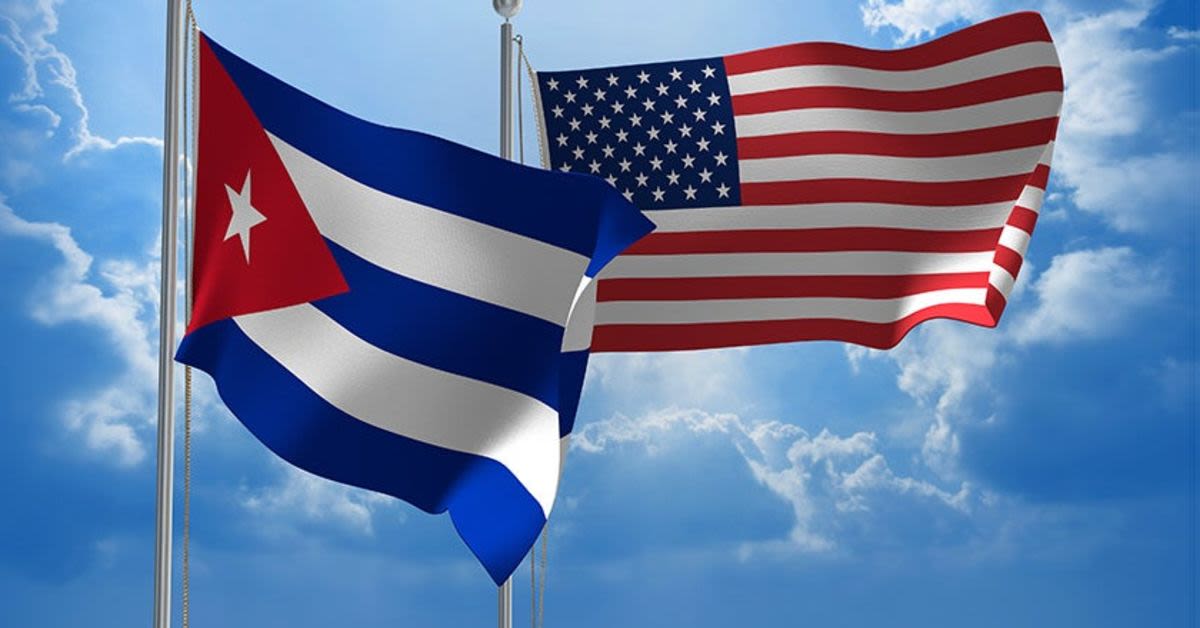
A rare U.S. government flight touched down in Havana last week, signaling a renewed but hard-edged diplomatic push toward a communist regime that has long been both a humanitarian catastrophe and a security concern just off Americas shores
According to the Gateway Pundit, U.S. State Department officials used the visitthe first such landing in roughly a decadeto conduct a series of high-level meetings with senior Cuban officials, including Raul Guillermo Rodriguez Castro, grandson of longtime strongman Ral Castro. The talks, described as unusually direct, underscored Washingtons growing impatience with a ruling elite that has presided over decades of economic collapse and political repression.
During the discussions, American envoys pressed Havana to undertake sweeping economic and political reforms in what they openly characterized as a collapsing communist state. A senior State Department official warned that the Cuban economy is in free fall and cautioned that the regime has only a limited window to act before the United States abandons diplomatic efforts.
In an effort to break the regimes stranglehold on information, the delegation reportedly offered technical assistance to restore and expand internet access across the island via Starlink satellite services. At the same time, U.S. officials reiterated longstanding demands: the release of political prisoners, broader political freedoms, and concrete steps toward genuinely free and fair elections.
American negotiators also raised the issue of justice for victims of communist expropriation, insisting on compensation for U.S. citizens and companies whose assets were seized after Fidel Castros 1959 revolution. Security concerns featured prominently as well, with the delegation pressing Havana over its foreign intelligence and military activities operating less than 100 miles from the U.S. mainland.
The last major diplomatic opening with Cuba occurred under Barack Obama, who pursued a Cuban Thaw that critics say rewarded the regime while delivering little for the Cuban people. The current talks unfold under a very different posture, as President Trump and Secretary of State Marco Rubio, himself of Cuban descent, seek to end the islands entrenched communist rule rather than normalize it.
While no explicit ultimatum was delivered in Havana, the shadow of American power loomed over the discussions. Trump has previously floated the possibility of military action to liberate the island, and a White House spokesperson emphasized that the president is committed to pursuing a diplomatic solution, if possible, but will not let the island collapse into a major national security threat if Cubas leaders are unwilling or unable to act.
Events in nearby Venezuela have already demonstrated that this administrations warnings are not idle. Back in January, the U.S. launched a limited military operation to capture Venezuelan dictator Nicols Maduro, and although his deputy Delcy Rodrguez remains in office, Caracas has since moved to cooperate with Washington on key issues, especially oil production.
Maduros ouster delivered a serious blow to Havana, which had long depended on subsidized Venezuelan oil in exchange for security and military support exported by the Cuban regime. With that lifeline fraying and the Cuban economy in free fall, Washingtons message in Havana was unmistakable: reform while there is still time, or risk the fate of other failed socialist experiments in the hemisphere.
Login